Monday, 26 January 2026

A MASSIVE AMMONITE THE SIZE OF A CAR: THE FERNIE AMMONITE

Titanites occidentalis, Fernie Ammonite
The Fernie ammonite—long known as Titanites occidentalis—has officially been given a new name: Corbinites occidentalis, a fresh genus erected after a meticulous re-evaluation of this Western Giant’s anatomy and lineage. 

What hasn’t changed is its breathtaking presence high on Coal Mountain near Fernie, British Columbia, where this colossal cephalopod has rested for roughly 150 million years.

This extraordinary fossil belongs to the family Lithacoceratinae within the ataxioceratid ammonites. 

Once thought to be a close cousin of the great Titanites of Dorset, new material—including two additional large specimens discovered at nearby mine sites—reveals ribbing patterns and growth-stage features that simply didn’t match Titanites

With these multiple overlapping growth stages finally available, paleontologists had the missing pieces needed to correct its identity.

So, Titanites occidentalis no more—meet Corbinites occidentalis, a giant ammonite likely endemic to the relatively isolated early Alberta foreland basin of the Late Jurassic.

Fernie, British Columbia, Canada
The Fernie ammonite is a carnivorous cephalopod from the latest Jurassic (Tithonian). 

The spectacular individual on Coal Mountain measures 1.4 metres across—about the size of a small car tire and absolutely staggering when you first see it hugged by the mountainside.

The first specimen, discovered in 1947 by a British Columbia Geophysical Society mapping team at Coal Creek, was initially mistaken for a “fossil truck tire.” 

Fair enough—if a truck tire had been forged in the Jurassic and left on a mountaintop. It was later described by GSC paleontologist Hans Frebold, who gave it the name Titanites occidentalis, inspired by the giant ammonites of Dorset. 

For decades, that name stuck, even though paleontologists suspected the attribution was shaky due to poor preservation of the holotype’s inner whorls.

Recent discoveries of two additional specimens at Teck Resources’ Coal Mountain Mine finally provided the evidence needed for reassessment. 

With intact inner whorls and beautifully preserved ribbing—including hallmark variocostate and ataxioceratoid ornamentation—researchers Terence P. Poulton and colleagues demonstrated that the Canadian ammonite does not belong in Titanites

Their work (Volumina Jurassica, 2023) established Corbinites as a brand-new genus, with C. occidentalis as its type and only known species.

These specimens—one exceeding a metre, another about 64 cm—confirm a resident ammonite population within this basin. And as of now, these giants are unique to Western Canada.
A Journey Up Coal Mountain

If you’re keen to meet Corbinites occidentalis in the wild, you’ll want to head to Fernie, in southeastern British Columbia, close to the Alberta border. 

As your feet move up the hillside, you can imagine this land 10,000 years ago, rising above great glaciers. Where footfalls trace the steps of those that came before you. This land has been home to the Yaq̓it ʔa·knuqⱡi ‘it First Nation and Ktunaxa or Kukin ʔamakis First Nations whose oral history have them living here since time immemorial. Like them, take only what you need and no more than the land offers — packing out anything that you packed in. 

Active logging in the area since 2021 means that older directions are now unreliable—trailheads have shifted, and a fair bit of bushwhacking is the price of admission. Though clear-cutting reshaped the slope, loggers at CanWel showed admirable restraint: they worked around the fossil, leaving it untouched.

The non-profit Wildsight has been championing efforts to protect the ammonite, hoping to establish an educational trail with provincial support and possible inclusion under the Heritage Conservation Act—where the fossil’s stewardship could be formally recognised.

HIKING TO THE FERNIE AMMONITE (IMPORTANT UPDATE: TRAIL CLOSED)

From the town of Fernie, British Columbia, you would traditionally head east along Coal Creek Road toward Coal Creek, with the ammonite site sitting 3.81 km from the road’s base as the crow flies. 

The classic approach begins at a roadside exposure of dark grey to black Cretaceous plant fossils, followed by a creek crossing and a steep, bushwhacking ascent.

However — and this is critical — the trail is currently closed.

The entire access route runs straight through an area of active logging, and conditions on the slope are extremely dangerous. Between heavy equipment, unstable cutblocks, and altered drainages, this is not a safe place for hikers right now.

Conservation groups, including Wildsight, continue working toward restoring safe public access and formalising the site under the Heritage Conservation Act. 

Their long-term goal is to reopen the trail as a designated educational hike with proper signage, but at present, the route should not be attempted. 

Once logging operations move out of the area and safety assessments are done, the possibility of reopening may return.

For now, the safest—and strongly recommended—way to view this iconic fossil is via the excellent cast on display at the Courtenay & District Museum on Vancouver Island, or at the Visitor Information Centre in Sparwood.

Photo credit: Vince Mo Media. Vince is an awesome photographer and drone operator based in Fernie, BC. Check out his work (and hire him!) by visiting his website at vmmedia.ca.

Sunday, 25 January 2026

FOSSIL DOLPHIN VERTEBRAE FROM THE NORTH SEA

Dolphin Fossil Vertebrae
Pulled from the cold, turbid bottom of the North Sea, a fossil dolphin vertebra is a small but eloquent survivor of a very different ocean. 

Today, the North Sea is shallow, busy, and heavily worked by trawlers, dredges, and offshore infrastructure. Beneath that modern churn lies a remarkable archive of Cenozoic life, quietly releasing its fossils when nets and dredges scrape sediments that have not seen daylight for millions of years.

Fossil cetacean bones—vertebrae, ribs, mandibles, and the occasional ear bone—are among the most evocative finds recovered from the seafloor. 

Dolphin vertebrae are especially common compared to skulls, as their dense, spool-shaped centra survive transport and burial better than more delicate skeletal elements. 

These fossils are typically dark brown to black, stained by long exposure to iron-rich sediments and phosphates, and often bear the polished surfaces and rounded edges that speak to a history of reworking by currents before final burial.

The North Sea is famous for yielding a mixed assemblage of fossils spanning multiple ice ages and interglacial periods, but many marine mammal remains originate from Miocene deposits, roughly 23 to 5 million years old. During the Miocene, this region was not the marginal, shallow sea we know today. It formed part of a broad, warm to temperate epicontinental sea connected to the Atlantic, rich in plankton, fish, sharks, and early whales and dolphins. 

This was a critical chapter in cetacean evolution, when modern groups of toothed whales, including early delphinids and their close relatives, were diversifying and refining the echolocation-based hunting strategies that define dolphins today.

Most North Sea cetacean fossils are found accidentally rather than through targeted excavation. Commercial fishing trawls, aggregate dredging for sand and gravel, and construction linked to wind farms and pipelines routinely disturb Miocene and Pliocene sediments. 

Fossils are hauled up tangled in nets or mixed with shell hash and glacial debris, often far from their original point of burial. As a result, precise stratigraphic context is usually lost, and age estimates rely on sediment still adhering to the bone, associated microfossils, or comparison with well-dated onshore Miocene marine deposits in the Netherlands, Belgium, Germany, and eastern England.

A dolphin vertebra from this setting tells a story of both life and loss. In life, it was part of a flexible, powerful spine built for speed and agility, driving rapid tail beats through warm Miocene waters. 

After death, the carcass likely sank to the seafloor, where scavengers stripped it and currents scattered the bones. Over time, burial in sand and silt allowed mineral-rich waters to replace organic material with stone, locking the bone into the geological record. 

Much later, Ice Age glaciers reshaped the seafloor, reworking older sediments and concentrating fossils into lag deposits that modern dredges now disturb.

Though often found in isolation, these vertebrae are scientifically valuable. They confirm the long presence of dolphins in northern European seas and help refine our understanding of Miocene marine ecosystems, biogeography, and climate.

Saturday, 24 January 2026

MIDDLE TRIASSIC MIXOSAURUS: TAIWAN STYLE

Mixosaurus sp. from Middle Triassic Seas
If you ever wanted to meet an ichthyosaur halfway between “sleek dolphin missile” and “awkward crocodile-fish,” Mixosaurus delivers. 

This extinct marine reptile cruised the Middle Triassic seas around 242–235 million years ago, back when the world’s continents were still shuffling seats and experimenting with new ocean ecosystems.

The Taiwan specimen of Mixosaurus sp. on display at the Natural History Branch of the National Taiwan Museum captures that transitional vibe perfectly. It is a very, very purdy specimen!

With an elongated snout, well-developed fins, and a body still figuring out hydrodynamic fashion, Mixosaurus sits smack in the ichthyosaur family tree between early, lizard-shaped forms and the more streamlined torpedo models that would show up in the Jurassic. 

Think of it as the “adolescent ichthyosaur phase,” complete with growth spurts and evolving lifestyles.

Taxonomically, Mixosaurus belongs to the order Ichthyosauria and is commonly grouped within Mixosauridae. Its relatives include the earlier Utatsusaurus and Grippia (more on the reptilian side of things) and later speed demons like Temnodontosaurus and Stenopterygius

While all ichthyosaurs shared adaptations for marine life — big eyes, paddle limbs, and that delightful habit of birthing live young — Mixosaurus kept a few primitive traits, making it a favorite for paleontologists trying to reconstruct evolutionary pathways in Triassic oceans.

As for its museum home: the National Taiwan Museum has a long pedigree. Founded in 1908 during the Japanese era, it’s the oldest museum in Taiwan and houses natural history, anthropology, geology, and zoology collections spanning deep time to present day. 

The Natural History Branch, nestled in a dedicated exhibition space, is where geology, paleontology, and biology truly shine — a quiet refuge where extinct reptiles like Mixosaurus can enjoy their retirement in glass cases while humans politely stare, point, and whisper variants of “whoa.”

If you’re lucky enough to visit, you’ll find Mixosaurus presented not as some dusty relic of a bygone sea, but as a charismatic stepping-stone in reptile evolution — a reminder that even in the Triassic, life was busy experimenting. 

And occasionally, those experiments worked so well they became crowd-pleasers 240 million years later.

The National Taiwan Museum is in Taipei, Taiwan, right in the city’s historic downtown. The main building sits along Xiànběi Road (Xiànběi Rd., Zhongzheng District) facing 228 Peace Memorial Park, making it easy to combine extinct reptiles with a lovely urban stroll.

The Natural History Branch — where the Mixosaurus hangs out — is part of the same museum system and also located in central Taipei. It focuses on geology, biology, and deep time, so it’s very fossil-friendly territory.

If you’re ever in Taipei (or plotting a paleontology-tour itinerary — which, honestly, is something you should do), it’s a fun stop: compact, historic, and just nerdy enough to make Triassic ichthyosaurs feel right at home.


Friday, 23 January 2026

NESSIE: THE OPALIZED PLIOSAUR OF THE EARLY CRETACEOUS

Nessie the Opalized Marine Reptile
At the Opal Museum in Queensland glitters one of the more improbable fossils ever pulled from the ancient seabed — an opalized pliosaur affectionately nicknamed “Nessie.” 

Beneath its shimmering surface lies the story of a powerful marine reptile that ruled the Early Cretaceous oceans roughly 110 million years ago, at a time when much of inland Australia was drowned beneath a warm, shallow epicontinental sea.

The lovely remains you see here are from one of those amazing marine reptiles, a pliosaur, who swam in those ancient seas. So what exactly is a pliosaur?

Pliosaurs are a subgroup within the Plesiosauria, the great marine reptiles (not dinosaurs!) of the Mesozoic. 

While long-necked plesiosaurs favored dainty heads and elongated cervical vertebrae for sweeping, panoramic strikes at small fish and cephalopods, pliosaurs evolved in the opposite direction:

  • Skulls short and massive
  • Necks abbreviated
  • Jaws deep and muscular
  • Teeth robust and conical

These were the ambush predators, built less like swans and more like crocodilian torpedoes, with four powerful flippers and a muscular body plan that let them sprint through the water column to surprise prey.

Though not an ichthyosaur — those fast, fish-shaped reptiles that converged spectacularly toward the form of modern dolphins — pliosaurs shared the same ecosystems. 

Ichthyosaurs hunted squid and fish in speed-based chases, while pliosaurs handled bigger, tougher fare: other marine reptiles, ammonites, and the occasional large fish unlucky enough to cross their path.

The Early Cretaceous seas hosted a diverse guild of reptiles:

  • Ichthyosaurs (fish-shaped pursuit predators)
  • Long-necked plesiosaurs (precision feeders)
  • Pliosaurs (apex ambush predators)
  • Crocodyliforms (semi-aquatic opportunists)
  • Ammonites & belemnites (cephalopods forming the backbone of the food web)

Nessie sits among a lineage that includes broad-skulled bruisers like Kronosaurus queenslandicus, a fellow Australian celebrity whose skull approached 3 meters in length and whose bite force was probably among the strongest of any Mesozoic reptile.

Pliosaurs didn’t so much swim as fly underwater. Their four hydrofoil flippers generated lift in alternating strokes, allowing bursts of speed followed by graceful pursuit. Streamlined bodies meant low drag, essential for surprise attacks in open water.

Dentition tells the tale:

  • Deep-rooted conical teeth resist torsional stress
  • Interlocking jaws grip slippery prey
  • Short snout adds leverage for skull-crushing force

Ammonites — including opalized forms from the same Australian basins — bear puncture marks suggestive of pliosaur predation. Large fish and other marine reptiles likely rounded out the menu.

Like ichthyosaurs and most plesiosaurs studied from articulated skeletons, pliosaurs were viviparous — they gave birth to live young at sea. No nests, no frantic beach crawls, and no hatchling gauntlet. Babies were miniature versions of adults, already hydrodynamic and hungry.

How do we know this? Well, a few ways. We have fossilized pregnant plesiosaur specimens with embryos and there is always the biomechanical absurdity of hauling such a creature onto land to lay eggs. So, wee ones at sea it is!

Why Opal? Why Here?

Opalization is an Australian specialty, the result of silica-rich groundwater percolating through Cretaceous sediments and replacing bone over geologic time. Fossils from Lightning Ridge and Coober Pedy preserve everything from ammonites to plesiosaurs as shockingly colourful silica pseudomorphs — Earth chemistry as jeweler.

Nessie’s preservation is thus a double marvel for its biological rarity (pliosaur skeletons are uncommon) and mineralogical rarity (precious opal replacement is even rarer)

Pliosaurs survived well into the Late Cretaceous before vanishing in a wave of marine turnover alongside ichthyosaurs, mosasaurs, and ammonites. Their departure marks a reshuffling of oceanic power dynamics — a story of climate, sea levels, and evolutionary competition.

Thursday, 22 January 2026

QUIET DAREDEVILS OF THE NORTHERN FORESTS: FLYING SQUIRRELS

Flying squirrels are the quiet daredevils of the northern forests, tiny nocturnal acrobats that turn the darkened canopy into an aerial highway. 

Mammals have always found inventive ways to move across the landscape — walking, hopping, swimming, flying — and a select few, such as the marsupial sugar gliders of Australia, have mastered the art of gliding. 

But with fifty-two species scattered across the Northern Hemisphere, flying squirrels are the most successful gliders ever to take to the trees.

They are not true fliers, at least not in the way bats or birds command the air. Instead, these diminutive rodents hurl themselves into space with astonishing confidence, stretching their limbs wide to transform their bodies into living parachutes. It is a leap that looks both reckless and charming: an adorable woodland pilot bounding into the night inside a furry paper airplane, with just enough tooth and claw to remind you they are still wild.

Their improbable flight depends on an extraordinary bit of anatomy — a thin membrane of skin, the patagium, that stretches from wrist to ankle. When they leap, the membrane balloons outward, turning their entire body into a gliding surface. 

Hidden within their tiny wrists are elongated, cartilaginous struts, unique among squirrels, that help spread and stabilize the winglike skin. These distinctive wrist bones mark them as gliders and set them apart from their earthbound cousins.

The evolutionary origins of these sky-graceful rodents, however, have long puzzled scientists. Genetic studies suggest that flying squirrels branched off from tree squirrels around twenty-three million years ago. But fossil evidence tells a different story. 

The oldest remains—mostly cheek teeth—hint that gliding squirrels were already slicing through forest air thirty-six million years ago. 

To complicate matters further, the subtle dental traits used to distinguish gliding squirrels from non-gliding ones may not be exclusive after all. Teeth, it seems, do not always tell the whole truth.

In 2002, a routine excavation at a dumpsite near Barcelona, Spain, brought the mystery into sharper focus. As workers peeled back layers of clay and debris, a peculiar skeleton began to emerge. 

First came a remarkably long tail. Then two robust thigh bones, so unexpectedly large that the team briefly wondered whether they belonged to a small primate. But as each bone was freed and reassembled, the truth took shape. This was no primate. It was a rodent.

The breakthrough came during preparation, when screen-washing the surrounding sediment revealed a set of minute, exquisitely specialized wrist bones — the unmistakable calling card of a glider. From that mud rose the tiny, ancient hands of Miopetaurista neogrivensis, an extinct flying squirrel whose nearly complete skeleton would become the oldest known representative of its kind.

Studied in detail by Casanovas-Vilar and colleagues, the 11.6-million-year-old fossil revealed an animal belonging to the lineage of large flying squirrels, the same branch that today includes the giant gliders of Asia. Molecular and paleontological data, when combined with this new find, painted a richer story: flying squirrels may have arisen between thirty-one and twenty-five million years ago — and perhaps even earlier. 

The skeleton of Miopetaurista was so similar to those of modern Petaurista that the living giants of Asia might fairly be called “living fossils,” their basic form barely altered across nearly twelve million years of evolutionary time.

It is rare for molecular and fossil evidence to agree so neatly, yet in this case, both strands appear to weave the same narrative. The Barcelona specimen anchors the timeline, offering a crucial calibration point that reconciles genetic divergence estimates with the scattered hints found in teeth alone. It also underscores how conservative evolution can be: once perfected, the gliding design of flying squirrels changed little through the ages.

Still, much remains hidden in the shadows of deep time. Older fossils, or transitional forms showing the first experimental steps toward gliding, could help illuminate how these rodents took to the air. What combination of strength, membrane, and courage first allowed a squirrel to turn a fall into a flight? And how did these early pioneers spread so widely across the forests of the Northern Hemisphere?

Flying squirrels remain unique among mammals that glide, remarkable for both their diversity and their broad geographical reach. Yet their lineage is a riddle still missing key chapters. For now, the fossil from Barcelona stands as a rare and precious window into their past — the moment when a small rodent stretched its skin, trusted the air, and opened an entirely new evolutionary pathway between the branches.

Wednesday, 21 January 2026

CHASING THE SCIENCE OF SUNSETS: WHY EVENING LIGHT FEELS LIKE MAGIC


Ancient Starlight Warming the Hills
After a long day on the trail—dust on your boots, muscles humming with that pleasant kind of fatigue—there is a particular hush that settles in as the sun sinks toward the horizon. 

The air cools. The world exhales. You stand there, maybe nursing a new blister or two, and the sky unfurls into a slow-blooming masterpiece of gold, tangerine, and ember-red. 

It an awe-inspiring view—serenity, visual poetry suspended in the last breaths of the day.

But have you ever paused in that glowing moment and wondered why sunsets look the way they do? Or what sunlight truly is, beyond the familiar warmth on your skin?

Sunlight begins as violence—beautiful cosmic violence. Deep within the Sun, hydrogen nuclei are squeezed and fused into helium in a thermonuclear furnace that has been roaring for 4.6 billion years. 

Solar-Powered Beauty
The energy released in these reactions travels outward as electromagnetic waves, a spectrum of radiation that includes visible light, ultraviolet rays, infrared warmth, and far stranger, invisible forms of energy. 

By the time these waves break free of the Sun’s surface, they’re tossed into space at the speed of light, making the 150-million-kilometre journey to Earth in just over eight minutes.

Once that energy reaches us, we give it a tidy scientific name: insolation, or incoming solar radiation. It may sound static, but it isn’t. 

The Sun is a restless star. 

Bursts of hot, tangled magnetic activity—solar flares—briefly brighten it, while dark sunspots, cooler by stellar standards, dim it. These cycles shift the amount of heat and light we receive over days, weeks, even months.

When sunlight finally reaches Earth, it gets straight to work. Our bodies quietly convert ultraviolet rays into Vitamin D, that small biochemical miracle essential to our bones and immune systems. Plants, meanwhile, harness the solar feast through photosynthesis, turning carbon dioxide, water, and photons into sugars and oxygen. In chemical shorthand:

6 CO₂ + 6 H₂O + light → C₆H₁₂O₆ + 6 O₂

Across the globe, photosynthetic organisms use sunlight to fix roughly 100–115 billion metric tonnes of carbon into biomass each year—about six times more energy than humanity collectively consumes. Humans, indeed, are bit players in a sun-powered world.

For all our scientific progress, the nature of light still teases us with mystery. It behaves as both a wave and a particle, depending on how we look at it. And the entire universe is steeped in its echoes, from the glow of newborn stars to the faint hiss of cosmic microwave background radiation—the lingering afterglow of the Big Bang.

But if sunlight begins in fusion and ends in galactic poetry, its final flourish—its colours—are created right here in our sky.

As beams of white light enter Earth’s atmosphere, they collide with nitrogen, oxygen, dust, wildfire smoke, sea salt, pollen—whatever is drifting through the air that day. Shorter wavelengths like blues and greens scatter more easily, ricocheting around and out of view. 

Longer wavelengths—yellows, oranges, and reds—sail through more cleanly, surviving the gauntlet. When the Sun dips low in the sky, its rays pass through more atmosphere, amplifying this effect. What remains to reach your eyes is that molten palette we call sunset.

It feels like magic. It is physics. It is the Sun’s long-distance love letter, read through Earth’s shimmering veil. You’re standing in the path of ancient starlight, scattered into gold just for you.

Tuesday, 20 January 2026

TOXODON: SOUTH AMERICA'S MOST MAGNIFICENT ODDBALL

Toxodon was a hulking, hippo-sized grazing mammal that once roamed the ancient grasslands, wetlands, and scrub of South America. 

The creature first entered the scientific spotlight thanks to Charles Darwin, who stumbled upon its bones during the HMS Beagle expedition. 

On November 26, 1834, while travelling in Uruguay, Darwin heard rumours of “giant’s bones” on a nearby farm. 

Curious, he rode over, investigated the cache, and purchased the skull of a strange beast for eighteen pence — a bargain for a fossil that would later puzzle the greatest minds of the 19th century.

In his journals, Darwin mused: “Toxodon is perhaps one of the strangest animals ever discovered.” And frankly, he wasn’t wrong. 

Once the skeleton was fully reconstructed, it appeared to pull anatomical traits from every corner of the mammalian tree. It was as large and barrel-bodied as a rhinoceros, yet equipped with chisel-shaped incisors reminiscent of oversized rodents — hence its name, meaning “arched tooth.” 

Its high-set eyes and nostrils suggested an animal comfortable in water, much like a hippo or manatee. Darwin marvelled at this evolutionary mash-up: “How wonderfully are the different orders… blended together in the structure of the Toxodon!”

For over a century, the lineage of Toxodon remained a scientific enigma. Traditional morphology bounced it somewhere among ungulates, rodents, and even sirenians. Then, in 2015, ancient DNA changed the game. 

A groundbreaking genomic study revealed that Toxodon — along with the equally bizarre Macrauchenia — belonged to a lineage known as the South American native ungulates, or SANUs. 

These animals were the evolutionary result of South America’s long isolation after the breakup of Gondwana. And here’s the kicker: SANUs are now understood to be distantly related to modern perissodactyls, the group that includes horses, tapirs, and rhinoceroses. 

So Darwin’s instincts weren’t far off — the resemblance to rhinos wasn’t just superficial whimsy.

Toxodon and its relatives (family Toxodontidae) appear in the Late Miocene, roughly 9 million years ago, and flourish throughout the Pliocene and Pleistocene of South America. 

Their fossils have been uncovered across Argentina, Bolivia, Brazil, Paraguay, and Uruguay, with especially rich deposits in the Pampean region where Darwin first collected his specimens.

These creatures were part of a wider radiation of endemic South American mammals — a remarkable fauna that included giant ground sloths, glyptodonts, terror birds, and litopterns. For tens of millions of years, South America functioned almost like a massive evolutionary island, producing lineages found nowhere else on Earth.

Toxodon itself survived until the tail end of the last Ice Age, vanishing about 12,000 years ago, around the time humans arrived on the continent and climate systems shifted dramatically. Its demise mirrors the fate of many Pleistocene megafaunal giants.

Toxodon stands as a fascinating case study in convergent evolution and the challenges of reconstructing deep-time relationships. Its stocky limbs, massive grinding teeth, and robust skull mark it as a grazer well-suited to tough vegetation, while its semi-aquatic adaptations hint at a lifestyle spent wallowing in wetlands and rivers. 

It was, in many ways, a South American answer to the hippo — yet biologically and evolutionarily, it belonged to an entirely different branch of the mammalian tree.

Darwin might have described it as a beautiful blend of mismatched traits, but with DNA in hand, we now see Toxodon not as a puzzle piece forced to fit the wrong box — but as the last great representative of an ancient, isolated ungulate lineage that flourished for millions of years in a continent of evolutionary mischief.


Monday, 19 January 2026

SPISULA FOSSIL CLAMS FROM HAIDA GWAII

Some lovely Spisula praecursor (Dall) fossil clams from the Skonun Formation of Haida Gwaii, British Columbia, captured from the Miocene when this coastline looked very different from today. 

These fossil bivalves belong to the surf clam lineage, a group well adapted to shallow, energetic marine environments with shifting sands and strong wave action. 

Their robust, equivalve shells and streamlined form speak to a life spent burrowed just beneath the sediment surface, filtering seawater for food while riding out constant motion above.

The Skonun Formation preserves a rich snapshot of nearshore marine life along the northeastern Pacific margin during the Miocene, roughly 23 to 5 million years ago. 

At that time, Haida Gwaii lay along an active tectonic edge, with sediments accumulating in coastal and shelf settings influenced by currents, storms, and abundant nutrient flow. 

Fossils such as Spisula praecursor help us reconstruct these dynamic environments, offering clues about water depth, substrate type, and even paleoclimate.

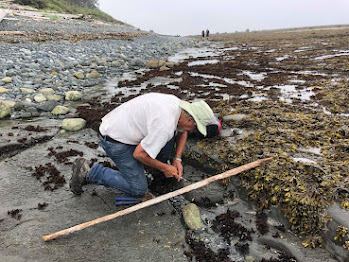
These particular specimens came from a single block only accessible on a falling tide. Timing, as ever, was everything—and the tide had other ideas. 

The excavation involved equal parts determination and seawater, leaving both collector and fossils thoroughly soaked. Still, there is something fitting about getting wet while freeing marine clams from their ancient shoreline, a small reminder that fieldwork often mirrors the environments we are trying to understand.

Sunday, 18 January 2026

A LINEAGE OF GIANTS: MEET THE IRISH ELK

Irish Elk, Megaloceros giganteus
Imagine cresting a windswept hillside in the fading amber of a Pleistocene sunset. 

The tall grass parts in slow ripples, stirred by a warm evening breeze—then by something far larger. An Irish Elk steps into view, a towering ghost from deep time, its silhouette edged with gold.

This magnificent deer—Megaloceros giganteus—was not, in fact, strictly Irish, nor truly an elk. 

It was a giant among cervids, a member of a lineage that roamed from Ireland to Siberia across vast Ice Age steppes. But Ireland’s bogs preserved their remains so exquisitely that the name stuck, and so did the awe.

Irish Elk fossils appear in abundance in the peatlands of Ireland, the loess plains of Eastern Europe, and far into Central Asia. Their lineage traces back to the genus Megaloceros, a group of large deer that emerged around two million years ago. 

What made M. giganteus the superstar of its clan? Two words: monumental antlers.

Irish Elk, Muséum National d'Histoire Naturelle, Paris
Spanning up to 3.7 metres (twelve feet) from tip to tip, the antlers were not simply oversized decoration—they were evolutionary billboards, broadcasting strength, health, and genetic prowess. They also had a hand in their fossil fame. 

When these massive antlers were unearthed centuries ago, early naturalists were convinced they belonged to mythical beasts or antediluvian monsters. 

The truth turned out to be even better: a deer so grand it nearly defied imagination.

Despite their size and majesty, Irish Elk were true deer, closely related to fallow deer and part of an ancient and diverse cervid family. Their bodies were robust, their legs strong and built for open ground, where visibility mattered and where their spectacular antlers could be displayed in their full glory.

But evolution is a dance with the environment, and as the Pleistocene climate fluctuated, the lush grasslands they depended on began to shrink. Their decline wasn’t sudden but drawn out, a slow waltz toward extinction.

The last of these giants fell only a short time ago. We do not know the exact date but the fossils share their stories as more and more are found. The youngest known fossils come from Siberia and date to about 7,700 years ago—well after most Ice Age megafauna had disappeared. 

Irish Elk, Natural History Museum London
By then, humans were spreading across Eurasia, climates were shifting, and dense forests were overtaking open plains. 

A giant deer with enormous antlers was increasingly out of place in a world thick with trees and rife with hunters.

Climate change, habitat loss, and possibly selective hunting all nudged the Irish Elk toward its final chapter. 

They are one of these species that have been talked about as contenders for using DNA to bring them back. 

Today the Irish Elk lives on in museum halls, in bog-darkened bones, and in our imaginations—a giant stepping through grass, pausing on a Pleistocene hillside as if it might turn its head toward us at any moment. There are several Irish Elk in collections and on display at museums around the world where you can view them at your leisure. 

A particularly impressive specimen is on view at the Muséum National d'Histoire Naturelle, Paris. The museum is a personal favourite of mine and worthy of a visit for its rich history and marvelous fossils, including the Irish Elk you see in the photo above. There are also wonderful examples in the British Museum in London, also worthy of a visit. 

The sheer grandeur of their size is sure to impress you! These beauties are a reminder that the world once held creatures both familiar and impossibly grand.

Illustration Credit: The lead image above was created by the supremely talented Daniel Eskridge, Paleo Illustrator from Atlanta, Georgia, USA. I share it here with permission as I have licensed the use of many of his images over the years, including this one. 

To enjoy his works (and purchase them!) to adorn your walls, visit his website at www.danieleskridge.com


Saturday, 17 January 2026

A TRILOBITE'S LAST MEAL REVEALED

Orygmaspis (Parabolinoides) contracta with gut structure
This specimen lovely chocolate brown trilobite specimen is Orygmaspis (Parabolinoides) contracta — one of the most exciting trilobites to come out of the McKay Group in the East Kootenay Region of British Columbia, Canada.

And what is most exciting about this specimen is that there is clear preservation of some of the gut structures preserving this trilobite's last meal.

Documentation of non- or weakly biomineralizing animals that lived during the Furongian is essential for a comprehensive understanding of the diversification of metazoans during the early Palaeozoic. 

Biomineralization, biologically controlled mineralization, occurs when crystal morphology, growth, composition, and location is completely controlled by the cellular processes of a specific organism. Examples include the shells of invertebrates, such as molluscs and brachiopods. The soft bits of those same animals tend to rot or be scavenged long before mineralization or fossilization can occur — hence, we find less of them.

So, not surprisingly, the fossil record of soft-bodied metazoans is particularly scarce for this critical time interval. To date, the fossils we do have are relatively rare and scattered at a dozen or so localities worldwide. 

Location and stratigraphy of the Fossil Locality
This is one of the reasons that the soft gut structures from this Orygmaspis contracta trilobite are particularly exciting. 

This specimen was found in Upper Cambrian exposures in the Clay Creek section at the top of the left fork of the ravine below Tanglefoot Mountain, 20 km northeast of Fort Steele. 

It was the keen eyes of Chris Jenkins who noticed the interesting structures worthy of exploration.

Lerosey-Aubril along with colleagues, Patterson, Gibb and Chatterton, published a great study on this trilobite in Gondwana Research, February 2017. 

Their work looked at this new occurrence of exceptional preservation in Furongian (Jiangshanian) strata of the McKay Group near Cranbrook, British Columbia, Canada. Their study followed up on the work of Chatterton et al. studying trilobites with phosphatised guts in this same 10-m-thick interval. 

Lerosey-Aubril et al.'s paper looked at two stratigraphically higher horizons with soft-tissue preservation. One yielded a ctenophore and an aglaspidid arthropod, the other a trilobite with a phosphatised gut belonging to a different species than the previously described specimens. 

Undetermined ctenophore
The ctenophore represents the first Furongian record of the phylum and the first reported occurrence of Burgess Shale-type preservation in the upper Cambrian of Laurentia. 

The aglaspidid belongs to a new species of Glypharthrus, and is atypical in having twelve trunk tergites and an anteriorly narrow ‘tailspine’. These features suggest that the tailspine of aglaspidids evolved from the fusion of a twelfth trunk segment with the telson. 

They also confirm the vicissicaudatan affinities of these extinct arthropods. Compositional analyses suggest that aglaspidid cuticle was essentially organic with a thin biomineralised (apatite) outer layer. 

Macro imagery of the trilobite reveals previously unknown gut features — medial fusion of digestive glands — possibly related to enhanced capabilities for digestion, storage, or the assimilation of food. 

These new fossils show that conditions conducive to soft-tissue preservation repeatedly developed in the outer shelf environment represented by the Furongian strata near Cranbrook. Future exploration of the c. 600-m-thick, mudstone-dominated upper part of the section is ongoing by Chris New, Chris Jenkins and Don Askey. There work and collaboration will likely result in more continued discoveries of exceptional fossils.

Glypharthrus magnoculus sp.
The specimen you see here was expertly prepped by Don Askew of Cranbrook, British Columbia. It now resides in collections at the Royal BC Museum.

Photo One: Orygmaspis (Parabolinoides) contracta (Trilobita) from the Jiangshanian (Furongian) part of the McKay Group, Clay Creek section, near Cranbrook, British Columbia, Canada. A–D, specimen RBCM.EH2016.031.0001.001, complete dorsal exoskeleton preserved dorsum-down and showing ventral features, such as the in situ hypostome and phosphatised digestive structures. 

A, general view, specimen immersed under ethanol; B, detail of the digestive structures, specimen under ethanol; C, same as B, electron micrograph; D, same as B and C, interpretative drawing with digestive tract in blue-purple and digestive glands in pink. 

Abbreviations: Dc 1 and 2, cephalic digestive glands 1 and 2, Dt1 and 5, thoracic digestive glands 1 and 5, hyp, hypostome, L2, glabellar lobe 2, LO, occipital lobe, T1 and 5, thoracic segments 1 and 5. Scale bars represent 2 mm (A) and 1 mm (B–D). For interpretation of the references to the colours in this figure legend, you'll want to read the full article in the link below. 

Photo Two:  Undetermined ctenophore from the Jiangshanian (Furongian) part of the McKay Group, Clay Creek section, near Cranbrook, British Columbia, Canada. A, B, specimen UA 14333, flattened body fragment with oral-aboral axis oriented parallel to bedding; specimen photographed immersed under dilute ethanol with presumed oral region facing to the bottom. A, general view. B, detailed view showing comb rows and ctene. Scale bars represent 1 cm (A) and 5 mm (B). (For interpretation of the references to colour in this figure legend, the reader is referred to the web version of this article.)  

Photo Three: Glypharthrus magnoculus sp. nov. from the Jiangshanian (Furongian) part of the McKay Group, Clay Creek section, near Cranbrook, British Columbia, Canada. A–H, holotype, UA 14332, almost complete dorsal exoskeleton; photographs (A–C) and electron micrographs (D, backscattered; E–H, secondary) of the specimen in dorsal view with anterior facing to the top. A, B, general view in normal (A) and inverted (B) colours; C, D, detail of posterior trunk region, showing T12 and its contacts with T11 and the spiniform telson (arrows); the core of the fossil is made of a clay mineral and was initially entirely covered by an apatitic thin layer (white areas on D); E, left eye; F, right posterolateral glabellar lobe; G, rounded tubercles on right posterior border of cephalon; H, triangular tubercles pointing backwards (bottom right corner) on trunk axial region. Scale bars represent 5 mm (A, B), 1 mm (C, D), 500 μm (E, F), and 100 μm (G, H).

Link to the paper: https://www.researchgate.net/publication/309549546_Exceptionally-preserved_late_Cambrian_fossils_from_the_McKay_Group_British_Columbia_Canada_and_the_evolution_of_tagmosis_in_aglaspidid_arthropods

Friday, 16 January 2026

AMMONITES IN CONCRETION

At first glance they look like ordinary stones—rounded, weathered, unassuming. 

But then you notice the delicious hints: a spiral ghosting through the surface, a faint rib, a seam where time is ready to split wide open—it's magic!

Ammonites, long extinct cephalopods, so often appear this way because, shortly after death, their shells became chemical centres of attraction on the seafloor. 

As the soft tissues decayed, they altered the surrounding sediment, triggering minerals—often calcium carbonate or iron-rich compounds—to precipitate rapidly around the shell. 

This early cementation formed a concretion, a protective stone cocoon that hardened long before the surrounding mud was compressed into rock. While everything around it flattened, cracked, and distorted under pressure, the ammonite inside remained cradled and whole.

What you see here is a gathering of these time capsules: a cluster of ammonites preserved in their concretions, each one split or weathered just enough to reveal the coiled story within. 

Some are neatly halved, spirals laid bare like fingerprints from ages past; others are only just beginning to show themselves, teasing their presence beneath rough stone skins. 

Together, they tell a familiar fossil-hunter’s tale—of patience, sharp eyes, and the quiet thrill of knowing that a simple rock can hold an ancient ocean inside.

Thursday, 15 January 2026

BRYCE CANYON NATIONAL PARK

Bryce Canyon National Park 
From above, Bryce Canyon National Park looks less like a place on Earth and more like a revealed secret—an ancient city carved by time, its towers glowing ember-orange against the cool blues and violets of shadow. 

The hoodoos rise by the tens of thousands, slender spires and stacked pinnacles arranged in amphitheatres that curve like giant bowls scooped from the Paunsaugunt Plateau. 

Seen from the air, their geometry becomes mesmerizing: rows and clusters, corridors and cul-de-sacs, each column subtly different, each telling its own long, patient story.

These improbable forms are the product of relentless, delicate violence. Bryce’s hoodoos are sculpted from the Claron Formation, a sequence of sedimentary rocks laid down between about 50 and 35 million years ago, when this high plateau was a landscape of lakes, rivers, and floodplains. 

Limestone, mudstone, and siltstone stacked layer upon layer, later lifted skyward as the Colorado Plateau rose. What followed was not a single dramatic event, but millions of freeze–thaw cycles—water seeping into cracks by day, freezing and expanding by night—paired with rain, snowmelt, and gravity’s quiet insistence.

From the aerial view, colour tells the chemistry of the stone. Iron oxides stain the hoodoos in fiery reds and oranges, while manganese adds purples and lavenders that deepen as shadows lengthen. 

Pale caps of harder rock perch atop many spires like improbable hats, protecting the softer stone beneath and allowing the columns to stand long enough to earn their fantastical shapes. Where caps fall, hoodoos soon follow—proof that this is a living, changing landscape, not a static monument.

Light is the final sculptor. At sunrise, the amphitheatres ignite, each spire rimmed with gold. By midday, the forms sharpen and flatten, revealing the intricate fluting etched into their sides. 

As evening approaches, shadows flood the basins, pooling between the towers until the hoodoos seem to float, suspended in a sea of dusk. From above, those shadows trace the park’s hidden architecture, mapping the slow choreography of erosion.

Wednesday, 14 January 2026

THE GREAT FINGER FIASCO: HERMANN AND CUVIER

Johann Hermann's Pterodactylus, 1800
In the grand annals of science, few discoveries have flapped into history with quite as much confusion as the poor Pterodactylus

It began, as many great scientific mix-ups do, with an enthusiastic man, a misplaced fossil, and a few patriotic misunderstandings.

Back in March of 1800, Johann Hermann — a German-slash-French scientist (depending on which invading army was in town that week) — became convinced that an odd fossil described by Collini held the key to something extraordinary. 

Without actually seeing the specimen, Hermann took a bold scientific leap: he announced that the animal used its absurdly long fourth finger to support a wing membrane.

This, in hindsight, was rather brilliant — and also rather lucky. Hermann mailed off a letter (and a sketch) to the great French naturalist Georges Cuvier, suggesting that the fossil might even have been war booty, plundered by Napoleon’s scientifically curious troops and whisked off to Paris. After all, France’s armies were busily collecting everything from priceless art to interesting bones at the time — science’s version of a clearance sale.

In his letter, Hermann proposed that this mysterious creature was a mammal. Yes, a furry, bat-like, possibly adorable flying thing. He imagined it with soft pelage, wings stretching elegantly from its fourth finger to its ankle, and a fashionable membrane connecting neck to wrist — the very portrait of prehistoric glamour.

Cuvier, intrigued and perhaps unwilling to admit he didn’t have the fossil in question, agreed with the wing idea but drew the line at “fuzzy mammal.” In December 1800, he published a short note, adopting Hermann’s winged interpretation but firmly declaring, “Non, monsieur — this thing is definitely a reptile.

Meanwhile, the fossil — allegedly stolen, possibly missing, and definitely not in Paris — turned up safe and sound in Munich. It had been spared confiscation thanks to one Baron von Moll, who managed to secure an “exemption from French enthusiasm.”

By 1809, Cuvier revisited the mystery, producing a longer and more confident description. He called it Petro-Dactyle (a typo he later fixed to Ptéro-Dactyle), thereby cementing both his reputation and a new spelling headache for future generations of palaeontologists.

He also took the time to dunk on his colleague Johann Friedrich Blumenbach, who had suggested the fossil might belong to a shore bird. Cuvier’s rebuttal was deliciously dry:

“It is not possible to doubt that the long finger served to support a membrane that, by lengthening the anterior extremity of this animal, formed a good wing.”

And with that, science had its first flying reptile — a creature born not only from stone but from a glorious mix of imagination, rivalry, and a few well-placed postal misunderstandings.

If you ever feel unqualified to make a bold scientific claim, remember Johann Hermann — who identified a whole new order of life without even seeing the fossil. Sometimes, a good guess (and a long finger) can take you far as history shows here in the The Great Finger Fiasco: How Johann Hermann and Georges Cuvier Accidentally Invented the Flying Reptile. 

Tuesday, 13 January 2026

GRACEFUL BEAUTY: ALBERTONIA

This graceful beauty, with its elegant, sail-like fins and armour of shimmering scales, is Albertonia sp.—an Early Triassic ganoid fish whose lineage once glided through the recovering seas of what is now western Canada. 

Belonging to a group of extinct bony fishes remarkable for their enamel-coated, diamond-shaped ganoid scales, Albertonia offers a rare and intimate glimpse into life shortly after the end-Permian mass extinction, when marine ecosystems were slowly rebuilding themselves.

Specimens of Albertonia have been discovered in two significant rock units: the Sulphur Mountain Formation near Wapiti Lake in British Columbia and the Lower Triassic Montney Formation of Alberta. 

These formations preserve an extraordinary record of Early Triassic marine life—ecosystems shaped by fluctuating sea levels, restricted basins, and the evolutionary experimentation that followed Earth’s most profound biological crisis.

The Sulphur Mountain Formation, in particular, is renowned for its exceptional vertebrate fossils, including fishes, marine reptiles, and rare soft-tissue impressions. Within these beds, Albertonia appears as a slender, streamlined fish with surprisingly tall dorsal and anal fins—features that give it that distinctive “sail-like” profile. These fins likely played a role in stabilization and maneuverability, allowing it to dart through the shallow carbonate-siliciclastic seas with speed and precision.

Ganoid fishes like Albertonia are characterized by their thick, lustrous scales, locking together like a natural chainmail. These scales not only protected the fish from predators but also provide paleontologists with exquisite fossil details. In well-preserved specimens, you can sometimes see the subtle ornamentation—ridges, pits, and patterns—etched into the ganoine coating, each reflecting the biology of a world more than 245 million years removed from our own.

Though Albertonia is long extinct, its fossils help illuminate the pivotal evolutionary story that unfolded during the Early Triassic. As life clawed its way back from catastrophe, species like this little ganoid fish were among the pioneers of new ecological niches, their presence a quiet testament to resilience in ancient oceans.

Monday, 12 January 2026

MEET ACICULOLENUS ASKEWI AFTER DON ASKEW

A new species of trilobite from the upper Cambrian McKay Group was introduced in March of 2020: Aciculolenus askewi.  The species is named after Don Askew, an avid fossil hunter of Upper Cambrian trilobites from Cranbrook, British Columbia, Canada, who has discovered several new species in the East Kootenays. 

Don was the first to brave the treacherous cliffs up the waterfall on the west side of the ravine below Tanglefoot mountain. 

That climb led to his discovery of one of the most prolific outcrops in the McKay Group with some of the most exciting and best-preserved trilobites from the region. 

The faunal set are similar to those found at site one — the first of the trilobite outcrops discovered by Chris New and Chris Jenkins — an hours hike through grizzly bear country.

The specimens found at the top of the waterfall are not in calcite wafers, as they are elsewhere, instead, these exceptionally preserved specimens are found complete with a thin coating of matrix that must be prepped down to the shell beneath. 

Askew was also the skill preparator called upon to tease out the details from the 'gut trilobite' recently published from the region. In all, this area has produced more than 60 new species — many found by Askew — and not all of which have been published yet.

I caught up with Don last summer on a trip to the region. He was gracious in openly sharing his knowledge and a complete mountain goat in the field — a good man that Askew. Not surprising then that Brian Chatterton would do him the honour of naming this new species after him. 

Chatterton, Professor Emeritus at the University of Alberta, is an invertebrate palaeontologist with a great sense of humour and a particular love of trilobites. Even so, his published works span a myriad of groups including conodonts, machaeridians, sponges, brachiopods, corals, cephalopods, bivalves, trace fossils — to fishes, birds and dinosaurs.

Brian Chatterton has been visiting the East Kootenay region for many years. In 1998, he and Rolf Ludvigsen published the pivotal work on the "calcified trilobites" we had begun hearing about in the late 1990s. There were tales of blue trilobites in calcified layers guarded by a resident Grizzly. This was years before logging roads had reached this pocket of paleontological goodness and hiking in — bear or no bear — was a daunting task. 

In his Cambridge University Press paper, Chatterton describes the well-preserved fauna of largely articulated trilobites from three new localities in the Bull River Valley. 

The Dream Team at Fossil Site #15, East Kootenays
All the trilobites from these localities are from the lower or middle part of the Wujiajiania lyndasmithae Subzone of the Elvinia Zone, lower Jiangshanian, in the McKay Group. 

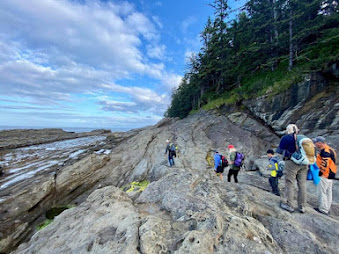
Access is via a bumpy ride on logging roads 20 km northeast of Fort Steele that includes fording a river (for those blessed with large tires and a high wheelbase) and culminating in a hot, dusty hike and death-defying traipse down 35-degree slopes to the localities.

Two new species were proposed with types from these localities: Aciculolenus askewi and Cliffia nicoleae. The trilobite (and agnostid) fauna from these localities includes at least 20 species that read like a who's who of East Kootenay palaeontology: 

Aciculolenus askewi n. sp., Agnostotes orientalis (Kobayashi, 1935), Cernuolimbus ludvigseni Chatterton and Gibb, 2016, Cliffia nicoleae n. sp., Elvinia roemeri (Shumard, 1861), Grandagnostus? species 1 of Chatterton and Gibb, 2016, Eugonocare? phillipi Chatterton and Gibb, 2016, Eugonocare? sp. A, Housia vacuna (Walcott, 1912), Irvingella convexa (Kobayashi, 1935), Irvingella flohri Resser, 1942, Irvingella species B Chatterton and Gibb, 2016, Olenaspella chrisnewi Chatterton and Gibb, 2016, Proceratopyge canadensis (Chatterton and Ludvigsen, 1998), Proceratopyge rectispinata (Troedsson, 1937), Pseudagnostus cf. P. josepha (Hall, 1863), Pseudagnostus securiger (Lake, 1906), Pseudeugonocare bispinatum (Kobayashi, 1962), Pterocephalia sp., and Wujiajiania lyndasmithae Chatterton and Gibb, 2016.

Chris New, pleased as punch atop Upper Cambrian Exposures
It has been the collaborative efforts of Guy Santucci, Chris New, Chris Jenkins, Don Askew and Stacey Gibb that has helped open up the region — including finding and identifying many new species or firsts including Pseudagnostus securiger, a widespread early Jiangshanian species not been previously recorded from southeastern British Columbia. 

Other interesting invertebrate fossils from these localities include brachiopods, rare trace fossils, a complete silica sponge (Hyalospongea), and a dendroid graptolite. 

The species we find here are more diverse than those from other localities of the same age in the region — and enjoy much better preservation. 

The birth of new species into our scientific nomenclature takes time and the gathering of enough material to justify a new species name. Fortunately for Labiostria gibbae, specimens had been found of this rare species had been documented from the upper part of Wujiajiania lyndasmithae Subzone — slightly younger in age. 

Combined with an earlier discovery, they provided adequate type material to propose the new species — Labiostria gibbae — a species that honours Stacey Gibb and which will likely prove useful for biostratigraphy.

Reference: https://www.cambridge.org/core/journals/journal-of-paleontology/article/abs/midfurongian-trilobites-and-agnostids-from-the-wujiajiania-lyndasmithae-subzone-of-the-elvinia-zone-mckay-group-southeastern-british-columbia-canada/E8DBC8BD635863E840715122C05BB14A#

Photo One: Aciculolenus askewi by Chris Jenkins, Cranbrook, British Columbia
Photo Two: L to R: Dan Bowden, Guy Santucci, Chris Jenkins, Dan Askew and John Fam at Fossil Site #15, East Kootenay Region, British Columbia, Canada, August 2, 2020.
Photo Three: Chris New pleased as punch atop of Upper Cambrian Exposures in the East Kootenay Region, British Columbia, Canada

Saturday, 10 January 2026

SCIENCE AND SHENANIGANS: PACIFIC NORTHWEST BEARS

If you spend enough time in the forests of the Pacific Northwest, you start to understand why Ursus americanus and Ursus arctos horribilis have held court in our stories for millennia. 

They’re curious, clever, deeply maternal, occasionally cranky, and—much like your favourite mischievous cousin at a family reunion—always two steps from either a cuddle or a wrestling match.

Bear play looks adorable from afar—soft paws swatting, roly-poly wrestling, mock charges that end in huffing and zoomies—but make no mistake: this is serious business. 

For young black bears and grizzlies, play is the curriculum of survival. 

Wrestling hones strength and coordination. Chase games build stamina and teach cubs how to gauge speed and momentum in uneven terrain. 

You will recognize the mouthing and pawing in bears if you have ever watched dogs playfighting. It has that same feel but with a much bigger smack.

Even the classic “stand up and paw slap” routine teaches social cues, dominance negotiation, and how to not get clobbered during adult interactions later on.

Adults play too—usually in the brief windows when food is plentiful, neighbours are tolerable, and no one is watching who might judge them for being goofballs. 

Scientists have documented adult grizzlies sliding down snow patches on their backs and black bears engaging in curious-object play, poking logs, tossing salmon carcasses, and investigating anything that smells even remotely like an adventure.

Interactions between bears are a delicate dance of dominance, tolerance, and opportunism. 

Adult females tend to keep to themselves, especially when raising cubs, while males roam wider territories and have higher tolerance thresholds—at least until another big male wanders too close to a prime feeding spot.

During salmon runs, though, everything changes. Suddenly you’ll see a whole cast of characters congregate along rivers: veteran matriarchs who fish with surgical precision, rowdy subadults who think stealth means “splash loudly until the fish give up,” and massive males who square off in dominance displays worthy of a heavyweight title card. 

Most conflicts end with bluff charges, raised hackles, and guttural woofs, but real fights—when they happen—are fast, violent, and rarely forgotten by the loser.

Maternal Tenderness: Mamma & Cub
If bears had résumés, every mother would list “24/7 security expert,” “milk bar proprietress,” and “professor of applied survival sciences.”

Cubs are born in winter dens, impossibly tiny—around 300 to 500 grams—and almost hairless, little squeaking marshmallows who depend entirely on their mother’s warmth and fat reserves. 

Over the next 18–30 months, a mother teaches her young everything: which plants won’t poison you, how to find grubs by the sound of a rotting stump, how to climb fast when trouble arrives, and how to read the moods of other bears.

Her tenderness is matched only by her ferocity. A mother bear defending cubs is one of the most formidable forces in the forest, and even adult males—three times her size—think twice before pushing their luck.

Where Bears Appear in the Fossil Record

Bears are relative newcomers in deep time, with the earliest ursoids emerging in the late Eocene, around 38 million years ago. True bears (family Ursidae) appear in the early Miocene, and by the Pliocene and Pleistocene, the Pacific Northwest was home to a rich lineup of ursids, including the mighty Arctodus simus, the short-faced bear—one of the largest terrestrial carnivores to ever live in North America.

Black bears show up in the fossil record around the mid-Pleistocene, with fossils found in caves and river-cut sediments from British Columbia down to California. Grizzly bears, originally a Eurasian species, crossed the Bering land bridge during the Pleistocene, leaving their remains in Late Pleistocene deposits from Alaska through western Canada.

Today, the Pacific Northwest remains a stronghold for bears:

Black bears are the most numerous, with an estimated 25,000–35,000 individuals in British Columbia alone, and healthy populations throughout Washington, Oregon, and Idaho. They’re adaptable, omnivorous, and just clever enough to defeat most human attempts at bear-proofing.

Grizzly bears (coastal and interior populations) are far fewer. British Columbia hosts an estimated 13,000–15,000, though distribution varies greatly. 

Coastal bears—brown bear or spirit bears—are more numerous and enjoy a salmon-rich in diet, while interior grizzlies face more fragmented landscapes and higher conflict pressures. In the Lower 48, grizzlies number around 2,000, clustered mainly in the Greater Yellowstone and Northern Continental Divide ecosystems.

Conservation efforts, especially Indigenous-led stewardship across the Great Bear Rainforest and interior plateaus, continue to shape recovery, resilience, and coexistence strategies for both species.

Friday, 9 January 2026

CHENGJIANG: A WINDOW INTO THE DAWN OF LIFE

Maotianshania cylindrica
High in the mist-softened hills of Yunnan Province, China, a band of ochre and grey shale holds one of Earth’s most extraordinary archives—a fossil record so exquisitely preserved that even the gills, antennae, and gut tracts of animals from over 518 million years ago remain visible. 

This is Chengjiang, a UNESCO World Heritage Site and one of the most important early Cambrian Lagerstätten on the planet.

Here, at the base of the Maotianshan shales, paleontologists have uncovered a moment of evolutionary ignition: the rapid diversification of complex animal life known as the Cambrian Explosion.

The Geological Setting: Maotianshan Shales

The Chengjiang fossil exposures occur within the Yu’anshan Member of the Heilinpu Formation, deposited in a quiet, offshore marine environment during the Cambrian. 

These fine-grained mudstones accumulated under low-oxygen conditions—an essential factor that inhibited decay and burrowing, allowing soft tissues to fossilize with remarkable fidelity.

Key geological features:

  • Age: ~518–520 Ma
  • Depositional environment: Distal, oxygen-poor shelf
  • Sediment: Fine mudstones and shales ideal for preserving delicate structures
  • Taphonomy: Rapid burial via storm-induced sediment flows, sealing organisms beneath thin laminae

It is this marriage of rapid burial and anoxic bottom waters that created one of Earth’s rare Konservat-Lagerstätten, preserving not only bones and shells but organs, musculature, and entire life assemblages.

Lead Image Credit: Maotianshania cylindrica. Phylum: Nematomorpha Early Cambrian Chengjiang, Maotianshan Shales, SNP. Released under the GNU Free Documentation License

Thursday, 8 January 2026

TASEKO LAKES FOSSIL ADVENTURE

John Fam, VIPS & VanPS
Over three field seasons, thirty-five taxa from the Mineralense and Rursicostatum zones were studied and three new species were discovered and named: Fergusonites hendersonae, Eolytoceras constrictum and Pseudaetomoceras victoriense

The late Hettangian ammonite fauna from Taseko Lakes is diverse and relatively well‐preserved.

This material is very important as it greatly expands our understanding of the fauna and ranges of ammonites currently included in the North American regional ammonite zonation. 

Castle Peak, Taseko Lakes
If you look closely, you can see a wee jet ranger helicopter hovering over a very chilly Castle Peak in the southern Chilcotin Range, British Columbia, Canada. 

Castle Peak served as our glorious landmark and loadstone of basalt that marked the spot on our Jurassic/Triassic palaeo adventures collecting about 7000 ft. 

The peak itself reaches higher still to around 8,176 ft. 

The site is special, both in terms of its geology and paleontological bounty, but also for the time spent there with friends. 

I had the very great honour of having the newly named, Fergusonites hendersonae, a new species of nektonic carnivorous ammonite, named after me by palaeontologist Louse Longridge from the University of British Columbia. 

Fergusonites hendersonae (Longridge, 2008)
I had met Louise as an undergrad and was pleased as punch to hear that she would be continuing the research by Dr. Howard Tipper, the authority on this area of the Chilcotins and Haida Gwaii — which he dearly loved. 

"Tip" was a renowned Jurassic ammonite palaeontologist and an excellent regional mapper who mapped large areas of the Cordillera. 

He made significant contributions to Jurassic paleobiogeography and taxonomy in collaboration with Dr. Paul Smith, Head of Earth and Ocean Science at the University of British Columbia. 

Tip’s regional mapping within BC has withstood the test of time and for many areas became the region's base maps for future studies. The scope of Tip’s understanding of Cordilleran geology and Jurassic palaeontology will likely never be matched. He passed away on April 21, 2005. His humour, knowledge and leadership will be sorely missed. 

Badouxia ammonites
Before he left us, he shared that knowledge with many of whom would help to secure his legacy for future generations. 

We did several trips over the years up to the Taseko Lake area of the Rockies joined by many wonderful researchers from the Vancouver Island Palaeontological Society and Vancouver Paleontological Society, as well as the University of British Columbia. 

Both Dan Bowen and John Fam were instrumental in planning those expeditions and each of them benefited greatly from the knowledge of Dr. Howard Tipper. 

If not for Tipper's early work in the region, our shared understanding and much of what was accomplished in his last years and after his passing would not have been possible. 

Over the course of three field seasons, we endured elevation sickness, rain, snow, grizzly bears and very chilly nights  — we were sleeping right next to a glacier at one point — but were rewarded by the enthusiastic crew, and helicopter rides — which really cut down the hiking time — excellent specimens including three new species of ammonites, along with a high-spired gastropod and lobster claw that have yet to be written up. 

This area of the world is wonderful to hike and explore — a stunningly beautiful country. We were also blessed with access as the area is closed to all fossil collecting except with a permit.