Showing posts with label fossil. Show all posts

Wednesday, 1 April 2026

CAMBRIAN CROWN: THE SPINED ELEGANCE OF ORGMASPIS

This calcified beauty is Orygmaspis (Parabolinoides) spinula (Westrop, 1986), an Upper Cambrian trilobite recovered from the McKay Group near Tanglefoot Mountain in the Kootenay Rockies—one of those quietly extraordinary places where deep time peeks through in layered stone.

A member of the Order Asaphida, Orygmaspis carries the elegant geometry so characteristic of its kin: an inverted, egg-shaped outline, a broad and gently arched cephalon, modestly sized eyes, and a thorax adorned with a procession of finely spined segments. 

Twelve thoracic segments form its articulated middle, each bearing spines that lengthen progressively toward the ninth before tapering again—a subtle rhythm of form that feels almost architectural in its precision.

Asaphids themselves tell a longer, more dramatic story. Emerging in the Cambrian and flourishing into the Ordovician, they diversified into six superfamilies—Anomocaroidea, Asaphoidea, Cyclopygoidea, Dikelocephaloidea, Remopleuridoidea and Trinucleioidea—each experimenting with variations on a successful marine design. 

Some evolved remarkable visual adaptations, including the long-stalked eyes of Asaphus kowalewskii, which would have lifted their gaze above the seafloor haze, scanning for both prey and peril in the shifting Ordovician seas.

By the close of the Ordovician, a great extinction event swept away five of these six lineages, claiming roughly 60% of marine life. Only the resilient Trinucleioidea persisted, carrying the torch a little further into the Silurian before another global upheaval drew the final curtain on the Asaphida (Fortey & Chatterton, 1988).

Returning to our Kootenay traveller, the cephalon of Orygmaspis is parabolic, less than twice as wide as long, with a well-defined glabella—the central raised axis—measuring roughly three-quarters as wide as it is long. Its surface is modestly convex, tapering forward with faint lateral furrows and a clearly expressed occipital ring marking the posterior boundary. The preglabellar field is short, about a quarter the length of the glabella, giving the headshield a compact, purposeful look.

The eyes, small but well placed, sit between the anterior and mid-length of the glabella, positioned about one-third of the way out from the axis. Surrounding cheeks—the fixigenae and librigenae—are relatively flat, divided by facial sutures that trace an elegant path: diverging just before the eyes, running parallel near the border, then sweeping inward again in a graceful convergence. 

Behind the eyes, these sutures arc outward and back at roughly 45°, cutting the posterior margin in classic opisthoparian fashion.

At the rear, a diminutive pygidium—just a third the width of the cephalon—completes the form. It is twice as wide as long, with a central axis composed of up to four rings that nearly reach the margin. The pleural fields are gently expressed, their segmentation subdued, while the posterior edge carries three to four pairs of spines, each diminishing toward the rear like the final notes of a fading refrain.

Altogether, Orygmaspis spinula is a study in balance—armoured, yes, but refined. A small, spined voyager from Cambrian seas, preserved in stone and beautifully calcified yet still whispering of movement, adaptation, and survival in a world more than half a billion years removed from our own.

The fingers you see holding this specimen are those of the deeply awesome Chris Jenkins. If you're reading this, Chris, I owe you a visit!

Tuesday, 31 March 2026

SQUAKING BY THE SEA: SEAGULLS: T'SIK'WI

A gull cries in protest at not getting his share of a meal

Many of us have the good fortune to live near the sea. It is one of the places I seek out to reset my energy and soak up the atmosphere.

I love the feeling of the wind on my face as I take my best-loved path down towards the water —the sand and shells under my feet.

In those moments, the foreshore is alive with the harsh, laughing cries of seagulls, their calls slicing through the steady hush of the tide. 

Wings flash white in the sunlight as they wheel and dive, squabbling over scraps, webbed feet slapping wet sand with a slap-slap before they lift again. The air is thick with the briny tang of seaweed and salt, mingled with the faint sourness of rotting kelp and shells cracked open by the tide. 

Each wave leaves behind a shining film on the rocks, and the gulls pick and probe at it with sharp yellow beaks, clattering and clucking in between their shrieks. The smell of the ocean mixes with the dry, feathery musk of the birds themselves, grounding the scene in a rhythm as ancient as the sea. This is the domain of the seagulls who call these shores home. 

Gulls, or colloquially seagulls, are seabirds of the family Laridae in the suborder Lari. The Laridae are known from not-yet-published fossil evidence from the Early Oligocene — 30–33 million years ago. 

Three gull-like species were described by Alphonse Milne-Edwards from the early Miocene of Saint-Gérand-le-Puy, France. 

Another fossil gull from the Middle to Late Miocene of Cherry County, Nebraska, USA, has been placed in the prehistoric genus Gaviota

These fossil gulls, along with undescribed Early Oligocene fossils are all tentatively assigned to the modern genus Larus. Among those of them that have been confirmed as gulls, Milne-Edwards' "Larus" elegans and "L." totanoides from the Late Oligocene/Early Miocene of southeast France have since been separated in Laricola.

Gulls are most closely related to the terns in the family Sternidae and only distantly related to auks, skimmers and distantly to waders. 

A historical name for gulls is mews, which is cognate with the German möwe, Danish måge, Swedish mås, Dutch meeuw, Norwegian måke/måse and French mouette. We still see mews blended into the lexicon of some regional dialects.

In the Kwak̓wala language of the Kwakwaka'wakw, speakers of Kwak'wala, of the Pacific Northwest, gulls are known as t̕sik̕wi. Most folk refer to gulls from any number of species as seagulls. This name is a local custom and does not exist in the scientific literature for their official naming. Even so, it is highly probable that it was the name you learned for them growing up.

If you have been to a coastal area nearly everywhere on the planet, you have likely encountered gulls. They are the elegantly plumed but rather noisy bunch on any beach. You will recognize them both by their size and colouring. 

Gulls are typically medium to large birds, usually grey or white, often with black markings on the head or wings. 

They typically have harsh shrill cries and long, yellow, curved bills. Their webbed feet are perfect for navigating the uneven landscape of the foreshore when they take most of their meals. 

Most gulls are ground-nesting carnivores that take live food or scavenge opportunistically, particularly the Larus species. 

Food often includes crab, clams (which they pick up, fly high and drop to crack open), fish and small birds. Gulls have unhinging jaws which allow them to consume large prey which they do with gusto. 

Their preference is to generally live along the bountiful coastal regions where they can find food with relative ease. Some prefer to live more inland and all rarely venture far out to sea, except for the kittiwakes. 

The larger species take up to four years to attain full adult plumage, but two years is typical for small gulls. Large white-headed gulls are typically long-lived birds, with a maximum age of 49 years recorded for the herring gull.

Gulls nest in large, densely packed, noisy colonies. They lay two or three speckled eggs in nests composed of vegetation. The young are precocial, born with dark mottled down and mobile upon hatching. Gulls are resourceful, inquisitive, and intelligent, the larger species in particular, demonstrating complex methods of communication and a highly developed social structure. Many gull colonies display mobbing behaviour, attacking and harassing predators and other intruders. 

Certain species have exhibited tool-use behaviour, such as the herring gull, using pieces of bread as bait with which to catch goldfish. Many species of gulls have learned to coexist successfully with humans and have thrived in human habitats. 

Others rely on kleptoparasitism to get their food. Gulls have been observed preying on live whales, landing on the whale as it surfaces to peck out pieces of flesh. They are keen, clever and always hungry. Near where I live along the west coast, I hear their calls and they always bring a smile to my day.

Saturday, 28 March 2026

ANCIENT AMBUSH KILLER: MACHAIRODUS

Saber-Toothed Cat, Machairodus aphanistus

The skull before you lies cradled in a glass case at the Museo Nacional de Ciencias Naturales in Madrid, Spain.

This museum—one of my most cherished anywhere in the world—houses extraordinary treasures in the heart of a city I adore.

Even at a distance, the skull seems almost unreal, its sweeping lines and lethal symmetry more like an artifact of myth than a product of natural selection.

The upper canines of Machairodus aphanistus sweep downward in a deadly curve, their bases thick and reinforced, their blades tapering into elegant, murderous crescents. 

Grooves along their sides lighten the teeth without robbing them of strength, an evolutionary compromise that allowed this ancient predator to deliver precise, slicing blows. The zygomatic arches flare outward with commanding confidence, a testament to the enormous jaw muscles that once powered the bite. Even the wide nasal opening hints at a creature ruled by scent, finely attuned to the faintest whispers of prey on a warm Miocene wind.

This skull—stripped of flesh, muscle, and fur—remains a vivid record of a predator that walked the Earth between nine and five million years ago, long before the saber-toothed icons of the Americas made their mark. 

Machairodus aphanistus lived in the shifting landscapes of the Late Miocene, a time when Europe and western Asia were giving way to broader grasslands and open woodlands. Forest canopies receded. Herds grew larger and faster. Predators had to adapt or perish, and Machairodus responded with a design both beautiful and deadly.

Unlike its more famous descendant, Smilodon, with its compact body and powerful forelimbs, Machairodus moved with the grace of a panther. It was long-limbed and athletic, relying on bursts of speed and stealth to launch an ambush. But its skull tells a more nuanced story—one of tension between speed and specialization. The tall sagittal crest reveals a powerhouse of jaw muscles anchoring deep into the bone. 

The forward-facing orbits provide the stereoscopic vision needed to track prey with extraordinary accuracy. The sheer length of the canines required a jaw capable of opening nearly ninety degrees, a gape far wider than that of any modern cat, allowing those great blades to descend unobstructed into vulnerable regions like the throat.

You will be relieved to hear that our ancestors did not hunt and were not hunted by this impressive predator. Machairodus aphanistus went extinct in the Late Miocene, roughly 5–9 million years ago.

The earliest members of the human lineage (Homo) did not appear until about 2.8 million years ago, in the early Pleistocene. Even our more ancient relatives—Australopithecines—don’t show up until 4–4.5 million years ago.

So there is a gap of millions of years between the disappearance of Machairodus and the emergence of anything that could be considered human or human-adjacent. For that, I think we can all breath a collective sigh.

Still, others were alive on the plains that were their hunting grounds. Both hunters and prey.

In the warm, open savannas of the Miocene, the world of Machairodus was alive with competition. Packs of early hyenas honed their bone-crushing skills. Bear-dogs patrolled the river valleys. Other machairodonts—kin, rivals, or both—shared the same hunting grounds. 

The herbivores were just as diverse: early horses galloped across the plains in tight herds, while rhinocerotids, camelids, and horned antelope moved in cautious groups, ever aware of shadows that shifted in the tall grass. To survive in this dynamic ecosystem, Machairodus embraced an ambush strategy refined over countless generations. It would stalk silently, using shrubs, boulders, or dim forest edges for cover. 

When the distance closed, it lunged with explosive force, using its muscular forelimbs to pin or destabilize its prey before delivering a swift, slicing bite to the neck. Death came quickly—less by crushing force and more by catastrophic blood loss.

There is a sense, looking at its skull that you are seeing an evolutionary idea mid-transformation.

Machairodus aphanistus stands at a pivotal moment in the story of the saber-toothed cats. Its body remained agile and panther-like, but its cranial features were edging ever closer to the extreme adaptations that would define later giants like Homotherium and Smilodon. It represents a crucial chapter in which nature was experimenting, refining, and pushing the boundaries of what a predator could become.

The skull contains all of this history within its bone: the open grasslands, the pounding hooves of prey, the quiet tension of ambush, and the relentless arms race that shaped predator and prey alike. 

In its silence, it speaks. It tells of a world both familiar and wild, a world where the line between beauty and brutality was sharpened to a sabre’s edge.

Tuesday, 24 March 2026

A MASSIVE AMMONITE THE SIZE OF A CAR: THE FERNIE AMMONITE

Titanites occidentalis, Fernie Ammonite
The Fernie ammonite—long known as Titanites occidentalis—has officially been given a new name: Corbinites occidentalis, a fresh genus erected after a meticulous re-evaluation of this Western Giant’s anatomy and lineage. 

What hasn’t changed is its breathtaking presence high on Coal Mountain near Fernie, British Columbia, where this colossal cephalopod has rested for roughly 150 million years.

This extraordinary fossil belongs to the family Lithacoceratinae within the ataxioceratid ammonites. 

Once thought to be a close cousin of the great Titanites of Dorset, new material—including two additional large specimens discovered at nearby mine sites—reveals ribbing patterns and growth-stage features that simply didn’t match Titanites

With these multiple overlapping growth stages finally available, paleontologists had the missing pieces needed to correct its identity.

So, Titanites occidentalis no more—meet Corbinites occidentalis, a giant ammonite likely endemic to the relatively isolated early Alberta foreland basin of the Late Jurassic.

Fernie, British Columbia, Canada
The Fernie ammonite is a carnivorous cephalopod from the latest Jurassic (Tithonian). 

The spectacular individual on Coal Mountain measures 1.4 metres across—about the size of a small car tire and absolutely staggering when you first see it hugged by the mountainside.

The first specimen, discovered in 1947 by a British Columbia Geophysical Society mapping team at Coal Creek, was initially mistaken for a “fossil truck tire.” 

Fair enough—if a truck tire had been forged in the Jurassic and left on a mountaintop. It was later described by GSC paleontologist Hans Frebold, who gave it the name Titanites occidentalis, inspired by the giant ammonites of Dorset. 

For decades, that name stuck, even though paleontologists suspected the attribution was shaky due to poor preservation of the holotype’s inner whorls.

Recent discoveries of two additional specimens at Teck Resources’ Coal Mountain Mine finally provided the evidence needed for reassessment. 

With intact inner whorls and beautifully preserved ribbing—including hallmark variocostate and ataxioceratoid ornamentation—researchers Terence P. Poulton and colleagues demonstrated that the Canadian ammonite does not belong in Titanites

Their work (Volumina Jurassica, 2023) established Corbinites as a brand-new genus, with C. occidentalis as its type and only known species.

These specimens—one exceeding a metre, another about 64 cm—confirm a resident ammonite population within this basin. And as of now, these giants are unique to Western Canada.
A Journey Up Coal Mountain

If you’re keen to meet Corbinites occidentalis in the wild, you’ll want to head to Fernie, in southeastern British Columbia, close to the Alberta border. 

As your feet move up the hillside, you can imagine this land 10,000 years ago, rising above great glaciers. Where footfalls trace the steps of those that came before you. This land has been home to the Yaq̓it ʔa·knuqⱡi ‘it First Nation and Ktunaxa or Kukin ʔamakis First Nations whose oral history have them living here since time immemorial. Like them, take only what you need and no more than the land offers — packing out anything that you packed in. 

Active logging in the area since 2021 means that older directions are now unreliable—trailheads have shifted, and a fair bit of bushwhacking is the price of admission. Though clear-cutting reshaped the slope, loggers at CanWel showed admirable restraint: they worked around the fossil, leaving it untouched.

The non-profit Wildsight has been championing efforts to protect the ammonite, hoping to establish an educational trail with provincial support and possible inclusion under the Heritage Conservation Act—where the fossil’s stewardship could be formally recognised.

HIKING TO THE FERNIE AMMONITE (IMPORTANT UPDATE: TRAIL CLOSED)

From the town of Fernie, British Columbia, you would traditionally head east along Coal Creek Road toward Coal Creek, with the ammonite site sitting 3.81 km from the road’s base as the crow flies. 

The classic approach begins at a roadside exposure of dark grey to black Cretaceous plant fossils, followed by a creek crossing and a steep, bushwhacking ascent.

However — and this is critical — the trail is currently closed.

The entire access route runs straight through an area of active logging, and conditions on the slope are extremely dangerous. Between heavy equipment, unstable cutblocks, and altered drainages, this is not a safe place for hikers right now.

Conservation groups, including Wildsight, continue working toward restoring safe public access and formalising the site under the Heritage Conservation Act. 

Their long-term goal is to reopen the trail as a designated educational hike with proper signage, but at present, the route should not be attempted. 

Once logging operations move out of the area and safety assessments are done, the possibility of reopening may return.

For now, the safest—and strongly recommended—way to view this iconic fossil is via the excellent cast on display at the Courtenay & District Museum on Vancouver Island, or at the Visitor Information Centre in Sparwood.

Photo credit: Vince Mo Media. Vince is an awesome photographer and drone operator based in Fernie, BC. Check out his work (and hire him!) by visiting his website at vmmedia.ca.

Monday, 23 March 2026

THIRST OF THE LOST CONTINENT: DODOS AT THE RIVER OF MAURITIA

Dodo Birds by Daniel Eskridge
Two dodo birds—one warm brown like sun-baked coconut husk, the other a pale, ghostly white with hints of grey—stand beak-deep in the shallows of a river that winds like a silver serpent through the tropical jungles of ancient Mauritia. 

Their feet sink into cool silt and damp leaves at a rivers edge. 

The air is thick with the scent of pandanus and damp leaves, heavy enough to taste. Dragonflies hover in lazy spirals above them, iridescent flashes stitching over the water’s skin.

The brown male dodo dips first, scooping up a beakful of water with a gentle glop, while the white female one pauses, head cocked, watching a fruit drift downstream. For a moment the world feels impossibly quiet—no humans, no predators bold enough to trouble them, only the chorus of the forest and the steady rhythm of their drinking.

These feathered oddities belong to an island that itself has slipped through time. Mauritia, a now-lost microcontinent once nestled between Madagascar and India, cracked and sank more than 60 million years ago as the Indian Ocean spread and rearranged the world’s geography. All that remains today are a few scattered fragments—Mauritius, Réunion, Rodrigues—emerald crumbs left atop an ancient submerged landmass.

Dodo Birds by Daniel Eskridge
It is on one of these volcanic islands, long after Mauritia’s foundering, that the dodo evolved into its peculiar glory. 

Descended from flighted pigeons that likely swept in on storm winds from Southeast Asia, the dodo abandoned the sky entirely. 

With no natural predators and an island full of fruits, nuts, and fallen seeds, wings became more decorative than practical. Their legs grew stout. Their bodies rounded. 

Their beaks curved into the iconic hooked silhouette now etched into the imagination of every natural historian.

The brown dodo nudges the white one aside, perhaps a sign of affection, perhaps mild irritation—dodos, after all, were social birds, not the clumsy caricatures drawn centuries later. 

They waddled in flocks, nested on the ground, and lived comfortably beneath the canopy of ebony forests. Their feathers, described by early visitors as soft and hair-like, varied from gray-brown to white depending on age, sex, and perhaps even seasonal cycles.

But their peace was fragile, vulnerable to change they could not see coming.

When humans finally set foot on Mauritius in the late 1500s, they brought ships that carried pigs, rats, goats, and monkeys, all eager for eggs, seedlings, and anything edible. 

Forests were cut, nests trampled, and the trusting dodos, unaccustomed to fear, walked directly into the hands of sailors who considered them a convenient, if not particularly tasty, meal. Within roughly a century, they were gone.

But in this imagined moment—two birds drinking from a clear jungle river on an island born from a drowned continent—they live again. 

The sun breaks through a gap in the canopy, scattering gold across their backs. The white dodo lifts its head, droplets falling like tiny jewels, and lets out a soft, throaty grunt.

Here, in the cool breath of Mauritia’s shadowed past, the dodos are a symbol of loss—curious, gentle, utterly at home.

And for a heartbeat, we remember them.

Illustration Credit: This image was created by the supremely talented Daniel Eskridge, Paleo Illustrator from Atlanta, Georgia, USA. I share it here with permission as I have licensed the use of many of his images over the years, including this one. 

To enjoy his works (and purchase them!) to adorn your walls, visit his website at www.danieleskridge.com

Sunday, 22 March 2026

SHAGGY TITANS OF THE GRASSLANDS: BISON

Bison move across the prairie like living storms, vast and steady, with the weight of centuries in their stride. 

Their dark eyes hold a quiet, unwavering depth—as if they’ve looked into the heart of time itself and carry its secrets in silence. Look into the eyes of this fellow and tell me you do not see his deep intelligence as he gives the camera a knowing look.

Shaggy fur ripples in the wind, rich and earthy, brushed by sun and shadow, a cloak woven from wilderness. When they breathe, clouds rise in the cold air, soft and ephemeral, like whispered promises that vanish but leave warmth behind.

There is something profoundly romantic in their presence: strength wrapped in gentleness, endurance softened by grace.  To watch them is to feel the wild itself lean closer, reminding us of a love as vast as the horizon, as eternal as the ground beneath our feet.

When we think of bison today, images of great herds roaming the North American plains come to mind—dark, shaggy shapes against sweeping prairies. But the story of bison goes back far deeper in time. 

These massive grazers are part of a lineage that stretches millions of years into the past, their fossil record preserving the tale of their rise, spread, and survival.

Bison belong to the genus Bison, within the cattle family (Bovidae). Their story begins in Eurasia during the late Pliocene, around 2.6 million years ago, when the first true bison evolved from earlier wild cattle (Bos-like ancestors). 

Fossils suggest they descended from large bovids that roamed open grasslands of Eurasia as forests retreated and cooler, drier climates expanded.

The earliest known species, Bison priscus, or the Steppe Bison, was a giant compared to modern bison, sporting long horns that could span over six feet tip to tip. These animals thrived across Europe, Asia, and eventually crossed into North America via the Bering Land Bridge during the Pleistocene Ice Age.

The fossil record of bison stretches back about 2 million years in Eurasia and at least 200,000 years in North America, where they became one of the most successful large herbivores of the Ice Age. Fossil evidence shows that at least seven different species of bison once lived in North America, including the iconic Bison latifrons with its massive horns, and Bison antiquus, which is considered the direct ancestor of the modern American bison (Bison bison).

Some of the richest fossil bison deposits come from Siberia and Eastern Europe – home to abundant Bison priscus fossils, often preserved in permafrost with soft tissues intact. They are also found in Alaska, USA and in Canada's Yukon region – where Ice Age bison fossils are found alongside mammoth, horse, and muskox remains.

The Great Plains of the United States and Canada are rich in Bison antiquus and later species, often in mass bone beds where entire herds perished. We also find their remains in California and the American Southwest at sites like the La Brea Tar Pits. La Brea preserves bison remains from the Late Pleistocene and their museum of the same name has a truly wonderful display of Pleistocene wolves. Definitely worthy of a trip!

One particularly famous fossil site is the Hudson-Meng Bison Kill Site in Nebraska, where remains of over 600 Bison antiquus dating to about 10,000 years ago provide a window into Ice Age hunting practices and herd behavior.

By the end of the Ice Age, many megafauna species disappeared, but bison endured. Bison antiquus gradually gave rise to the modern American bison (Bison bison), which still carries echoes of its Ice Age ancestors. Though smaller than their Pleistocene relatives, today’s bison remain the largest land mammals in North America.

Tuesday, 17 March 2026

BACK IN THE USSR: KEPPLERITES

This glorious chocolate block contains the creamy grey ammonite Kepplerites gowerianus (Sowerby 1827) with a few invertebrate friends, including two brachiopods: Ivanoviella sp., Zeilleria sp. and the deep brown gastropod Bathrotomaria sp

There is also a wee bit of petrified wood on the backside.

These beauties hail from Jurassic, Lower Callovian outcrops in the Quarry of Kursk Magnetic Anomaly (51.25361,37.66944), Kursk region, Russia. Diameter ammonite 70мм. 

In the mid-1980s, during the expansion and development of one of the quarries, an unusual geological formation was found. This area had been part of the seafloor around an ancient island surrounded by Jurassic Seas. 

The outcrops of this geological formation turned out to be very rich in marine fossil fauna. This ammonite block was found there years ago by the deeply awesome Emil Black. 

In more recent years, the site has been closed to fossil collecting and is in use solely for the processing and extraction of iron ore deposits. Kursk Oblast is one of Russia's major producers of iron ore. The area of the Kursk Magnetic Anomaly has one of the richest iron-ore deposits in the world. Rare Earth minerals and base metals also occur in commercial quantities in several locations. Refractory loam, mineral sands, and chalk are quarried and processed in the region. 

The Kursk Magnetic Anomaly Quarry is not far from the Sekmenevsk Formation or Sekmenevska Svita in Russian, a Cretaceous (Albian to Cenomanian) terrestrial geologic formation where Pterosaur fossils have been found in the sandstones. 


Monday, 16 March 2026

OIL IN WATER BEAUTY: FOSSILS OF FOLKSTONE

Sheer beauty — a beautiful Euhoplites ammonite from Folkstone, UK. I've been really enjoying looking at all oil-in-water colouring and chunkiness of these ammonites.

Euhoplites is an extinct ammonoid cephalopod from the Lower Cretaceous, characterized by strongly ribbed, more or less evolute, compressed to inflated shells with flat or concave ribs, typically with a deep narrow groove running down the middle.

In some, ribs seem to zigzag between umbilical tubercles and parallel ventrolateral clavi. In others, the ribs are flexious and curve forward from the umbilical shoulder and lap onto either side of the venter.

Its shell is covered in the lovely lumps and bumps we associate with the genus. The function of these adornments are unknown. I wonder if they gave them greater strength to go deeper into the ocean to hunt for food. 

They look to have been a source of hydrodynamic drag, likely preventing Euhoplites from swimming at speed. Studying them may give some insight into the lifestyle of this ancient marine predator. Euhoplites had shells ranging in size up to a 5-6cm. 

We find them in Lower Cretaceous, middle to upper Albian age strata. Euhoplites has been found in Middle and Upper Albian beds in France where it is associated respectively with Hoplites and Anahoplites, and Pleurohoplites, Puzosia, and Desmoceras; in the Middle Albian of Brazil with Anahoplites and Turrilites; and in the Cenomanian of Texas.

This species is the most common ammonite from the Folkstone Fossil Beds in southeastern England where a variety of species are found, including this 37mm beauty from the collections of José Juárez Ruiz.

Friday, 13 March 2026

QUENSTEDTOCERAS WITH PATHOLOGY

What you are seeing here is a protuberance extruding from the venter of Quenstedtoceras cf. leachi (Sowerby). It is a pathology in the shell from hosting immature bivalves that shared the seas with these Middle Jurassic, Upper Callovian, Lamberti zone fauna from the Volga River basin. 

The collecting site is the now inactive Dubki commercial clay quarry and brickyard near Saratov, Russia. 

The site has produced thousands of ammonite specimens. A good 1,100 of those ended up at the Black Hills Institute of Geological Research in Hill City, South Dakota. 

Roughly 1,000 of those are Quenstedtoceras (Lamberticeras) lamberti and the other 100 are a mix of other species found in the same zone. These included Eboraciceras, Peltoceras, Kosmoceras, Grossouvria, Proriceras, Cadoceras and Rursiceras

What is especially interesting is the volume of specimens — 167 Quenstedtoceras (Lamberticeras) lamberti and 89 other species in the Black Hills collection — with healed predation injuries. It seems Quenstedtoceras (Lamberticeras) lamberti are the most common specimens found here and so not surprisingly the most common species found injured. 

Of the 1,000, 655 of the Quenstedtoceras (Lamberticeras) lamberti displayed some sort of deformation or growth on the shell or had grown in a tilted manner. 

Again, some of the Q. lamberti had small depressions in the centre likely due to a healed bite and hosting infestations of the immature bivalve Placunopsis and some Ostrea

The bivalves thrived on their accommodating hosts and the ammonites carried on, growing their shells right up and over their bivalve guests. 

This relationship led to some weird and deformities of their shells. They grow in, around, up and over nearly every surface of the shell and seem to have lived out their lives there. It must have gotten a bit unworkable for the ammonites, their shells becoming warped and unevenly weighted. 

Over time, both the flourishing bivalves and the ammonite shells growing up and over them produced some of the most interesting pathology specimens I have ever seen.    

In the photo here from Emil Black, you can see some of the distorted shapes of Quenstedtoceras sp. 

Look closely and you see a trochospiral or flattened appearance on one side while they are rounded on the other. 

All of these beauties hail from the Dubki Quarry near Saratov, Russia. The ammonites were collected in marl or clay used in brick making. The clay particles suggest a calm, deep marine environment. 

One of the lovely features of the preservation here is the amount of pyrite filling and replacement. It looks like these ammonites were buried in an oxygen-deficient environment. 

The ammonites were likely living higher in the water column, well above the oxygen-poor bottom. An isotopic study would be interesting to prove this hypothesis. 

There's certainly enough of these ammonites that have been recovered to make that possible. It's estimated that over a thousand specimens have been recovered from the site but that number is likely much higher. But these are not complete specimens. We mostly find the phragmocones and partial body chambers. Given the numbers, this may be a site documenting a mass spawning death over several years or generations.

If you fancy a read on all things cephie, consider picking up a copy of Cephalopods Present and Past: New Insights and Fresh Perspectives edited by Neil Landman and Richard Davis. Figure 16.2 is from page 348 of that publication and shows the hosting predation quite well. 

Photos: Courtesy of the deeply awesome Emil Black. These are in his personal collection that I hope to see in person one day. 

It was his sharing of the top photo and the strange anomaly that had me explore more about the fossils from Dubki and the weird and wonderful hosting relationship between ammonites and bivalves. Thank you, my friend!

Thursday, 12 March 2026

ZENASPIS: DEVONIAN FISH MORTALITY PLATE

A Devonian fish mortality plate showing all lower shields of Zenaspis podolica (Lankester, 1869) and Stensiopelta pustulata (or Victoraspis longicornualis) from Lower Devonian deposits of Podolia, Ukraine.

Zenaspis is an extinct genus of jawless fish which existed during the early Devonian period. Due to it being jawless, Zenaspis was probably a bottom feeder.

The lovely 420 million-year-old plate you see here is from Podolia or Podilia, a historic region in Eastern Europe, located in the west-central and south-western parts of Ukraine, in northeastern Moldova. 

Podolia is the only region in Ukraine where Lower Devonian remains of ichthyofauna can be found near the surface.

For the past 150 years, vertebrate fossils have been found in more than 90 localities situated in outcrops along banks of the Dniester River and its northern tributaries, and in sandstone quarries. 

At present faunal list of Early Devonian agnathans and fishes from Podolia number 72 species, including 8 Thelodonti, 39 Heterostraci, 19 Osteostraci, 4 Placodermi, 1 Acanthodii, and 1 Holocephali (Voichyshyn 2001a, modified).

In Podolia, Lower Devonian redbeds strata (the Old Red Formation or Dniester Series) can be found up to 1800 m thick and range from Lochkovian to Eifelian in age (Narbutas 1984; Drygant 2000, 2003). 

In the lower part (Ustechko and Khmeleva members of the Dniester Series) they consist of multicoloured, mainly red, fine-grained cross-bedded massive quartz sandstones and siltstones with seams of argillites (Drygant 2000).

We see fossils beds of Zenaspis in the early Devonian of Western Europe. Both Zenaspis pagei and Zenaspis poweri can be found up to 25 centimetres long in Devonian outcrops of Scotland.

Reference: Voichyshyn, V. 2006. New osteostracans from the Lower Devonian terrigenous deposits of Podolia, Ukraine. Acta Palaeontologica Polonica 51 (1): 131–142. Photo care of Fossilero Fisherman.

Tuesday, 10 March 2026

BACK IN THE USSR: BEADANTICERAS OF THE NORTHERN CAUCASUS

This lovely oil in water coloured ammonite is the beauty Beudanticeras sp. from the Lower Cretaceous (Upper Aptian), Krasnodar region, Northern Caucasus, southern Russia. 

This area of the world has beautiful fossil specimens with their distinct colouring. The geology and paleontological history of the region are fascinating as is its more recent history. 

The territory of present Krasnodar Krai was inhabited as early as the Paleolithic, about 2 million years ago. It was inhabited by various tribes and peoples since ancient times. 

There were several Greek colonies on the Black Sea coast, which later became part of the Kingdom of the Bosporus. In 631, the Great Bulgaria state was founded in the Kuban. In the 8th-10th centuries, the territory was part of Khazaria.

In 965, the Kievan Prince Svyatoslav defeated the Khazar Khanate and this region came under the power of Kievan Rus, Tmutarakan principality was formed. At the end of the 11th century, in connection with the strengthening of the Polovtsy and claims of Byzantium, Tmutarakan principality came under the authority of the Byzantine emperors (until 1204).

In 1243-1438, this land was part of the Golden Horde. After its collapse, Kuban was divided between the Crimean Khanate, Circassia, and the Ottoman Empire, which dominated in the region. Russia began to challenge the protectorate over the territory during the Russian-Turkish wars.

In 1783, by decree of Catherine II, the right-bank Kuban and Taman Peninsula became part of the Russian Empire after the liquidation of the Crimean Khanate. 

In 1792-1793, Zaporozhye (Black Sea) Cossacks resettled here to protect new borders of the country along the Kuban River. 

During the military campaign to establish control over the North Caucasus (Caucasian War of 1763-1864), in the 1830s, the Ottoman Empire for forced out of the region and Russia gained access to the Black Sea coast.

Prior to the revolutionary events of 1917, most of the territory of present Krasnodar Krai was occupied by the Kuban region, founded in 1860. In 1900, the population of the region was about 2 million people. In 1913, it ranked 2nd by the gross harvest of grain, 1st place for the production of bread in the Russian Empire.

The Kuban was one of the centres of resistance after the Bolshevik revolution of 1917. In 1918-1920, there was a non-Bolshevik Kuban People’s Republic. In 1924, North-Caucasian krai was founded with the centre in Rostov-on-Don. In 1934, it was divided into Azov-Black Sea krai (Rostov-on-Don) and North Caucasus krai (Stavropol).

September 13, 1937, the Azov-Black Sea region was divided into the Rostov region and Krasnodar Krai that included Adygei autonomous oblast. During the Second World War, the region was captured by the Germans. After the battle for the Caucasus, it was liberated. There are about 1,500 monuments and memorials commemorating heroes of the war on the territory of Krasnodar Krai.

The lovely block you see here is in the collections of the awesome John Fam, Vice-Chair of the Vancouver Paleontological Society in British Columbia, Canada.

Friday, 6 March 2026

AVES: LIVING DINOSAURS

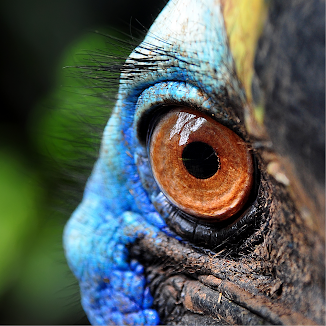
Cassowary, Casuariiformes
Wherever you are in the world, it is likely that you know your local birds. True, you may call them des Oiseaux, pássaros or uccelli — but you'll know their common names by heart.

You will also likely know their sounds. The tweets, chirps, hoots and caws of the species living in your backyard.

Birds come in all shapes and sizes and their brethren blanket the globe. It is amazing to think that they all sprang from the same lineage given the sheer variety. 

If you picture them, we have such a variety on the planet — parrots, finches, wee hummingbirds, long-legged waterbirds, waddling penguins and showy toucans. 

But whether they are a gull, hawk, cuckoo, hornbill, potoo or albatross, they are all cousins in the warm-blooded vertebrate class Aves. 

The defining features of the Aves are feathers, toothless beaked jaws, the laying of hard-shelled eggs, a high metabolic rate, a four-chambered heart, and a strong yet lightweight skeleton. The best features, their ability to dance, bounce and sing, are not listed, but it is how I see them in the world.

These modern dinosaurs live worldwide and range in size from the 5 cm (2 in) bee hummingbird to the 2.75 m (9 ft) ostrich. 

There are about ten thousand living species, more than half of which are passerine, or "perching" birds. Birds have wings whose development varies according to species; the only known groups without wings are the extinct moa and elephant birds.

Wings evolved from forelimbs giving birds the ability to fly
Wings, which evolved from forelimbs, gave birds the ability to fly, although further evolution has led to the loss of flight in some birds, including ratites, penguins, and diverse endemic island species. 

The digestive and respiratory systems of birds are also uniquely adapted for flight. Some bird species of aquatic environments, particularly seabirds and some waterbirds, have further evolved for swimming.

Wee Feathered Theropod Dinosaurs

We now know from fossil and biological evidence that birds are a specialized subgroup of theropod dinosaurs, and more specifically, they are members of Maniraptora, a group of theropods that includes dromaeosaurs and oviraptorids, amongst others. As palaeontologists discover more theropods closely related to birds, the previously clear distinction between non-birds and birds has become a bit muddy.

Recent discoveries in the Liaoning Province of northeast China, which include many small theropod feathered dinosaurs — and some excellent arty reproductions — contribute to this ambiguity. 

Still, other fossil specimens found here shed a light on the evolution of Aves. Confuciusornis sanctus, an Early Cretaceous bird from the Yixian and Jiufotang Formations of China is the oldest known bird to have a beak.

Like modern birds, Confuciusornis had a toothless beak, but close relatives of modern birds such as Hesperornis and Ichthyornis were toothed, telling us that the loss of teeth occurred convergently in Confuciusornis and living birds.

The consensus view in contemporary palaeontology is that the flying theropods, or avialans, are the closest relatives of the deinonychosaurs, which include dromaeosaurids and troodontids.

Together, these form a group called Paraves. Some basal members of this group, such as Microraptor, have features that may have enabled them to glide or fly. 

The most basal deinonychosaurs were wee little things. This raises the possibility that the ancestor of all paravians may have been arboreal, have been able to glide, or both. Unlike Archaeopteryx and the non-avialan feathered dinosaurs, who primarily ate meat, tummy contents from recent avialan studies suggest that the first avialans were omnivores. Even more intriguing...

Avialae, which translates to bird wings, are a clade of flying dinosaurs containing the only living dinosaurs, the birds. It is usually defined as all theropod dinosaurs more closely related to modern birds — Aves — than to deinonychosaurs, though alternative definitions are occasionally bantered back and forth.

The Earliest Avialan: Archaeopteryx lithographica

Archaeopteryx, bird-like dinosaur from the Late Jurassic
Archaeopteryx lithographica, from the late Jurassic Period Solnhofen Formation of Germany, is the earliest known avialan that may have had the capability of powered flight. 

However, several older avialans are known from the Late Jurassic Tiaojishan Formation of China, dating to about 160 million years ago.

The Late Jurassic Archaeopteryx is well-known as one of the first transitional fossils to be found, and it provided support for the theory of evolution in the late 19th century. 

Archaeopteryx was the first fossil to clearly display both traditional reptilian characteristics — teeth, clawed fingers, and a long, lizard-like tail—as well as wings with flight feathers similar to those of modern birds. It is not considered a direct ancestor of birds, though it is possibly closely related to the true ancestor.

Unlikely yet true, the closest living relatives of birds are the crocodilians. Birds are descendants of the primitive avialans — whose members include Archaeopteryx — which first appeared about 160 million years ago in China.

DNA evidence tells us that modern birds — Neornithes — evolved in the Middle to Late Cretaceous, and diversified dramatically around the time of the Cretaceous–Paleogene extinction event 66 mya, which killed off the pterosaurs and all non-avian dinosaurs.

In birds, the brain, especially the telencephalon, is remarkably developed, both in relative volume and complexity. Unlike most early‐branching sauropsids, the adults of birds and other archosaurs have a well‐ossified neurocranium. In contrast to most of their reptilian relatives, but similar to what we see in mammals, bird brains fit closely to the endocranial cavity so that major external features are reflected in the endocasts. What you see on the inside is what you see on the outside.

This makes birds an excellent group for palaeoneurological investigations. The first observation of the brain in a long‐extinct bird was made in the first quarter of the 19th century. However, it was not until the 2000s and the application of modern imaging technologies that avian palaeoneurology really took off.

Understanding how the mode of life is reflected in the external morphology of the brains of birds is but one of several future directions in which avian palaeoneurological research may extend.

Although the number of fossil specimens suitable for palaeoneurological explorations is considerably smaller in birds than in mammals and will very likely remain so, the coming years will certainly witness a momentous strengthening of this rapidly growing field of research at the overlap between ornithology, palaeontology, evolutionary biology and the neurosciences.

Reference: Cau, Andrea; Brougham, Tom; Naish, Darren (2015). "The phylogenetic affinities of the bizarre Late Cretaceous Romanian theropod Balaur bondoc (Dinosauria, Maniraptora): Dromaeosaurid or flightless bird?". PeerJ. 3: e1032. doi:10.7717/peerj.1032. PMC 4476167. PMID 26157616.

Reference: Ivanov, M., Hrdlickova, S. & Gregorova, R. (2001) The Complete Encyclopedia of Fossils. Rebo Publishers, Netherlands. p. 312

Wednesday, 4 March 2026

WHEN GORGON REIGNED SUPREME

Step back into the deep Paleozoic—an era that began some 540 million years ago with oceans bustling with trilobites, early fish, and soft-bodied wonders, while the continents themselves hosted little more than humble mats of mosses and fungi. Life’s great drama was still mostly underwater.

Fast-forward 240 million years, and the evolutionary landscape had transformed dramatically. 

Vertebrates had conquered the land, ecosystems had diversified, and Earth’s surface teemed with reptilian innovators, amphibians the size of crocodiles, and the early ancestors of mammals. Among these emerging terrestrial titans strode the Gorgonopsians, or “Gorgons”—ferocious sabre-toothed therapsids that dominated the Middle to Late Permian, from about 265 to 252 million years ago.

These were no sluggish proto-reptiles. Gorgons were highly specialized predators, boasting elongated canine teeth worthy of any future saber-toothed cat, powerful jaws, and sleek, muscular bodies built for pursuit. Their anatomy blended the primitive and the prophetic: reptile-like postures paired with early mammalian traits such as differentiated teeth and strong jaw musculature. 

Their clawed limbs, keen forward-facing eyes, and cutting-edge predatory adaptations placed them firmly at the top of the Permian food chain. In a world long before dinosaurs, they were the undisputed apex hunters.

My own fascination with these remarkable creatures was ignited by Gorgons, Peter Ward’s wonderfully wry and insightful dive into the ancient landscapes of South Africa. Ward’s vivid tales of fieldwork in the blistering, bone-dry vastness of the Karoo Basin—ancestral home of the Gorgons—captured both the hardships and the sheer exhilaration of unearthing deep time. 

His descriptions of sunburn and scientific revelations in that arid world made me laugh more than once. It is a highly enjoyable read.

The Great Karoo itself is a geological and paleontological marvel. This enormous, semi-arid expanse formed within a vast inland basin roughly 320 million years ago, at a time when the part of Gondwana destined to become Africa lay draped across the South Pole. 

Layer upon layer of sedimentary rock accumulated as glaciers advanced and retreated, rivers meandered, lakes dried, and ecosystems rose and fell. Today, those layers read like a grand evolutionary chronicle, preserving a world populated by beaked herbivores, hulking amphibians, and the charismatic, toothy Gorgonopsians.

This was a pivotal chapter in Earth’s history—just before the catastrophic Permian-Triassic extinction swept away nearly 90% of life. Yet in the twilight of the Permian, before that great dying, the Karoo thrived with innovation and ecological complexity. It was a world where the early steps toward warm-bloodedness were being taken, where synapsids (our own deep ancestors) were experimenting with new forms, and where the Gorgons reigned supreme.

Tuesday, 3 March 2026

FOSSIL BEES, FIRST NATION HISTORY

Welcome to the world of bees. This fuzzy yellow and black striped fellow is a bumblebee in the genus Bombus sp., family Apidae. 

We know him from our gardens where we see them busily lapping up nectar and pollen from flowers with their long hairy tongues.

My Norwegian cousins on my mother's side call them humle. Norway is a wonderful place to be something wild as the wild places have not been disturbed by our hands. 

Head out for a walk in the wild flowers and the sounds you will hear are the wind and the bees en masse amongst the flowers.   

There are an impressive thirty-five species of bumblebee species that call Norway hjem (home), and one, Bombus consobrinus, boasts the longest tongue that they use to feast solely on Monkshood, genus Aconitum, you may know by the name Wolf's-bane.

In the Kwak̓wala language of the Kwakwaka'wakw, speakers of Kwak'wala, and my family on my father's side in the Pacific Northwest, bumblebees are known as ha̱mdzalat̕si — though I wonder if this is actually the word for a honey bee, Apis mellifera, as ha̱mdzat̕si is the word for a beehive.

I have a special fondness for all bees and look for them both in the garden and in First Nation art.

Bumblebees' habit of rolling around in flowers gives us a sense that these industrious insects are also playful. In First Nation art they provide levity — comic relief along with their cousins the mosquitoes and wasps — as First Nation dancers wear masks made to mimic their round faces, big round eyes and pointy stingers. 

A bit of artistic license is taken with their forms as each mask may have up to six stingers. The dancers weave amongst the watchful audience and swoop down to playfully give many of the guests a good, albeit gentle, poke. 

Honey bees actually do a little dance when they get back to the nest with news of an exciting new place to forage — truly they do. Bumblebees do not do a wee bee dance when they come home pleased with themselves from a successful foraging mission, but they do rush around excitedly, running to and fro to share their excitement. They are social learners, so this behaviour can signal those heading out to join them as they return to the perfect patch of wildflowers. 

Bumblebees are quite passive and usually sting in defense of their nest or if they feel threatened. Female bumblebees can sting several times and live on afterwards — unlike honeybees who hold back on their single sting as its barbs hook in once used and their exit shears it off, marking their demise.

They are important buzz pollinators both for our food crops and our wildflowers. Their wings beat at 130 times or more per second, literally shaking the pollen off the flowers with their vibration. 

And they truly are busy bees, spending their days fully focused on their work. Bumblebees collect and carry pollen and nectar back to the nest which may be as much as 25% to 75% of their body weight. 

And they are courteous — as they harvest each flower, they mark them with a particular scent to help others in their group know that the nectar is gone. 

The food they bring back to the nest is eaten to keep the hive healthy but is not used to make honey as each new season's queen bees hibernate over the winter and emerge reinvigorated to seek a new hive each Spring. She will choose a new site, primarily underground depending on the bumblebee species, and then set to work building wax cells for each of her fertilized eggs. 

Bumblebees are quite hardy. The plentiful hairs on their bodies are coated in oils that provide them with natural waterproofing. They can also generate more heat than their smaller, slender honey bee cousins, so they remain productive workers in cooler weather.    

We see the first bumblebees arise in the fossil record 100 million years ago and diversify alongside the earliest flowering plants. 

Their evolution is an entangled dance with the pollen and varied array of flowers that colour our world. 

We have found many wonderful examples within the fossil record, including a rather famous Eocene fossil bee found by a dear friend and naturalist who has left this Earth, Rene Savenye.

His namesake, H. Savenyei, is a lovely fossil halictine bee from Early Eocene deposits near Quilchena, British Columbia — and the first bee body-fossil known from the Okanagan Highlands — and indeed from Canada. 

It is a fitting homage, as bees symbolize honesty, playfulness and willingness to serve the community in our local First Nation lore and around the world — something Rene did his whole life.

Monday, 2 March 2026

FOSSIL FISHAPODS FROM THE CANADIAN ARCTIC

Qikiqtania wakei, a fishapod & relative to tetrapods
You will likely recall the amazing tetrapodomorpha fossil found on Ellesmere Island in the Canadian Arctic in 2004, Tiktaalik roseae

These were advanced forms transitional between fish and the early labyrinthodonts playfully referred to as fishapods — half-fish, half-tetrapod in appearance and limb morphology. 

Up to that point, the relationship of limbed vertebrates (tetrapods) to lobe-finned fish (sarcopterygians) was well known, but the origin of significant tetrapod features remained obscure for the lack of fossils that document the sequence of evolutionary changes — until Tiktaalik

While Tiktaalik is technically a fish, this fellow is as far from fish-like as you can be and still be a card-carrying member of the group. 

Interestingly, while Neil Shubin and crew were combing the icy tundra for Tiktaalik, another group was trying their luck just a few kilometres away. 

A week before the eureka moment of Tiktaalik's discovery, Tom Stewart and Justin Lemberg unearthed material that we now know to be a relative of Tiktaalik's. 

Meet Qikiqtania wakei, a fishapod and close relative to our dear tetrapods — and cousin to Tiktaalik — who shares features in the flattened triangular skull, shoulders and elbows in the fin. 

Qikiqtania (pronounced kick-kick-TAN-ee-ya)
But, and here’s the amazing part, its upper arm bone (humerus) is specialised for open water swimming, not walking. 

The story gets wilder when we look at Qikiqtania’s position on the evolutionary tree— all the features for this type of swimming are newly evolved, not primitive. 

This means that Qikiqtania secondarily reentered open water habitats from ancestors that had already had some aspect of walking behaviour. 

And, this whole story was playing out 365 million years ago — the transition from water to land was going both ways in the Devonian.

Why is this exciting? You and I descend from those early tetrapods. We share the legacy of their water-to-land transition and the wee bony bits in their wrists and paddles that evolved to become our hands. I know, mindblowing!

Thomas Stewart and Justin Lemberg put in thousands of hours bringing Qikiqtania to life. 

The analysis consisted of a long path of wild events— from a haphazard moment when it was first spotted, a random collection of a block that ended up containing an articulated fin, to a serendipitous discovery three days before Covid lockdowns in March 2020.

Both teams acknowledge the profound debt owed to the individuals, organizations and indigenous communities where they had the privilege to work — Grise Fiord and Resolute Bay— Ellesmere Island in Nunavut, the largest and northernmost territory of Canada. 

Part of that debt is honoured in the name chosen for this new miraculous species. 

Aerial View of Ellesmere Island
The generic name, Qikiqtania (pronounced kick-kick-TAN-ee-ya), is derived from the Inuktitut words Qikiqtaaluk and Qikiqtani which are the traditional place name of the region where the fossil was discovered. 

The specific name, wakei, is in memory of the evolutionary biologist David Wake — colleague, mentor and friend. 

He was a professor of integrative biology and Director and curator of herpetology at the Museum of Vertebrate Zoology at the University of California, Berkeley who passed away in April 2021. 

Wake is known for his work on the biology and evolution of salamanders and vertebrate evolutionary biology. 

If you look at the photo on the left you can imagine visiting these fossil localities in Canada's far north.

Qikiqtania was found on Inuit land and belongs to the community. Thomas Stewart and his colleagues were able to conduct this research because of the generosity and support of individuals in the hamlets of Resolute Bay and Grise Fiord, the Iviq Hunters and Trappers of Grise Fiord, and the Department of Heritage and Culture, Nunavut.

To them, on behalf of the larger scientific community — Nakurmiik. Thank you! 

Here is the link to Tom Stewart's article in The Conversation & paper in Nature:

Image One: An artist’s vision of Qikiqtania enjoying its fully aquatic, free-swimming lifestyle. Alex Boersma, CC BY-ND

Image Two: A new elpistostegalian from the Late Devonian of the Canadian Arctic, T. A. Stewart, J. B. Lemberg, A. Daly, E. B. Daeschler, & N. H. Shubin.

A huge shout out to the deeply awesome Neil Shubin who shared that the paper had been published and offered his insights on what played out behind the scenes!

Sunday, 1 March 2026

CLALLAM BAY FOSSIL HEIST

Vertipecten fucanus (Dall, 1900)
Some water-worn samples of the bivalve Verdipectin fucanus, Clallam Formation, Clallam Bay, Washington State. Miocene.

It all began one gloriously sunny summer weekend when the planets aligned, the calendar gods smiled, and my mother and I were simultaneously free. 

Naturally, this meant one thing: we were going fossil hunting. I still get out collecting regularly but back in the day it was every weekend of the year with the bigger trips planned a few years in advance. 

Many of those were "reckie trips" scouting out new localities. The Olympic Peninsula was duly scouted and now it was back to the regular haunts. 

We rattled down through Port Angeles and set up camp at the Lyre River—mosquitoes, campfire smoke, and all the rustic feels

I took Mom on a grand tour of my favourite haunts: Majestic Beach (where we found some amazing fossil whale verts), a private-land site with ghost shrimp claws and urchins (with permission), and finally down to Clallam Bay and its dreamy beach exposures.

The Clallam Formation stretches along the north coast of the Olympic Peninsula, tracing the rugged edge of the Strait of Juan de Fuca from Slip Point at the eastern end of Clallam Bay to the headland of Pillar Point. Here, sandstone beds push the coastline outward in a subtle bulge, their weathered flanks dropping abruptly to a broad, wave-washed bedrock platform.

Pillar Point, Clallam Bay
Imagine standing on that foreshore: waves crash rhythmically against the stone, sending up bursts of cool spray. The surf’s deep, steady thunder pulses underfoot, while the sharper cries of gulls wheel above, carried on the wind. 

The air is rich with the briny scent of kelp and cold saltwater, a sharp, clean smell that settles in the back of the throat. Each retreating wave leaves a gleaming sheen on the rock, swirling with foam before sliding back to the sea.

Its cliffs and tidal benches have long drawn geologists—and especially paleontologists—who were captivated by the formation’s abundance of beautifully preserved fossils. 

William Healey Dall, a pioneering American geologist and paleontologist whose career spanned more than six decades. Dall loved to explore this rugged bit of coastline, studying and describing many of the mollusks now known from the Clallam Formation, adding his work to the early scientific tapestry woven from these windswept rocks.

He became one of the most prolific describers of North Pacific mollusks, naming hundreds of new species—from marine snails and clams to chitons—many of which still bear the names he assigned or honour him through genera such as Dallina and Dallididae. His work laid much of the early scientific foundation for the paleontology of the Pacific Coast.

Retracing his footsteps and to catch the tides just right, we collected in the early afternoon, blissfully unaware that we were setting up the perfect comedy plot twist. 

After a full day of hauling home the ocean’s Miocene leftovers, we decided to stash some of our fossil booty under a log—just until morning. A little paleo treasure cache. Perfectly safe. Nothing could possibly go wrong.

The next morning, we strolled back down the beach, coffees in hand, ready to retrieve our hoard like triumphant pirates.

Enter: A very enthusiastic gaggle of high school students.

There they were, marching toward us, each clutching a fossil like they’d just won the geological lottery. “Look what we found!” they cried, beaming, displaying our carefully cached treasures.

Yes. Our stash. Our carefully curated, lovingly positioned, absolutely-not-meant-for-public-consumption stash.

But honestly? They were so thrilled, we couldn’t help but be charmed. Besides, most of what I collect ends up in museums or teaching collections anyway. These young fossil hunters had simply… expedited the process. Efficient, really.

We gathered the Verdipectin together for one glamorous group photo, wished the kids well, and sent them off with pockets full of deep time. 

And our grand prize for the weekend? Some very fetching water-worn whale vertebrae—one of which was briefly enscripted into service as the crown of the King of the Lemon People, while my mother created elaborate beach sculptures to our shared amusement.. All in all, a perfect weekend.

Image: Vertipecten fucanus (Dall, 1900) is the most characteristic mollusk in assemblages from the Clallam Formation.

Saturday, 28 February 2026

BEARDED SEALS OF SVALBARD

The Bearded Seal
Bartrobbe — the bearded seal (Erignathus barbatus) — is a familiar and charismatic presence in the high Arctic waters surrounding Svalbard, Norway. 

Large, solitary, and unmistakable with its luxuriant moustache of stiff vibrissae, this species is superbly adapted to life along the drifting margins of sea ice. 

Adults can exceed 400 kilograms in mass, with thick blubber for insulation and broad, flexible foreflippers that allow them to haul out on ice floes or shallow shorelines with surprising ease.

Bearded seals are benthic specialists. Rather than chasing fast-moving prey in the water column, they forage along the seafloor, using their extraordinarily sensitive whiskers to detect vibrations and textures in soft sediments. 

Their diet reflects this lifestyle and includes clams, mussels, polychaete worms, crabs, shrimp, snails, and demersal fishes such as sculpins and flatfish. Powerful suction feeding allows them to extract prey directly from shells or sediment, leaving distinctive feeding pits on the seabed—clear signatures of their presence even when the seals themselves are out of sight.

The Bearded Seal
Unlike many other pinnipeds, bearded seals are not strongly colonial. Outside of the breeding season they are largely solitary, loosely distributed across ice-covered continental shelves. 

Mating occurs in spring, typically from April to May, when males establish underwater display areas rather than surface territories. 

Courtship is acoustic: males produce long, haunting trills and sweeping calls beneath the ice, audible over kilometres, to attract receptive females. 

After mating, implantation of the embryo is delayed, a reproductive strategy shared with many seals, resulting in a total gestation of roughly 11 months. 

Pups are born the following spring on drifting sea ice and are remarkably precocial, entering the water within hours and weaned after only two to three weeks—one of the shortest lactation periods among seals.

In the fossil record, bearded seals belong to the family Phocidae, a lineage that diversified during the Miocene as cold-adapted marine ecosystems expanded in the Northern Hemisphere. 

While Erignathus barbatus itself does not appear as a clearly identifiable species until the late Pleistocene, its ancestry is represented by fossil phocids from Miocene and Pliocene deposits across the North Atlantic and Arctic margins. 

Fragmentary remains—skulls, mandibles, and limb bones—document the emergence of large, bottom-feeding seals adapted to shallow continental shelves, particularly in regions influenced by cooling climates and seasonal ice. 

Pleistocene deposits in northern Europe, Siberia, Alaska, and Arctic Canada contain remains attributable to Erignathus, telling us that bearded seals expanded their range alongside advancing ice sheets during glacial cycles.

Today, Bartrobbe and its kin remain tightly bound to Arctic sea ice, making them sensitive indicators of environmental change. Their long evolutionary history, traced through shifting climates and frozen seas, underscores just how finely tuned they are to the rhythms of ice, sound, and sediment in the polar oceans—a living echo of the Arctic’s deep past.