![]() |
| A gull cries in protest at not getting his share of a meal |
Tuesday, 31 March 2026
SEAGULLS: T'SIK'WI
Saturday, 28 March 2026
ANCIENT AMBUSH KILLER: MACHAIRODUS
![]() |
| Saber-Toothed Cat, Machairodus aphanistus |
The skull before you lies cradled in a glass case at the Museo Nacional de Ciencias Naturales in Madrid, Spain.
This museum—one of my most cherished anywhere in the world—houses extraordinary treasures in the heart of a city I adore.
Even at a distance, the skull seems almost unreal, its sweeping lines and lethal symmetry more like an artifact of myth than a product of natural selection.
The upper canines of Machairodus aphanistus sweep downward in a deadly curve, their bases thick and reinforced, their blades tapering into elegant, murderous crescents.
Grooves along their sides lighten the teeth without robbing them of strength, an evolutionary compromise that allowed this ancient predator to deliver precise, slicing blows. The zygomatic arches flare outward with commanding confidence, a testament to the enormous jaw muscles that once powered the bite. Even the wide nasal opening hints at a creature ruled by scent, finely attuned to the faintest whispers of prey on a warm Miocene wind.
This skull—stripped of flesh, muscle, and fur—remains a vivid record of a predator that walked the Earth between nine and five million years ago, long before the saber-toothed icons of the Americas made their mark.
Machairodus aphanistus lived in the shifting landscapes of the Late Miocene, a time when Europe and western Asia were giving way to broader grasslands and open woodlands. Forest canopies receded. Herds grew larger and faster. Predators had to adapt or perish, and Machairodus responded with a design both beautiful and deadly.
Unlike its more famous descendant, Smilodon, with its compact body and powerful forelimbs, Machairodus moved with the grace of a panther. It was long-limbed and athletic, relying on bursts of speed and stealth to launch an ambush. But its skull tells a more nuanced story—one of tension between speed and specialization. The tall sagittal crest reveals a powerhouse of jaw muscles anchoring deep into the bone.
The forward-facing orbits provide the stereoscopic vision needed to track prey with extraordinary accuracy. The sheer length of the canines required a jaw capable of opening nearly ninety degrees, a gape far wider than that of any modern cat, allowing those great blades to descend unobstructed into vulnerable regions like the throat.
You will be relieved to hear that our ancestors did not hunt and were not hunted by this impressive predator. Machairodus aphanistus went extinct in the Late Miocene, roughly 5–9 million years ago.
The earliest members of the human lineage (Homo) did not appear until about 2.8 million years ago, in the early Pleistocene. Even our more ancient relatives—Australopithecines—don’t show up until 4–4.5 million years ago.
So there is a gap of millions of years between the disappearance of Machairodus and the emergence of anything that could be considered human or human-adjacent. For that, I think we can all breath a collective sigh.
Still, others were alive on the plains that were their hunting grounds. Both hunters and prey.
In the warm, open savannas of the Miocene, the world of Machairodus was alive with competition. Packs of early hyenas honed their bone-crushing skills. Bear-dogs patrolled the river valleys. Other machairodonts—kin, rivals, or both—shared the same hunting grounds.
The herbivores were just as diverse: early horses galloped across the plains in tight herds, while rhinocerotids, camelids, and horned antelope moved in cautious groups, ever aware of shadows that shifted in the tall grass. To survive in this dynamic ecosystem, Machairodus embraced an ambush strategy refined over countless generations. It would stalk silently, using shrubs, boulders, or dim forest edges for cover.
When the distance closed, it lunged with explosive force, using its muscular forelimbs to pin or destabilize its prey before delivering a swift, slicing bite to the neck. Death came quickly—less by crushing force and more by catastrophic blood loss.
There is a sense, looking at its skull that you are seeing an evolutionary idea mid-transformation.
Machairodus aphanistus stands at a pivotal moment in the story of the saber-toothed cats. Its body remained agile and panther-like, but its cranial features were edging ever closer to the extreme adaptations that would define later giants like Homotherium and Smilodon. It represents a crucial chapter in which nature was experimenting, refining, and pushing the boundaries of what a predator could become.
The skull contains all of this history within its bone: the open grasslands, the pounding hooves of prey, the quiet tension of ambush, and the relentless arms race that shaped predator and prey alike.
In its silence, it speaks. It tells of a world both familiar and wild, a world where the line between beauty and brutality was sharpened to a sabre’s edge.
Tuesday, 24 March 2026
A MASSIVE AMMONITE THE SIZE OF A CAR: THE FERNIE AMMONITE
![]() |
| Titanites occidentalis, Fernie Ammonite |
![]() |
| Fernie, British Columbia, Canada |
Monday, 23 March 2026
THIRST OF THE LOST CONTINENT: DODOS AT THE RIVER OF MAURITIA
![]() |
| Dodo Birds by Daniel Eskridge |
The brown male dodo dips first, scooping up a beakful of water with a gentle glop, while the white female one pauses, head cocked, watching a fruit drift downstream. For a moment the world feels impossibly quiet—no humans, no predators bold enough to trouble them, only the chorus of the forest and the steady rhythm of their drinking.
These feathered oddities belong to an island that itself has slipped through time. Mauritia, a now-lost microcontinent once nestled between Madagascar and India, cracked and sank more than 60 million years ago as the Indian Ocean spread and rearranged the world’s geography. All that remains today are a few scattered fragments—Mauritius, Réunion, Rodrigues—emerald crumbs left atop an ancient submerged landmass.
![]() |
| Dodo Birds by Daniel Eskridge |
The brown dodo nudges the white one aside, perhaps a sign of affection, perhaps mild irritation—dodos, after all, were social birds, not the clumsy caricatures drawn centuries later.
But their peace was fragile, vulnerable to change they could not see coming.
When humans finally set foot on Mauritius in the late 1500s, they brought ships that carried pigs, rats, goats, and monkeys, all eager for eggs, seedlings, and anything edible.
But in this imagined moment—two birds drinking from a clear jungle river on an island born from a drowned continent—they live again.
Here, in the cool breath of Mauritia’s shadowed past, the dodos are a symbol of loss—curious, gentle, utterly at home.
And for a heartbeat, we remember them.
Sunday, 22 March 2026
SHAGGY TITANS OF THE GRASSLANDS: BISON
Bison move across the prairie like living storms, vast and steady, with the weight of centuries in their stride.
Their dark eyes hold a quiet, unwavering depth—as if they’ve looked into the heart of time itself and carry its secrets in silence. Look into the eyes of this fellow and tell me you do not see his deep intelligence as he gives the camera a knowing look.
Shaggy fur ripples in the wind, rich and earthy, brushed by sun and shadow, a cloak woven from wilderness. When they breathe, clouds rise in the cold air, soft and ephemeral, like whispered promises that vanish but leave warmth behind.
There is something profoundly romantic in their presence: strength wrapped in gentleness, endurance softened by grace. To watch them is to feel the wild itself lean closer, reminding us of a love as vast as the horizon, as eternal as the ground beneath our feet.
When we think of bison today, images of great herds roaming the North American plains come to mind—dark, shaggy shapes against sweeping prairies. But the story of bison goes back far deeper in time.
These massive grazers are part of a lineage that stretches millions of years into the past, their fossil record preserving the tale of their rise, spread, and survival.
Bison belong to the genus Bison, within the cattle family (Bovidae). Their story begins in Eurasia during the late Pliocene, around 2.6 million years ago, when the first true bison evolved from earlier wild cattle (Bos-like ancestors).
Fossils suggest they descended from large bovids that roamed open grasslands of Eurasia as forests retreated and cooler, drier climates expanded.
The earliest known species, Bison priscus, or the Steppe Bison, was a giant compared to modern bison, sporting long horns that could span over six feet tip to tip. These animals thrived across Europe, Asia, and eventually crossed into North America via the Bering Land Bridge during the Pleistocene Ice Age.
The fossil record of bison stretches back about 2 million years in Eurasia and at least 200,000 years in North America, where they became one of the most successful large herbivores of the Ice Age. Fossil evidence shows that at least seven different species of bison once lived in North America, including the iconic Bison latifrons with its massive horns, and Bison antiquus, which is considered the direct ancestor of the modern American bison (Bison bison).
Some of the richest fossil bison deposits come from Siberia and Eastern Europe – home to abundant Bison priscus fossils, often preserved in permafrost with soft tissues intact. They are also found in Alaska, USA and in Canada's Yukon region – where Ice Age bison fossils are found alongside mammoth, horse, and muskox remains.
The Great Plains of the United States and Canada are rich in Bison antiquus and later species, often in mass bone beds where entire herds perished. We also find their remains in California and the American Southwest at sites like the La Brea Tar Pits. La Brea preserves bison remains from the Late Pleistocene and their museum of the same name has a truly wonderful display of Pleistocene wolves. Definitely worthy of a trip!
One particularly famous fossil site is the Hudson-Meng Bison Kill Site in Nebraska, where remains of over 600 Bison antiquus dating to about 10,000 years ago provide a window into Ice Age hunting practices and herd behavior.
By the end of the Ice Age, many megafauna species disappeared, but bison endured. Bison antiquus gradually gave rise to the modern American bison (Bison bison), which still carries echoes of its Ice Age ancestors. Though smaller than their Pleistocene relatives, today’s bison remain the largest land mammals in North America.
Tuesday, 17 March 2026
BACK IN THE USSR: KEPPLERITES
These beauties hail from Jurassic, Lower Callovian outcrops in the Quarry of Kursk Magnetic Anomaly (51.25361,37.66944), Kursk region, Russia. Diameter ammonite 70мм.
In the mid-1980s, during the expansion and development of one of the quarries, an unusual geological formation was found. This area had been part of the seafloor around an ancient island surrounded by Jurassic Seas.
The outcrops of this geological formation turned out to be very rich in marine fossil fauna. This ammonite block was found there years ago by the deeply awesome Emil Black.
In more recent years, the site has been closed to fossil collecting and is in use solely for the processing and extraction of iron ore deposits. Kursk Oblast is one of Russia's major producers of iron ore. The area of the Kursk Magnetic Anomaly has one of the richest iron-ore deposits in the world. Rare Earth minerals and base metals also occur in commercial quantities in several locations. Refractory loam, mineral sands, and chalk are quarried and processed in the region.
The Kursk Magnetic Anomaly Quarry is not far from the Sekmenevsk Formation or Sekmenevska Svita in Russian, a Cretaceous (Albian to Cenomanian) terrestrial geologic formation where Pterosaur fossils have been found in the sandstones.
Monday, 16 March 2026
OIL IN WATER BEAUTY: FOSSILS OF FOLKSTONE
Euhoplites is an extinct ammonoid cephalopod from the Lower Cretaceous, characterized by strongly ribbed, more or less evolute, compressed to inflated shells with flat or concave ribs, typically with a deep narrow groove running down the middle.
In some, ribs seem to zigzag between umbilical tubercles and parallel ventrolateral clavi. In others, the ribs are flexious and curve forward from the umbilical shoulder and lap onto either side of the venter.
Its shell is covered in the lovely lumps and bumps we associate with the genus. The function of these adornments are unknown. I wonder if they gave them greater strength to go deeper into the ocean to hunt for food.
They look to have been a source of hydrodynamic drag, likely preventing Euhoplites from swimming at speed. Studying them may give some insight into the lifestyle of this ancient marine predator. Euhoplites had shells ranging in size up to a 5-6cm.
We find them in Lower Cretaceous, middle to upper Albian age strata. Euhoplites has been found in Middle and Upper Albian beds in France where it is associated respectively with Hoplites and Anahoplites, and Pleurohoplites, Puzosia, and Desmoceras; in the Middle Albian of Brazil with Anahoplites and Turrilites; and in the Cenomanian of Texas.
This species is the most common ammonite from the Folkstone Fossil Beds in southeastern England where a variety of species are found, including this 37mm beauty from the collections of José Juárez Ruiz.
Friday, 13 March 2026
QUENSTEDTOCERAS WITH PATHOLOGY
Thursday, 12 March 2026
ZENASPIS: DEVONIAN FISH MORTALITY PLATE
Zenaspis is an extinct genus of jawless fish which existed during the early Devonian period. Due to it being jawless, Zenaspis was probably a bottom feeder.
The lovely 420 million-year-old plate you see here is from Podolia or Podilia, a historic region in Eastern Europe, located in the west-central and south-western parts of Ukraine, in northeastern Moldova.
For the past 150 years, vertebrate fossils have been found in more than 90 localities situated in outcrops along banks of the Dniester River and its northern tributaries, and in sandstone quarries.
In Podolia, Lower Devonian redbeds strata (the Old Red Formation or Dniester Series) can be found up to 1800 m thick and range from Lochkovian to Eifelian in age (Narbutas 1984; Drygant 2000, 2003).
We see fossils beds of Zenaspis in the early Devonian of Western Europe. Both Zenaspis pagei and Zenaspis poweri can be found up to 25 centimetres long in Devonian outcrops of Scotland.
Tuesday, 10 March 2026
BACK IN THE USSR: BEADANTICERAS OF THE NORTHERN CAUCASUS
This area of the world has beautiful fossil specimens with their distinct colouring. The geology and paleontological history of the region are fascinating as is its more recent history.
The territory of present Krasnodar Krai was inhabited as early as the Paleolithic, about 2 million years ago. It was inhabited by various tribes and peoples since ancient times.
There were several Greek colonies on the Black Sea coast, which later became part of the Kingdom of the Bosporus. In 631, the Great Bulgaria state was founded in the Kuban. In the 8th-10th centuries, the territory was part of Khazaria.
In 965, the Kievan Prince Svyatoslav defeated the Khazar Khanate and this region came under the power of Kievan Rus, Tmutarakan principality was formed. At the end of the 11th century, in connection with the strengthening of the Polovtsy and claims of Byzantium, Tmutarakan principality came under the authority of the Byzantine emperors (until 1204).
In 1243-1438, this land was part of the Golden Horde. After its collapse, Kuban was divided between the Crimean Khanate, Circassia, and the Ottoman Empire, which dominated in the region. Russia began to challenge the protectorate over the territory during the Russian-Turkish wars.
In 1783, by decree of Catherine II, the right-bank Kuban and Taman Peninsula became part of the Russian Empire after the liquidation of the Crimean Khanate.During the military campaign to establish control over the North Caucasus (Caucasian War of 1763-1864), in the 1830s, the Ottoman Empire for forced out of the region and Russia gained access to the Black Sea coast.
Prior to the revolutionary events of 1917, most of the territory of present Krasnodar Krai was occupied by the Kuban region, founded in 1860. In 1900, the population of the region was about 2 million people. In 1913, it ranked 2nd by the gross harvest of grain, 1st place for the production of bread in the Russian Empire.
The Kuban was one of the centres of resistance after the Bolshevik revolution of 1917. In 1918-1920, there was a non-Bolshevik Kuban People’s Republic. In 1924, North-Caucasian krai was founded with the centre in Rostov-on-Don. In 1934, it was divided into Azov-Black Sea krai (Rostov-on-Don) and North Caucasus krai (Stavropol).
September 13, 1937, the Azov-Black Sea region was divided into the Rostov region and Krasnodar Krai that included Adygei autonomous oblast. During the Second World War, the region was captured by the Germans. After the battle for the Caucasus, it was liberated. There are about 1,500 monuments and memorials commemorating heroes of the war on the territory of Krasnodar Krai.
The lovely block you see here is in the collections of the awesome John Fam, Vice-Chair of the Vancouver Paleontological Society in British Columbia, Canada.
Friday, 6 March 2026
AVES: LIVING DINOSAURS
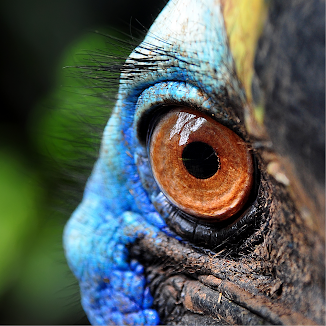
| Cassowary, Casuariiformes |
You will also likely know their sounds. The tweets, chirps, hoots and caws of the species living in your backyard.
There are about ten thousand living species, more than half of which are passerine, or "perching" birds. Birds have wings whose development varies according to species; the only known groups without wings are the extinct moa and elephant birds.
| Wings evolved from forelimbs giving birds the ability to fly |
The digestive and respiratory systems of birds are also uniquely adapted for flight. Some bird species of aquatic environments, particularly seabirds and some waterbirds, have further evolved for swimming.
Wee Feathered Theropod Dinosaurs
We now know from fossil and biological evidence that birds are a specialized subgroup of theropod dinosaurs, and more specifically, they are members of Maniraptora, a group of theropods that includes dromaeosaurs and oviraptorids, amongst others. As palaeontologists discover more theropods closely related to birds, the previously clear distinction between non-birds and birds has become a bit muddy.
Recent discoveries in the Liaoning Province of northeast China, which include many small theropod feathered dinosaurs — and some excellent arty reproductions — contribute to this ambiguity.
Still, other fossil specimens found here shed a light on the evolution of Aves. Confuciusornis sanctus, an Early Cretaceous bird from the Yixian and Jiufotang Formations of China is the oldest known bird to have a beak.
Like modern birds, Confuciusornis had a toothless beak, but close relatives of modern birds such as Hesperornis and Ichthyornis were toothed, telling us that the loss of teeth occurred convergently in Confuciusornis and living birds.
The consensus view in contemporary palaeontology is that the flying theropods, or avialans, are the closest relatives of the deinonychosaurs, which include dromaeosaurids and troodontids.Together, these form a group called Paraves. Some basal members of this group, such as Microraptor, have features that may have enabled them to glide or fly.
The most basal deinonychosaurs were wee little things. This raises the possibility that the ancestor of all paravians may have been arboreal, have been able to glide, or both. Unlike Archaeopteryx and the non-avialan feathered dinosaurs, who primarily ate meat, tummy contents from recent avialan studies suggest that the first avialans were omnivores. Even more intriguing...
Avialae, which translates to bird wings, are a clade of flying dinosaurs containing the only living dinosaurs, the birds. It is usually defined as all theropod dinosaurs more closely related to modern birds — Aves — than to deinonychosaurs, though alternative definitions are occasionally bantered back and forth.
The Earliest Avialan: Archaeopteryx lithographica
![]() |
| Archaeopteryx, bird-like dinosaur from the Late Jurassic |
However, several older avialans are known from the Late Jurassic Tiaojishan Formation of China, dating to about 160 million years ago.
The Late Jurassic Archaeopteryx is well-known as one of the first transitional fossils to be found, and it provided support for the theory of evolution in the late 19th century.
Archaeopteryx was the first fossil to clearly display both traditional reptilian characteristics — teeth, clawed fingers, and a long, lizard-like tail—as well as wings with flight feathers similar to those of modern birds. It is not considered a direct ancestor of birds, though it is possibly closely related to the true ancestor.
Unlikely yet true, the closest living relatives of birds are the crocodilians. Birds are descendants of the primitive avialans — whose members include Archaeopteryx — which first appeared about 160 million years ago in China.
DNA evidence tells us that modern birds — Neornithes — evolved in the Middle to Late Cretaceous, and diversified dramatically around the time of the Cretaceous–Paleogene extinction event 66 mya, which killed off the pterosaurs and all non-avian dinosaurs.In birds, the brain, especially the telencephalon, is remarkably developed, both in relative volume and complexity. Unlike most early‐branching sauropsids, the adults of birds and other archosaurs have a well‐ossified neurocranium. In contrast to most of their reptilian relatives, but similar to what we see in mammals, bird brains fit closely to the endocranial cavity so that major external features are reflected in the endocasts. What you see on the inside is what you see on the outside.
This makes birds an excellent group for palaeoneurological investigations. The first observation of the brain in a long‐extinct bird was made in the first quarter of the 19th century. However, it was not until the 2000s and the application of modern imaging technologies that avian palaeoneurology really took off.
Understanding how the mode of life is reflected in the external morphology of the brains of birds is but one of several future directions in which avian palaeoneurological research may extend.
Although the number of fossil specimens suitable for palaeoneurological explorations is considerably smaller in birds than in mammals and will very likely remain so, the coming years will certainly witness a momentous strengthening of this rapidly growing field of research at the overlap between ornithology, palaeontology, evolutionary biology and the neurosciences.
Reference: Cau, Andrea; Brougham, Tom; Naish, Darren (2015). "The phylogenetic affinities of the bizarre Late Cretaceous Romanian theropod Balaur bondoc (Dinosauria, Maniraptora): Dromaeosaurid or flightless bird?". PeerJ. 3: e1032. doi:10.7717/peerj.1032. PMC 4476167. PMID 26157616.
Reference: Ivanov, M., Hrdlickova, S. & Gregorova, R. (2001) The Complete Encyclopedia of Fossils. Rebo Publishers, Netherlands. p. 312
Wednesday, 4 March 2026
WHEN GORGON REIGNED SUPREME
Tuesday, 3 March 2026
FOSSIL BEES, FIRST NATION HISTORY
My Norwegian cousins on my mother's side call them humle. Norway is a wonderful place to be something wild as the wild places have not been disturbed by our hands. Head out for a walk in the wild flowers and the sounds you will hear are the wind and the bees en masse amongst the flowers.
There are an impressive thirty-five species of bumblebee species that call Norway hjem (home), and one, Bombus consobrinus, boasts the longest tongue that they use to feast solely on Monkshood, genus Aconitum, you may know by the name Wolf's-bane.
In the Kwak̓wala language of the Kwakwaka'wakw, speakers of Kwak'wala, and my family on my father's side in the Pacific Northwest, bumblebees are known as ha̱mdzalat̕si — though I wonder if this is actually the word for a honey bee, Apis mellifera, as ha̱mdzat̕si is the word for a beehive.
I have a special fondness for all bees and look for them both in the garden and in First Nation art.
Bumblebees' habit of rolling around in flowers gives us a sense that these industrious insects are also playful. In First Nation art they provide levity — comic relief along with their cousins the mosquitoes and wasps — as First Nation dancers wear masks made to mimic their round faces, big round eyes and pointy stingers.
A bit of artistic license is taken with their forms as each mask may have up to six stingers. The dancers weave amongst the watchful audience and swoop down to playfully give many of the guests a good, albeit gentle, poke.
Honey bees actually do a little dance when they get back to the nest with news of an exciting new place to forage — truly they do. Bumblebees do not do a wee bee dance when they come home pleased with themselves from a successful foraging mission, but they do rush around excitedly, running to and fro to share their excitement. They are social learners, so this behaviour can signal those heading out to join them as they return to the perfect patch of wildflowers.
Bumblebees are quite passive and usually sting in defense of their nest or if they feel threatened. Female bumblebees can sting several times and live on afterwards — unlike honeybees who hold back on their single sting as its barbs hook in once used and their exit shears it off, marking their demise.They are important buzz pollinators both for our food crops and our wildflowers. Their wings beat at 130 times or more per second, literally shaking the pollen off the flowers with their vibration.
And they truly are busy bees, spending their days fully focused on their work. Bumblebees collect and carry pollen and nectar back to the nest which may be as much as 25% to 75% of their body weight.
And they are courteous — as they harvest each flower, they mark them with a particular scent to help others in their group know that the nectar is gone.
The food they bring back to the nest is eaten to keep the hive healthy but is not used to make honey as each new season's queen bees hibernate over the winter and emerge reinvigorated to seek a new hive each Spring. She will choose a new site, primarily underground depending on the bumblebee species, and then set to work building wax cells for each of her fertilized eggs.
Bumblebees are quite hardy. The plentiful hairs on their bodies are coated in oils that provide them with natural waterproofing. They can also generate more heat than their smaller, slender honey bee cousins, so they remain productive workers in cooler weather.
We see the first bumblebees arise in the fossil record 100 million years ago and diversify alongside the earliest flowering plants. Their evolution is an entangled dance with the pollen and varied array of flowers that colour our world.We have found many wonderful examples within the fossil record, including a rather famous Eocene fossil bee found by a dear friend and naturalist who has left this Earth, Rene Savenye.
His namesake, H. Savenyei, is a lovely fossil halictine bee from Early Eocene deposits near Quilchena, British Columbia — and the first bee body-fossil known from the Okanagan Highlands — and indeed from Canada.
It is a fitting homage, as bees symbolize honesty, playfulness and willingness to serve the community in our local First Nation lore and around the world — something Rene did his whole life.
Monday, 2 March 2026
FOSSIL FISHAPODS FROM THE CANADIAN ARCTIC
| Qikiqtania wakei, a fishapod & relative to tetrapods |
Up to that point, the relationship of limbed vertebrates (tetrapods) to lobe-finned fish (sarcopterygians) was well known, but the origin of significant tetrapod features remained obscure for the lack of fossils that document the sequence of evolutionary changes — until Tiktaalik.
While Tiktaalik is technically a fish, this fellow is as far from fish-like as you can be and still be a card-carrying member of the group.
Interestingly, while Neil Shubin and crew were combing the icy tundra for Tiktaalik, another group was trying their luck just a few kilometres away.
A week before the eureka moment of Tiktaalik's discovery, Tom Stewart and Justin Lemberg unearthed material that we now know to be a relative of Tiktaalik's.
Meet Qikiqtania wakei, a fishapod and close relative to our dear tetrapods — and cousin to Tiktaalik — who shares features in the flattened triangular skull, shoulders and elbows in the fin.
![]() |
| Qikiqtania (pronounced kick-kick-TAN-ee-ya) |
The story gets wilder when we look at Qikiqtania’s position on the evolutionary tree— all the features for this type of swimming are newly evolved, not primitive.
This means that Qikiqtania secondarily reentered open water habitats from ancestors that had already had some aspect of walking behaviour.
And, this whole story was playing out 365 million years ago — the transition from water to land was going both ways in the Devonian.
Why is this exciting? You and I descend from those early tetrapods. We share the legacy of their water-to-land transition and the wee bony bits in their wrists and paddles that evolved to become our hands. I know, mindblowing!
Thomas Stewart and Justin Lemberg put in thousands of hours bringing Qikiqtania to life.
The analysis consisted of a long path of wild events— from a haphazard moment when it was first spotted, a random collection of a block that ended up containing an articulated fin, to a serendipitous discovery three days before Covid lockdowns in March 2020.
Both teams acknowledge the profound debt owed to the individuals, organizations and indigenous communities where they had the privilege to work — Grise Fiord and Resolute Bay— Ellesmere Island in Nunavut, the largest and northernmost territory of Canada.
Part of that debt is honoured in the name chosen for this new miraculous species.
![]() |
| Aerial View of Ellesmere Island |
The specific name, wakei, is in memory of the evolutionary biologist David Wake — colleague, mentor and friend.
He was a professor of integrative biology and Director and curator of herpetology at the Museum of Vertebrate Zoology at the University of California, Berkeley who passed away in April 2021.
Wake is known for his work on the biology and evolution of salamanders and vertebrate evolutionary biology.
If you look at the photo on the left you can imagine visiting these fossil localities in Canada's far north.
Qikiqtania was found on Inuit land and belongs to the community. Thomas Stewart and his colleagues were able to conduct this research because of the generosity and support of individuals in the hamlets of Resolute Bay and Grise Fiord, the Iviq Hunters and Trappers of Grise Fiord, and the Department of Heritage and Culture, Nunavut.
To them, on behalf of the larger scientific community — Nakurmiik. Thank you!
Here is the link to Tom Stewart's article in The Conversation & paper in Nature:
- Stewart, Thomas A.; Lemberg, Justin B.; Daly, Ailis; Daeschler, Edward B.; Shubin, Neil H. (2022-07-20). "A new elpistostegalian from the Late Devonian of the Canadian Arctic". Nature. doi:10.1038/s41586-022-04990-w. ISSN 0028-0836.
- Stewart, Thomas. "Meet Qikiqtania, a fossil fish with the good sense to stay in the water while others ventured onto land" The Conversation. Retrieved 2022-07-20.
Image One: An artist’s vision of Qikiqtania enjoying its fully aquatic, free-swimming lifestyle. Alex Boersma, CC BY-ND
Image Two: A new elpistostegalian from the Late Devonian of the Canadian Arctic, T. A. Stewart, J. B. Lemberg, A. Daly, E. B. Daeschler, & N. H. Shubin.
A huge shout out to the deeply awesome Neil Shubin who shared that the paper had been published and offered his insights on what played out behind the scenes!
Sunday, 1 March 2026
CLALLAM BAY FOSSIL HEIST
![]() |
| Vertipecten fucanus (Dall, 1900) |
It all began one gloriously sunny summer weekend when the planets aligned, the calendar gods smiled, and my mother and I were simultaneously free.
Naturally, this meant one thing: we were going fossil hunting. I still get out collecting regularly but back in the day it was every weekend of the year with the bigger trips planned a few years in advance.
Many of those were "reckie trips" scouting out new localities. The Olympic Peninsula was duly scouted and now it was back to the regular haunts.
We rattled down through Port Angeles and set up camp at the Lyre River—mosquitoes, campfire smoke, and all the rustic feels.
I took Mom on a grand tour of my favourite haunts: Majestic Beach (where we found some amazing fossil whale verts), a private-land site with ghost shrimp claws and urchins (with permission), and finally down to Clallam Bay and its dreamy beach exposures.
The Clallam Formation stretches along the north coast of the Olympic Peninsula, tracing the rugged edge of the Strait of Juan de Fuca from Slip Point at the eastern end of Clallam Bay to the headland of Pillar Point. Here, sandstone beds push the coastline outward in a subtle bulge, their weathered flanks dropping abruptly to a broad, wave-washed bedrock platform.
![]() |
| Pillar Point, Clallam Bay |
The air is rich with the briny scent of kelp and cold saltwater, a sharp, clean smell that settles in the back of the throat. Each retreating wave leaves a gleaming sheen on the rock, swirling with foam before sliding back to the sea.
Its cliffs and tidal benches have long drawn geologists—and especially paleontologists—who were captivated by the formation’s abundance of beautifully preserved fossils.
William Healey Dall, a pioneering American geologist and paleontologist whose career spanned more than six decades. Dall loved to explore this rugged bit of coastline, studying and describing many of the mollusks now known from the Clallam Formation, adding his work to the early scientific tapestry woven from these windswept rocks.
He became one of the most prolific describers of North Pacific mollusks, naming hundreds of new species—from marine snails and clams to chitons—many of which still bear the names he assigned or honour him through genera such as Dallina and Dallididae. His work laid much of the early scientific foundation for the paleontology of the Pacific Coast.
Retracing his footsteps and to catch the tides just right, we collected in the early afternoon, blissfully unaware that we were setting up the perfect comedy plot twist.
After a full day of hauling home the ocean’s Miocene leftovers, we decided to stash some of our fossil booty under a log—just until morning. A little paleo treasure cache. Perfectly safe. Nothing could possibly go wrong.
The next morning, we strolled back down the beach, coffees in hand, ready to retrieve our hoard like triumphant pirates.
Enter: A very enthusiastic gaggle of high school students.
There they were, marching toward us, each clutching a fossil like they’d just won the geological lottery. “Look what we found!” they cried, beaming, displaying our carefully cached treasures.
Yes. Our stash. Our carefully curated, lovingly positioned, absolutely-not-meant-for-public-consumption stash.
But honestly? They were so thrilled, we couldn’t help but be charmed. Besides, most of what I collect ends up in museums or teaching collections anyway. These young fossil hunters had simply… expedited the process. Efficient, really.
We gathered the Verdipectin together for one glamorous group photo, wished the kids well, and sent them off with pockets full of deep time.
And our grand prize for the weekend? Some very fetching water-worn whale vertebrae—one of which was briefly enscripted into service as the crown of the King of the Lemon People, while my mother created elaborate beach sculptures to our shared amusement.. All in all, a perfect weekend.
Image: Vertipecten fucanus (Dall, 1900) is the most characteristic mollusk in assemblages from the Clallam Formation.
Saturday, 28 February 2026
BEARDED SEALS OF SVALBARD
![]() |
| The Bearded Seal |
Large, solitary, and unmistakable with its luxuriant moustache of stiff vibrissae, this species is superbly adapted to life along the drifting margins of sea ice.
Adults can exceed 400 kilograms in mass, with thick blubber for insulation and broad, flexible foreflippers that allow them to haul out on ice floes or shallow shorelines with surprising ease.
Bearded seals are benthic specialists. Rather than chasing fast-moving prey in the water column, they forage along the seafloor, using their extraordinarily sensitive whiskers to detect vibrations and textures in soft sediments.
Their diet reflects this lifestyle and includes clams, mussels, polychaete worms, crabs, shrimp, snails, and demersal fishes such as sculpins and flatfish. Powerful suction feeding allows them to extract prey directly from shells or sediment, leaving distinctive feeding pits on the seabed—clear signatures of their presence even when the seals themselves are out of sight.
![]() |
| The Bearded Seal |
Mating occurs in spring, typically from April to May, when males establish underwater display areas rather than surface territories.
Courtship is acoustic: males produce long, haunting trills and sweeping calls beneath the ice, audible over kilometres, to attract receptive females.
After mating, implantation of the embryo is delayed, a reproductive strategy shared with many seals, resulting in a total gestation of roughly 11 months.
Pups are born the following spring on drifting sea ice and are remarkably precocial, entering the water within hours and weaned after only two to three weeks—one of the shortest lactation periods among seals.
In the fossil record, bearded seals belong to the family Phocidae, a lineage that diversified during the Miocene as cold-adapted marine ecosystems expanded in the Northern Hemisphere.
While Erignathus barbatus itself does not appear as a clearly identifiable species until the late Pleistocene, its ancestry is represented by fossil phocids from Miocene and Pliocene deposits across the North Atlantic and Arctic margins.
Fragmentary remains—skulls, mandibles, and limb bones—document the emergence of large, bottom-feeding seals adapted to shallow continental shelves, particularly in regions influenced by cooling climates and seasonal ice.Pleistocene deposits in northern Europe, Siberia, Alaska, and Arctic Canada contain remains attributable to Erignathus, telling us that bearded seals expanded their range alongside advancing ice sheets during glacial cycles.
Today, Bartrobbe and its kin remain tightly bound to Arctic sea ice, making them sensitive indicators of environmental change. Their long evolutionary history, traced through shifting climates and frozen seas, underscores just how finely tuned they are to the rhythms of ice, sound, and sediment in the polar oceans—a living echo of the Arctic’s deep past.


.png)


%20Fram%20Formation%20of%20Nunavut,%20Canada.%20The%20genus%20contains%20a%20single%20species,%20Q.%20wakei,%20known%20from%20a%20partial%20skele.png)


.png)
.png)