Showing posts with label huntress. Show all posts

Friday, 22 August 2025

LOVE LANGUAGE OF THE FAR NORTH

Nunatsiarmiut Mother and Child, Baffin Island, Nunavut
Warm light bathes this lovely Nunatsiarmiut mother and child from Baffin Island, Nunavut. 

They speak Inuktitut, the mother tongue of the majority of the Nunatsiarmiut who call Baffin Island home. 

Baffin is the largest island in the Arctic Archipelago in the territory of Nunavut in Canada's far north—the chilliest region of Turtle Island. 

As part of the Qikiqtaaluk Region of Nunavut, Baffin Island is home to a constellation of remote Inuit communities each with a deep cultural connection to the land—Iqaluit, Pond Inlet, Pangnirtung, Clyde River, Arctic Bay, Kimmirut and Nanisivik. 

The ratio of Inuit to non-Inuit here is roughly three to one and perhaps the reason why the Inuktitut language has remained intact and serves as the mother tongue for more than 36,000 residents. Inuktitut has several subdialects—these, along with a myriad of other languages—are spoken across the north.  

If you look at the helpful visual below you begin to get a feel for the diversity of these many tongues. The languages vary by region. There is the Iñupiaq of the Inupiatun/Inupiat; Inuvialuktun of the Inuinnaqtun, Natsilingmiutut, Kivallirmiutut, Aivilingmiutut, Qikiqtaaluk Uannanganii and Siglitun. Kalaallisut is spoken by many Greenlandic peoples though, in northwest Greenland, Inuktun is the language of the Inughuit.

We use the word Inuktitut when referring to a specific dialect and inuktut when referring to all the dialects of Inuktitut and Inuinnaqtun.

Northern Language Map (Click to Enlarge)
Should you travel to the serene glacier-capped wilds and rolling tundra of our far north, you will want to dress for the weather and learn a few of the basics to put your best mukluk shod feet forward. 

The word for hello or welcome in Inuktitut is Atelihai—pronounced ahh-tee-lee-hi. And thank you is nakurmiik, pronounced na-kur-MIIK.  

Perhaps my favourite Inuktitut expression is Naglingniq qaikautigijunnaqtuq maannakautigi, pronounced NAG-ling-niq QAI-kau-ti-gi-jun-naqtuq MAAN-na-KAU-ti-gi. This tongue-twister is well worth the linguistic challenge as it translates to love can travel anywhere in an instant. Indeed it can. 

So much of our Indigenous culture is passed through stories, so language takes on special meaning in that context. It is true for all societies but especially true for the Inuit. Stories help connect the past to the present and future. They teach how to behave in society, engage with the world and how to survive in the environment. They also help to create a sense of belonging. 

You have likely seen or heard the word Eskimo used in older books to refer to the Inuit, Iñupiat, Kalaallit or Yupik. This misnomer is a colonial term derived from the Montagnais or Innu word ayas̆kimewnetter of snowshoes

It is a bit like meeting a whole new group of people who happen to wear shoes and referring to them all as cobblers—not as a nickname, but as a legal term to describe populations from diverse communities disregarding the way each self-refer. 

Inukshuk / Inuksuk Marker Cairn
For those who identify as Inupiaq or Yupik, the preferred term is Inuit meaning people—though some lingering use of the term Eskimo lives on. The Inuit as a group are made up of many smaller groups. 

The Inuit of Greenland self-refer as Kalaallit or Greenlanders when speaking Kalaallisut

The Tunumiit of Tunu (east Greenland), speak Tunumiit oraasiat ("East Greenlandic"); and the Inughuit of north Greenland, speak Inuktun "Polar Eskimo."

The Inupiat of Alaska, or real people, use Yupik as the singular for real person and yuk to simply mean person.

When taken all together, Inuit is used to mean all the peoples in reference to the Inuit, Iñupiat, Kalaallit and Yupik. Inuit is the plural of inuk or person

You likely recognize this word from inuksuk or inukshuk, pronounced ih-nook-suuk — the human-shaped stone cairns built by the Inuit, Iñupiat, Kalaallit, Yupik, and other peoples of the Arctic regions of northern Canada, Greenland, and Alaska—as helpful reference markers for hunters and navigation. 

The word inuksuk means that which acts in the capacity of a human, combining inuk or person and suk, as a human substitute

A World of Confusion

You may be disappointed to learn that our northern friends do not live in igloos. I remember answering the phone as a child and the fellow calling was hoping to speak to my parents about some wonderful new invention perfect for use in an igloo. 

The call came while I was in the kitchen of our family home in Port Hardy. He was disappointed to hear that I was standing in a wooden house with the standard four walls to a room and a handy roof topping it off. 

I also had my own room with Scooby-Doo wallpaper, but he was having nothing of it.

"Well, what about your neighbours? Surely, a few of them live in igloos..." 

It seems that some atlases in circulation at the time, and certainly the one he was looking at, simply blanketed everything north of the 49th parallel in a snowy white. His clearly showed an igloo sitting proudly in the centre of the province.

Interestingly, I only learned this morning (thank you, Jen) that that type of playful map is called a Counter Map and can be used in delightful ways to draw the reader in to the mapping of a landscape, region, people or culture—often out of scale and with many wonderful images added to give you a beautiful sense of the people, plants, animals and topography of a place.

My cousin Shawn brought one such simplified book back from his elementary school in California. British Columbia had a nice image of a grizzly bear and a wee bit further up, a polar bear grinned smugly. 

British Columbia's beaver population would be sad to know that they did not inhabit the province though there were two chipper beavers with big bright smiles—one in Ontario and another gracing the province of Quebec. Further north, where folk do build igloos, their icy domes were curiously lacking. 

Igloos are used for winter hunting trips much the same way we use tents for camping. The Inuit do not have fifty words for snow—you can thank the ethnographer Franz Boas for that wee fabrication—but within the collective languages of the frozen north there are more than fifty words to describe it. And kisses are not nose-to-nose. To give a tender kiss or kunik to a loved one, you press your nose and upper lip to their forehead or cheek and rub gently. 

Fancy trying a wee bit of Inuktitut yourself? This link will bring you to a great place to start: https://inhabitmedia.com/inuitnipingit/

Inuit Language Map:  By Noahedits - Own work, CC BY-SA 4.0. If you want to the image full size, head to this link: https://commons.wikimedia.org/w/index.php?curid=85587388

Sunday, 17 August 2025

AVES: LIVING DINOSAURS

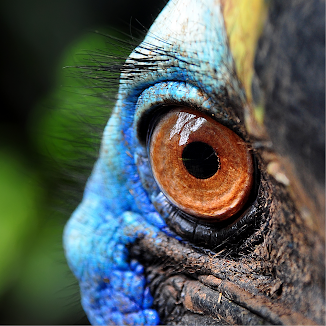
Cassowary, Casuariiformes
Wherever you are in the world, it is likely that you know your local birds. True, you may call them des Oiseaux, pássaros or uccelli — but you'll know their common names by heart.

You will also likely know their sounds. The tweets, chirps, hoots and caws of the species living in your backyard.

Birds come in all shapes and sizes and their brethren blanket the globe. It is amazing to think that they all sprang from the same lineage given the sheer variety. 

If you picture them, we have such a variety on the planet — parrots, finches, wee hummingbirds, long-legged waterbirds, waddling penguins and showy toucans. 

But whether they are a gull, hawk, cuckoo, hornbill, potoo or albatross, they are all cousins in the warm-blooded vertebrate class Aves. 

The defining features of the Aves are feathers, toothless beaked jaws, the laying of hard-shelled eggs, a high metabolic rate, a four-chambered heart, and a strong yet lightweight skeleton. The best features, their ability to dance, bounce and sing, are not listed, but it is how I see them in the world.

These modern dinosaurs live worldwide and range in size from the 5 cm (2 in) bee hummingbird to the 2.75 m (9 ft) ostrich. 

There are about ten thousand living species, more than half of which are passerine, or "perching" birds. Birds have wings whose development varies according to species; the only known groups without wings are the extinct moa and elephant birds.

Wings evolved from forelimbs giving birds the ability to fly
Wings, which evolved from forelimbs, gave birds the ability to fly, although further evolution has led to the loss of flight in some birds, including ratites, penguins, and diverse endemic island species. 

The digestive and respiratory systems of birds are also uniquely adapted for flight. Some bird species of aquatic environments, particularly seabirds and some waterbirds, have further evolved for swimming.

Wee Feathered Theropod Dinosaurs

We now know from fossil and biological evidence that birds are a specialized subgroup of theropod dinosaurs, and more specifically, they are members of Maniraptora, a group of theropods that includes dromaeosaurs and oviraptorids, amongst others. As palaeontologists discover more theropods closely related to birds, the previously clear distinction between non-birds and birds has become a bit muddy.

Recent discoveries in the Liaoning Province of northeast China, which include many small theropod feathered dinosaurs — and some excellent arty reproductions — contribute to this ambiguity. 

Still, other fossil specimens found here shed a light on the evolution of Aves. Confuciusornis sanctus, an Early Cretaceous bird from the Yixian and Jiufotang Formations of China is the oldest known bird to have a beak.

Like modern birds, Confuciusornis had a toothless beak, but close relatives of modern birds such as Hesperornis and Ichthyornis were toothed, telling us that the loss of teeth occurred convergently in Confuciusornis and living birds.

The consensus view in contemporary palaeontology is that the flying theropods, or avialans, are the closest relatives of the deinonychosaurs, which include dromaeosaurids and troodontids.

Together, these form a group called Paraves. Some basal members of this group, such as Microraptor, have features that may have enabled them to glide or fly. 

The most basal deinonychosaurs were wee little things. This raises the possibility that the ancestor of all paravians may have been arboreal, have been able to glide, or both. Unlike Archaeopteryx and the non-avialan feathered dinosaurs, who primarily ate meat, tummy contents from recent avialan studies suggest that the first avialans were omnivores. Even more intriguing...

Avialae, which translates to bird wings, are a clade of flying dinosaurs containing the only living dinosaurs, the birds. It is usually defined as all theropod dinosaurs more closely related to modern birds — Aves — than to deinonychosaurs, though alternative definitions are occasionally bantered back and forth.

The Earliest Avialan: Archaeopteryx lithographica

Archaeopteryx, bird-like dinosaur from the Late Jurassic
Archaeopteryx lithographica, from the late Jurassic Period Solnhofen Formation of Germany, is the earliest known avialan that may have had the capability of powered flight. 

However, several older avialans are known from the Late Jurassic Tiaojishan Formation of China, dating to about 160 million years ago.

The Late Jurassic Archaeopteryx is well-known as one of the first transitional fossils to be found, and it provided support for the theory of evolution in the late 19th century. 

Archaeopteryx was the first fossil to clearly display both traditional reptilian characteristics — teeth, clawed fingers, and a long, lizard-like tail—as well as wings with flight feathers similar to those of modern birds. It is not considered a direct ancestor of birds, though it is possibly closely related to the true ancestor.

Unlikely yet true, the closest living relatives of birds are the crocodilians. Birds are descendants of the primitive avialans — whose members include Archaeopteryx — which first appeared about 160 million years ago in China.

DNA evidence tells us that modern birds — Neornithes — evolved in the Middle to Late Cretaceous, and diversified dramatically around the time of the Cretaceous–Paleogene extinction event 66 mya, which killed off the pterosaurs and all non-avian dinosaurs.

In birds, the brain, especially the telencephalon, is remarkably developed, both in relative volume and complexity. Unlike most early‐branching sauropsids, the adults of birds and other archosaurs have a well‐ossified neurocranium. In contrast to most of their reptilian relatives, but similar to what we see in mammals, bird brains fit closely to the endocranial cavity so that major external features are reflected in the endocasts. What you see on the inside is what you see on the outside.

This makes birds an excellent group for palaeoneurological investigations. The first observation of the brain in a long‐extinct bird was made in the first quarter of the 19th century. However, it was not until the 2000s and the application of modern imaging technologies that avian palaeoneurology really took off.

Understanding how the mode of life is reflected in the external morphology of the brains of birds is but one of several future directions in which avian palaeoneurological research may extend.

Although the number of fossil specimens suitable for palaeoneurological explorations is considerably smaller in birds than in mammals and will very likely remain so, the coming years will certainly witness a momentous strengthening of this rapidly growing field of research at the overlap between ornithology, palaeontology, evolutionary biology and the neurosciences.

Reference: Cau, Andrea; Brougham, Tom; Naish, Darren (2015). "The phylogenetic affinities of the bizarre Late Cretaceous Romanian theropod Balaur bondoc (Dinosauria, Maniraptora): Dromaeosaurid or flightless bird?". PeerJ. 3: e1032. doi:10.7717/peerj.1032. PMC 4476167. PMID 26157616.

Reference: Ivanov, M., Hrdlickova, S. & Gregorova, R. (2001) The Complete Encyclopedia of Fossils. Rebo Publishers, Netherlands. p. 312

Sunday, 10 August 2025

AINOCERAS OF VANCOUVER ISLAND

A wee baby deep chocolate Ainoceras sp. heteromorph ammonite from Vancouver Island. This adorable corkscrew-shaped ammonite is an extinct marine mollusc related to squid and octopus.  

Within their shells, they had a number of chambers, called septa, filled with gas or fluid that were interconnected by a wee air tube. 

By pushing air in or out, they were able to control their buoyancy in the water column. These little cuties were predators who hunted in Cretaceous seas.

They lived in the last chamber of their shells, continuously building new shell material as they grew. As each new chamber was added, the squid-like body of the ammonite would move down to occupy the final outside chamber. 

Not all ammonites have this whacky corkscrew design. Most are coiled and some are even shaped like massive paperclips. This one is so remarkable, so joyously perfect my internal thesaurus can’t keep up.

I will be heading back to the area where these lovelies are found in late March this year to see if I can find other associated fossils and learn more about his paleo community

Friday, 18 July 2025

SPIRALING BEAUTY: AMMONITES AS INDEX FOSSILS

Argonauticeras besairei, Collection of José Juárez Ruiz.
An exceptional example of fractal building of an ammonite septum, in this clytoceratid Argonauticeras besairei from the awesome José Juárez Ruiz.

Ammonites were predatory, squid-like creatures that lived inside coil-shaped shells.

Like other cephalopods, ammonites had sharp, beak-like jaws inside a ring of squid-like tentacles that extended from their shells. They used these tentacles to snare prey, — plankton, vegetation, fish and crustaceans — similar to the way a squid or octopus hunt today.

Catching a fish with your hands is no easy feat, as I'm sure you know. But the Ammonites were skilled and successful hunters. They caught their prey while swimming and floating in the water column. Within their shells, they had a number of chambers, called septa, filled with gas or fluid that were interconnected by a wee air tube. By pushing air in or out, they were able to control their buoyancy in the water column.

They lived in the last chamber of their shells, continuously building new shell material as they grew. As each new chamber was added, the squid-like body of the ammonite would move down to occupy the final outside chamber.

They were a group of extinct marine mollusc animals in the subclass Ammonoidea of the class Cephalopoda. These molluscs, commonly referred to as ammonites, are more closely related to living coleoids — octopuses, squid, and cuttlefish) than they are to shelled nautiloids such as the living Nautilus species.

The Ammonoidea can be divided into six orders:
  • Agoniatitida, Lower Devonian - Middle Devonian
  • Clymeniida, Upper Devonian
  • Goniatitida, Middle Devonian - Upper Permian
  • Prolecanitida, Upper Devonian - Upper Triassic
  • Ceratitida, Upper Permian - Upper Triassic
  • Ammonitida, Lower Jurassic - Upper Cretaceous
Ammonites have intricate and complex patterns on their shells called sutures. The suture patterns differ across species and tell us what time period the ammonite is from. If they are geometric with numerous undivided lobes and saddles and eight lobes around the conch, we refer to their pattern as goniatitic, a characteristic of Paleozoic ammonites.

If they are ceratitic with lobes that have subdivided tips; giving them a saw-toothed appearance and rounded undivided saddles, they are likely Triassic. For some lovely Triassic ammonites, take a look at the specimens that come out of Hallstatt, Austria and from the outcrops in the Humboldt Mountains of Nevada.

Hoplites bennettiana (Sowby, 1826).
If they have lobes and saddles that are fluted, with rounded subdivisions instead of saw-toothed, they are likely Jurassic or Cretaceous. If you'd like to see a particularly beautiful Lower Jurassic ammonite, take a peek at Apodoceras. Wonderful ridging in that species.

One of my favourite Cretaceous ammonites is the ammonite, Hoplites bennettiana (Sowby, 1826). This beauty is from Albian deposits near Carrière de Courcelles, Villemoyenne, near la région de Troyes (Aube) Champagne in northeastern France.

At the time that this fellow was swimming in our oceans, ankylosaurs were strolling about Mongolia and stomping through the foliage in Utah, Kansas and Texas. Bony fish were swimming over what would become the strata making up Canada, the Czech Republic and Australia. Cartilaginous fish were prowling the western interior seaway of North America and a strange extinct herbivorous mammal, Eobaatar, was snuffling through Mongolia, Spain and England.

In some classifications, these are left as suborders, included in only three orders: Goniatitida, Ceratitida, and Ammonitida. Once you get to know them, ammonites in their various shapes and suturing patterns make it much easier to date an ammonite and the rock formation where is was found at a glance.

Ammonites first appeared about 240 million years ago, though they descended from straight-shelled cephalopods called bacrites that date back to the Devonian, about 415 million years ago, and the last species vanished in the Cretaceous–Paleogene extinction event.

They were prolific breeders that evolved rapidly. If you could cast a fishing line into our ancient seas, it is likely that you would hook an ammonite, not a fish. They were prolific back in the day, living (and sometimes dying) in schools in oceans around the globe. We find ammonite fossils (and plenty of them) in sedimentary rock from all over the world.

In some cases, we find rock beds where we can see evidence of a new species that evolved, lived and died out in such a short time span that we can walk through time, following the course of evolution using ammonites as a window into the past.

For this reason, they make excellent index fossils. An index fossil is a species that allows us to link a particular rock formation, layered in time with a particular species or genus found there. Generally, deeper is older, so we use the sedimentary layers rock to match up to specific geologic time periods, rather the way we use tree-rings to date trees. A handy way to compare fossils and date strata across the globe.

References: Inoue, S., Kondo, S. Suture pattern formation in ammonites and the unknown rear mantle structure. Sci Rep 6, 33689 (2016). https://doi.org/10.1038/srep33689
https://www.nature.com/articles/srep33689?fbclid=IwAR1BhBrDqhv8LDjqF60EXdfLR7wPE4zDivwGORTUEgCd2GghD5W7KOfg6Co#citeas

Photo: Hoplites Bennettiana from near Troyes, France. Collection de Christophe Marot

Saturday, 5 July 2025

FOSSIL HUNTRESS PODCAST: DEAD SEXY SCIENCE

Geeky goodness from the Fossil Huntress. If you love paleontology, you will love this stream. Dinosaurs, trilobites, ammonites—you'll find them all here!

Close your eyes & fly with me as we head out together to explore Earth's rich history written in her rock. Travel to extraordinary places, sacred sites & unearth mysteries millions of years old on the Fossil Huntress Podcast.

This stream is for those who share an enduring passion for our world's hidden treasures, its wild places & want to uncover her beauty stone by stone.

This is the story of the making of our Earth and the many wonderful creatures who have called it home.

Join in the exploration of the fascinating science of paleontology — that lens that examines ancient animals, plants & ecosystems from wee single-celled organisms to big & mighty dinosaurs. Save the stream to your favorites to listen while you drive, head out fossil collecting or snuggle in for the night!

​To listen now, visit: https://open.spotify.com/show/1hH1wpDFFIlYC9ZW5uTYVL

Friday, 4 July 2025

FOSSIL FRESHWATER SALMON FROM KAMLOOPS, BRITISH COLUMBIA

Fossilized Salmon gifted to the Huntress by John Leahy
Nestled in the interior of British Columbia, the region around Kamloops is a dry, sagebrush-studded landscape—and home to some of Canada’s most remarkable fossil fish discoveries. 

It is also home to many rattlesnakes, so if you are up that way, step lively!

Among the most fascinating fossils found here are fossilized salmonids, distant ancestors of the modern Pacific salmon that are iconic to the rivers of British Columbia today.

The fossils of interest date back to the Eocene, approximately 50 million years ago, and are primarily found in the Tranquille Formation, a part of the Kamloops Group. 

This ancient lakebed is located at McAbee Fossil Beds, near Cache Creek just west of Kamloops, and also in the nearby Driftwood Canyon and Princeton fossil beds, which together form part of British Columbia’s Eocene fossil record.

The Tranquille Formation preserves what was once a large, subtropical freshwater lake surrounded by lush forests. 

Volcanic ashfalls and fine silt periodically buried aquatic organisms and plant matter, preserving them in astonishing detail. Among the insects, plants, and other fish fossils, paleontologists have discovered fossil remains of early salmonids, the group of fish that includes modern salmon and trout.

A significant discovery was Eosalmo driftwoodensis, the earliest known fossil representative of the salmon family (Salmonidae). 

First described in 1977 by Canadian ichthyologist Mark Wilson, Eosalmo was recovered from the Driftwood Canyon site in northern BC but its relatives have been found in similar-aged formations across the province, including near Kamloops.

These fossils show that salmonids had already begun to diversify during the early Eocene. Eosalmo displays characteristics linking it to both trout and salmon, suggesting that the divergence between these lineages was already underway. Its morphology includes features like a terminal mouth, forked tail, and well-developed fins, hallmarks of active freshwater swimmers.

What’s particularly interesting about fossil salmonids in British Columbia is that they appear to have lived exclusively in freshwater during the Eocene. 

This contrasts with today’s Pacific salmon, which are famously anadromous—born in freshwater, migrating to the ocean, and returning to spawn. The fossil record suggests this sea-run lifestyle evolved later, possibly as a response to tectonic shifts and changing ocean currents in the Miocene, around 20 million years ago.

The lakes of Eocene BC, including the one preserved at McAbee, would have supported thriving fish populations in a warm, relatively stable climate. Fossil finds include not just salmonids but also bowfins, suckers, and small freshwater herring-like fish, painting a picture of a rich and diverse aquatic ecosystem.

The McAbee Fossil Beds, now designated as a provincial heritage site, continue to yield new specimens. Though public access is currently restricted to protect the integrity of the site, ongoing research continues to uncover new details about the ancient ecosystems of interior BC.

Institutions such as the Royal BC Museum and the University of Alberta have studied and preserved these fossil fish. Scientific papers by Mark Wilson, and others have helped place these finds into a broader evolutionary context, revealing how ancient fish faunas of western North America evolved over tens of millions of years.

The fossil salmon of Kamloops bones, entombed in rock for 50 million years, speak to a time when the interior of British Columbia was lush, warm, and teeming with life. 

As research continues, these fossil salmonids help illuminate the early history of a fish group vital not just to ecosystems, but to cultures and economies across the Pacific Rim.

The beauty you see here is a fossil salmon skull gifted to me by the remarkable John Leahy, who is much missed!

References:

Wilson, M. V. H. (1977). Eosalmo driftwoodensis, a new genus and species of fossil salmonid fish from the Eocene of British Columbia. Canadian Journal of Earth Sciences, 14(5), 1213–1230.

Wilson, M. V. H., & Li, G. Q. (1999). Osteology and phylogenetic relationships of Eosalmo, the earliest known salmonid fish. Canadian Journal of Earth Sciences, 36(10), 1559–1573.

Archibald, S. B., Greenwood, D. R., Smith, R. Y., Mathewes, R. W., & Basinger, J. F. (2011). Great Canadian Lagerstätten 1. Early Eocene Lagerstätten of the Okanagan Highlands (British Columbia and Washington State). Geoscience Canada, 38(4), 155–164.

McAbee Fossil Beds Provincial Heritage Site: https://www2.gov.bc.ca

If you’re ever driving through Kamloops, it’s humbling to think that beneath your feet lie the ancestors of today’s salmon—timeless travellers of BC’s ancient waterways.

Saturday, 28 June 2025

MIGWAT: SLEEK, PLAYFUL SEALS

Seals—those sleek, playful creatures that glide through our oceans and lounge on rocky shores—are part of a remarkable evolutionary story stretching back millions of years. 

Though we often see them today basking on beaches or popping their heads above the waves, their journey through the fossil record reveals a dramatic tale of land-to-sea adaptation and ancient global wanderings.

Seals belong to a group of marine mammals called pinnipeds, which also includes sea lions and walruses. All pinnipeds share a common ancestry with terrestrial carnivores, and their closest living relatives today are bears and mustelids (like otters and weasels). Their ancestors walked on land before evolving to thrive in marine environments.

The fossil record suggests that pinnipeds first emerged during the Oligocene epoch, around 33 to 23 million years ago. These early proto-seals likely lived along coastal environments, where they gradually adapted to life in the water. Over time, their limbs transformed into flippers, their bodies streamlined, and their reliance on the sea for food and movement became complete.

In Kwak'wala, the language of the Kwakwaka'wakw of the Pacific Northwest, seals are known as migwat, and fur seals are referred to as xa'wa.

Friday, 27 June 2025

PORT HARDY: TIME AND TIDE

One of the most beautiful areas of Vancouver Island is the town of Port Hardy on the north end of the island. 

Just outside Port Hardy further south on the west coast is the area known as Fort Rupert or Tsaxis—my home community. 

It was here that the Hudson's Bay Company built Fort Rupert both for trade with the local First Nation population and the allure of potential coal deposits. 

I headed up to the north island this past week to stomp around my old haunts, visit with family and get in a bit of late season kayaking. The town was much as I remembered it. There have been changes, of course. I lived up on Wally's hill above the reserve at Tsaxis beside the old cemetery. 

My wee childhood home is still there and I am very pleased to see that the earthly home of my ancestors is well maintained. The cemetery is groomed and cared for but the land surrounding it is overgrown and it took me a few minutes to orient myself to see where things used to be. Where the old Hudson's Bay Company Fort and its iconic chimney were in relation to the graveyard. 

A lifetimes worth of memories came flooding back. Those from my earliest years and then later when I returned to kayak, fish and scuba dive in these rich waters.

My plans of blissful days kayaking and taking photos of the scenery were altered by hurricane-force winds. Still beautiful, but chilly and choppy.

The beachhead here was clocking 120 km winds so I did a brief visit to the homestead, the graveyard and Jokerville then headed home to light the fire and hunker in as the storm blew through. 

Port Harty and Fort Rupert have an interesting history and how you read it or hear it truly depends on the lens that is applied. This has been the ancestral home to many First Nation groups. Mostly they were passing through and coming here to dig up delicious butter clams, roots, berries and other natural yummy goodness. Years before Port Hardy was settled at the turn of the century it was the home to the Kwakiutl or Kwagu’ł and part of my heritage. 

Alec and Sarah Lyon operated a store and post office on the east side of Hardy Bay. A 1912 land deal promoted by the Hardy Bay Land Co., put the area on the map and increased its population. By 1914, 12 families had settled, built a school, sawmill, church and hotel. 

The community of Port Hardy is situated within traditional Kwagu’ł First Nation territory. It is also home to the Gwa’sala-‘Nakwaxda’xw First Nation. In 1964 all the First Nations communities were amalgamated and forced to relocate from their traditional territories by the federal government, for administrative reasons. 

The First Nation families were told that it would cost less for education, easier for medical help, and the government would help with housing, but it turned out to be a hidden agenda designed to assimilate the various groups into Canadian society — or face extermination. Several years of threats and promises later, the Gwa’sala and ‘Nakwaxda’xw reluctantly gave in to the relocation, but the government didn’t keep their promise for adequate housing. 

There were five homes for over 200 people on the Tsulquate Reservation. The Gwa’sala traditional territory is Smith Inlet and surrounding islands. ‘Nakwaxda’xw traditional territory is Seymour Inlet, the Deserter’s Group, Blunden Harbour, and surrounding islands.

There was limited access to the community until the logging road connecting Port Hardy to Campbell River was paved in December of 1979. As a child, travelling to visit my grandmother in Nanaimo meant eating eating dust behind logging trucks all the way from Hardy to Campbell doing about 40 kilometres an hour, then a stop at the Dairy Queen in Campbell River for a banana split, and on again on the old Island Highway.

Port Hardy’s population grew to a little over 5,000 residents during the Island Copper Mine years (1971-1995). The former mine site is located 16 kilometres south of Port Hardy on the shores of Rupert Inlet. The open-pit porphyry copper mine employed over 900 employees from Port Hardy and the surrounding communities. Today, the former mine has been transformed into a wildlife habitat and pit lake biological treatment system (BHP Copper Inc., 2010). The Quatsino First Nation manage the property and their Economic Development Board is exploring options for its use. 

The Quatsino First Nations have conducted several feasibility studies around the implementation of a puck or brickett mill onsite, utilizing the existing infrastructure, which includes six industrial buildings.

Today, Port Hardy serves as the crossroads for air, ferry and marine transportation networks, and serves as the gateway to the fast-growing Central Coast, the Cape Scott and North Coast Trails, and BC Ferry’s northern terminus for the Discovery Coast run and Prince Rupert. It supports several traditional and emerging sectors and remains rich in natural resources and community spirit.

Every corner of the Port Hardy region is enriched with culture and history. Starting with the two welcome poles in Carrot Park, both carved and replicated by Calvin Hunt, a Kwagu’ł artist who is based in Tsax̱is. 

From here and along the seawall are interpretive signs with Kwak’wala words for various wildlife, such as salmon, bear, wolf, and orca. At the end of this walk is Tsulquate Park. 

From here you can see across Queen Charlotte Strait; the ocean highway and lands of the Kwakwa̱ka̱ʼwakw. Port Hardy was named after Vice-Admiral Sir Thomas Masterman Hardy (5 April 1769 – 20 September 1839) who served as the captain of H.M.S. Victory in the Royal Navy. 

He served at the Battle of Trafalgar and held Lord Nelson at the end of that battle where Nelson died in his arms. Though he never visited this island community, it bears his name today. 

A ten-minute drive from downtown Port Hardy, in the neighbouring community of Fort Rupert, is the village of Tsax̱is. This is the current home of the Kwagu’ł First Nation. Here lies elaborated totem poles and the big house; a venue where First Nations ceremonies take place, such as the potlatch. 

The potlatch is a First Nations constitution that determines our politics, our government, our education, our medicine, our territory, and our jurisdiction. Potlatch is a complex event with several ceremonies, which are still practiced in buildings like the Tsax̱is big house.

On the front porch of the village of Tsax̱is is Tayaguł (Storey’s Beach). Along this waterfront were several villages, which are depicted on map (pictured below) by Mervyn Child, a Kwagu’ł artist. 

Across the way and middle of K’ak’a (Beaver Harbour) are Atłanudzi (Cattle Island), Ḵ’ut’sa̱dze (Peel Island), Ḵ’a̱msa̱x̱tłe (Shell Island), and Uxwiwe’ (Deer Island). Once the words are broken down and translated; the names of these islands are unique to their environment, as they’re part of a story that belongs to the Kwagu’ł.

Where: Port Hardy, British Columbia. 50°43'27"N, 127°29'52"W

Monday, 16 June 2025

FOSSIL HUNTRESS PODCAST: DEAD SEXY SCIENCE

Close your eyes & fly with me as we head out together to explore Earth's rich history written in her rock. Travel to extraordinary places, sacred sites & unearth mysteries millions of years old on the Fossil Huntress Podcast.

This stream is for those who share an enduring passion for our world's hidden treasures, its wild places & want to uncover her beauty stone by stone. This is the story of the making of our Earth and the many wonderful creatures who have called it home. 

Join in the exploration of the fascinating science of palaeontology — that lens that examines ancient animals, plants & ecosystems from wee single-celled organisms to big & mighty dinosaurs.

​Learn about the interwoven disciplines of natural history, ecology, geology, conservation & stewardship of our world. To listen to the stories of the Earth, visit: https://open.spotify.com/show/1hH1wpDFFIlYC9ZW5uTYVL


Sunday, 15 June 2025

GULLS ON THE FORESHORE: TSIK'WI

A gull cries in protest at not getting his share of a meal

Gulls, or colloquially seagulls, are seabirds of the family Laridae in the suborder Lari. 

The Laridae are known from not-yet-published fossil evidence from the Early Oligocene — 30–33 million years ago. 

Three gull-like species were described by Alphonse Milne-Edwards from the early Miocene of Saint-Gérand-le-Puy, France. 

Another fossil gull from the Middle to Late Miocene of Cherry County, Nebraska, USA, has been placed in the prehistoric genus Gaviota

These fossil gulls, along with undescribed Early Oligocene fossils are all tentatively assigned to the modern genus Larus. Among those of them that have been confirmed as gulls, Milne-Edwards' "Larus" elegans and "L." totanoides from the Late Oligocene/Early Miocene of southeast France have since been separated in Laricola.

Gulls are most closely related to the terns in the family Sternidae and only distantly related to auks, skimmers and distantly to waders. 

A historical name for gulls is mews, which is cognate with the German möwe, Danish måge, Swedish mås, Dutch meeuw, Norwegian måke/måse and French mouette. We still see mews blended into the lexicon of some regional dialects.

In the Kwak̓wala language of the Kwakwaka'wakw, speakers of Kwak'wala, of the Pacific Northwest, gulls are known as t̕sik̕wi. Most folk refer to gulls from any number of species as seagulls. This name is a local custom and does not exist in the scientific literature for their official naming. Even so, it is highly probable that it was the name you learned for them growing up.

If you have been to a coastal area nearly everywhere on the planet, you have likely encountered gulls. They are the elegantly plumed but rather noisy bunch on any beach. You will recognize them both by their size and colouring. 

Gulls are typically medium to large birds, usually grey or white, often with black markings on the head or wings. They typically have harsh shrill cries and long, yellow, curved bills. Their webbed feet are perfect for navigating the uneven landscape of the foreshore when they take most of their meals. 

Most gulls are ground-nesting carnivores that take live food or scavenge opportunistically, particularly the Larus species. Live food often includes crab, clams (which they pick up, fly high and drop to crack open), fish and small birds. Gulls have unhinging jaws which allow them to consume large prey which they do with gusto. 

Their preference is to generally live along the bountiful coastal regions where they can find food with relative ease. Some prefer to live more inland and all rarely venture far out to sea, except for the kittiwakes. 

The larger species take up to four years to attain full adult plumage, but two years is typical for small gulls. Large white-headed gulls are typically long-lived birds, with a maximum age of 49 years recorded for the herring gull.

Gulls nest in large, densely packed, noisy colonies. They lay two or three speckled eggs in nests composed of vegetation. The young are precocial, born with dark mottled down and mobile upon hatching. Gulls are resourceful, inquisitive, and intelligent, the larger species in particular, demonstrating complex methods of communication and a highly developed social structure. Many gull colonies display mobbing behaviour, attacking and harassing predators and other intruders. 

Certain species have exhibited tool-use behaviour, such as the herring gull, using pieces of bread as bait with which to catch goldfish. Many species of gulls have learned to coexist successfully with humans and have thrived in human habitats. Others rely on kleptoparasitism to get their food. Gulls have been observed preying on live whales, landing on the whale as it surfaces to peck out pieces of flesh. They are keen, clever and always hungry.

Thursday, 5 June 2025

DINOSAUR EGGS: THE PROMISE OF LIFE

Hadrosaur Eggs
Standing before a clutch of fossilized dinosaur eggs for the first time is a deeply moving experience. Unlike towering skeletons or fearsome teeth, eggs speak to vulnerability and the quiet promise of life that never came to be.

I have found many fossil feathers (another personal fav) but have yet to find dino eggs or any egg for that matter. While my track record here is beyond sparse, dinosaur eggs have been found on nearly every continent, from the deserts of Mongolia to the floodplains of Montana and the nesting grounds of Patagonia. 

The discovery of dinosaur eggs offers one of the most intimate glimpses into the life history of these long-extinct animals. Unlike bones or teeth, eggs preserve direct evidence of reproduction, nesting strategies, and even embryonic development. 

Over the last century, paleontologists and citizen scientists have uncovered thousands of fossilized eggs and eggshell fragments across the globe, revealing that dinosaurs laid their clutches in diverse environments ranging from deserts to floodplains.

Early Discoveries — The first scientifically recognized dinosaur eggs were discovered in the 1920s by the American Museum of Natural History’s Central Asiatic Expeditions to Mongolia’s Gobi Desert. 

Led by Roy Chapman Andrews, these expeditions unearthed clutches of round, fossilized eggs in the Djadokhta Formation. Initially misattributed to Protoceratops, later discoveries showed they belonged to the bird-like and immensely cool theropod Oviraptor. This corrected attribution changed the understanding of dinosaur nesting, particularly with the revelation of adults preserved brooding on nests.

Asia: The Richest Record — Asia remains the richest continent for dinosaur eggs.

Mongolia: The Gobi Desert has yielded numerous oviraptorid and hadrosaurid eggs, often preserved in nesting sites.

China: The Henan and Guangdong Provinces have produced abundant eggs, including complete clutches of hadrosaurs, theropods, and titanosaurs. Some sites, such as the Xixia Basin, contain thousands of eggshell fragments, telling us that these were long-term nesting grounds. Embryos preserved within eggs, like those of Beibeilong sinensis, provide rare developmental insights.

India: Extensive titanosaur nests from the Lameta Formation demonstrate colonial nesting behavior and some of the largest known egg accumulations.

North America has also yielded important dinosaur egg sites. Montana: The Two Medicine Formation preserves fossilized nests of hadrosaurids like Maiasaura peeblesorum, discovered by Jack Horner in the late 1970s. These finds gave rise to the concept of “good mother lizard,” as evidence suggested parental care and extended nesting.

Utah and Colorado: Eggshell fragments and isolated eggs of sauropods and theropods have been reported, though less commonly than in Asia.

South America: Sauropod Hatcheries — Argentina is home to some of the most significant sauropod nesting sites. In Patagonia, the Auca Mahuevo locality preserves thousands of titanosaur eggs, many with fossilized embryos inside. This site demonstrates large-scale nesting colonies and offers clues to sauropod reproductive strategies, including shallow burial of eggs in soft sediment.

Europe: A Widespread Record — Europe has produced diverse dinosaur egg finds, particularly in France, Spain, and Portugal. In southern France, sauropod egg sites such as those in the Provence region reveal clutches laid in sandy floodplains. Spain’s Tremp Formation contains both hadrosaurid and sauropod eggs, some associated with trackways, linking nesting and movement behavior.

Africa: Expanding the Map — Egg discoveries in Africa are less common but significant. In Morocco and Madagascar, titanosaur eggs have been recovered, suggesting a widespread distribution of sauropod nesting across Gondwana.

Dinosaur eggs fossilize under specific conditions. Burial by sediment soon after laying, mineral-rich groundwater for permineralization, and relative protection from erosion. Eggshell microstructure, pore density, and arrangement allow paleontologists to infer incubation strategies, from buried clutches similar to modern crocodilians to open nests akin to modern birds.

These fossils are remarkable for their beauty and rarity but also for the wealth of biological information they provide. These elusive fossils help us to understand dinosaur reproduction, nesting behaviour, and evolutionary ties to modern birds. I will continue my hunt and post pics to share with all of you if the Paleo Gods smile on me!

Tuesday, 3 June 2025

NASAL SACS AND CHILLY WATERS: HOODED SEALS

If you frequent the eastern coast of North America north of Maine to the western tip of Europe, along the coast of Norway near Svalbard you may have glimpsed one of their chubby, dark silver-grey and white residents. 

Hooded seals, Cystophora cristata, are large phocid seals in the family Phocidae, who live in some of the chilliest places on Earth, from 47° to 80° N in latitude. 

These skilled divers are mainly concentrated around Bear Island, Norway, Iceland, and northeast Greenland. 

In rare cases, we find them in the icy waters in Siberia. They usually dive depths of 600 m (1,968 ft) in search of fishy treats but can go as deep as 1000 m (3,280 ft) when needed. That is deep into the cold, dark depths of our oceans. Sunlight entering the sea may travel as deep as 1,000 m (3,280 ft) under the right conditions, but there is rarely any significant light beyond 200 meters (656 ft). This is the dark zone and the place we find our bioluminescent friends. 

Hooded seals have a sparse fossil record. One of the first fossils found was a Pliocene specimen from Anvers, Belgium discovered in 1876. In 1983 a paper was published claiming there were some fossils found in North America thought to be from Cystophora cristata. Of the three accounts, the most creditable discovery was from a sewer excavation in Maine, the northeasternmost U.S. state, known for its rocky coastline, maritime history and nature areas like the granite and spruce islands of Acadia National Park. A scapula and humeri were found among other bones and thought to date to the post-Pleistocene. 

Of two other accounts, one was later reassigned to another species and the other left unsolved. (Folkow, et al., 2008; Kovacs and Lavigne, 1986; Ray, 1983)

The seals are typically silver-grey or white in colour, with black spots that vary in size covering most of the body. 

Hooded seal pups are known as, Blue-backs as their coats are blue-grey on the back with whitish bellies, though this coat is shed after 14 months of age when the pups moult.

FIRST NATION, INUIT, METIS, MI'KMAQ L'NU

In the Kwak̓wala language of the Kwakwaka'wakw, speakers of Kwak'wala, of the Pacific Northwest, seal are known as migwat — and fur seals are known as x̱a'wa.

Hooded seals live primarily on drifting pack ice and in deep water in the Arctic Ocean and North Atlantic. Although some drift away to warmer regions during the year their best survival rate is in colder climates. They can be found on four distinct areas with pack ice: near Jan Mayen Island, northeast of Iceland; off Labrador and northeastern Newfoundland; the Gulf of St. Lawrence; and the Davis Strait, off midwestern Greenland. 

The province of Newfoundland and Labrador is home to the Inuit, the Innu, the Mi'kmaq L'nu and the Southern Inuit of NunatuKavut, formerly the Labrador Inuit-Metis. The Hooded Seals that visit their traditional territory were a welcome source of food and clothing. In Mi'kmaw, the language spoken in Mi'kma'ki, the territory of the Mi'kmaq L'nu, the word for seal is waspu.

HOODED SEAL HABITAT

Males are localized around areas of complex seabeds, such as Baffin Bay, Davis Strait, and the Flemish Cap. Females concentrate their habitat efforts primarily on shelf areas, such as the Labrador Shelf. 

Females reach the age of sexual maturity between two and nine years old and it is estimated that most females give birth to their first young at around five years of age. Males reach sexual maturity a little later around four to six years old but often do not mate until much later. Females give birth to one young at a time through March and April. The gestation period is 240 to 250 days. 

Blue-back, Hooded Seal Pup
During this time the fetus, unlike those of other seals, sheds its lanugo — a covering of fine soft hair that is replaced by thicker pelage — in the uterus. 

These young are precocious and at birth are able to move about and swim with ease. They are independent and left to fend for themselves immediately after they have been weaned.

Hooded seals are known to be a highly migratory species that often wander long distances, as far west as Alaska and as far south as the Canary Islands and Guadeloupe. 

Prior to the mid-1990s, hooded seal sightings in Maine and the east Atlantic were rare but began increasing in the mid-1990s. From January 1997 to December 1999, a total of 84 recorded sightings of hooded seals occurred in the Gulf of Maine, one in France and one in Portugal. 

From 1996 to 2006, five strandings and sightings were noted near the Spanish coasts in the Mediterranean Sea. There is no scientific explanation for the increase in sightings and range of the hooded seal.

Cystophora means "bladder-bearer" in Greek and pays homage to this species' inflatable bladder septum on the heads of adult males. The bladder hangs between the eyes and down over the upper lip in a deflated state. 

The hooded seal can inflate a large balloon-like sac from one of its nostrils. This is done by shutting one nostril valve and inflating a membrane, which then protrudes from the other nostril. 

I was thinking of Hooded seals when contemplating the nasal bladders of Prosaurolophus maximum, large-headed duckbill dinosaurs, or hadrosaurid, in the ornithischian family Hadrosauridae. Perhaps both species used these bladders in a similar manner — to warn predators and attract mates.

Hooded seals are known for their uniquely elastic nasal cavity located at the top of their head, also known as the hood. Only males possess this display-worthy nasal sac, which they begin to develop around the age of four. The hood begins to inflate as the seal makes its initial breath prior to going underwater. It then begins to repetitively deflate and inflate as the seal is swimming. 

The purpose of this is acoustic signaling. It occurs when the seal feels threatened and attempt to ward off hostile species when competing for resources such as food and shelter. It also serves to communicate their health and superior status to both other males and females they are attempting to attract. 

In sexually mature males, a pinkish balloon-like nasal membrane comes out of the left nostril to further aid it in attracting a mate. This membrane, when shaken, is able to produce various sounds and calls depending on whether the seal is underwater or on land. Most of these acoustic signals are used in an acoustic situation (about 79%), while about 12% of the signals are used for sexual purposes.

References: Ray, C. 1983. Hooded Seal, Cystophora cristata: Supposed Fossil Records in North America. American Society of Mammalogists, Vol. 64 No. 3: 509-512; Cystophora cristata, Hooded Seal", 2007; "Seal Conservation Society", 2001; Kovacs and Lavigne, 1986.

Mi'kmaq Online Dictionary: https://www.mikmaqonline.org/servlet/dictionaryFrameSet.html?method=showCategory&arg0=animal

Sunday, 1 June 2025

FOSSIL HUNTRESS PALEO PODCAST

Step into deep time with the Fossil Huntress Podcast—your warm and wonder-filled gateway to dinosaurs, trilobites, ammonites, and the astonishing parade of life that has ever walked, swum, or crawled across our planet.

Close your eyes and travel with me through ancient oceans teeming with early life, lush primeval forests echoing with strange calls, and sunbaked badlands where the bones of giants rest beneath your feet. 

Each episode is a journey into Earth’s secret past, where every fossil tells a story and every stone remembers.

Together, we’ll wander across extraordinary fossil beds, sacred landscapes, and timeworn shores that have witnessed the rise and fall of worlds. 

From tiny single-celled pioneers to mighty dinosaurs, from cataclysms to new dawns, this is where science meets storytelling—and where the past comes vividly alive.

So wherever you are—on the trail, by the sea, or cozy at home—bring your curiosity and join me in the great adventure of discovery. Favourite the show and come fossil-hunting through time with me!

Listen now: Fossil Huntress Podcast on Spotify: https://open.spotify.com/show/1hH1wpDFFIlYC9ZW5uTYVL

Monday, 19 May 2025

BRONZE BEAUTY: EIFELIAN PARALEJURUS

This bronzed beauty is the Middle Devonian, Eifelian (~395 mya) trilobite, Paralejurus rehamnanus (Alberti, 1970) from outcrops near Issoumour, Alnif, Morocco in North Africa. 

It was the colour of this amazing trilobite that captured the eye of David Appleton in whose collection it now resides. He is an avid collector and coming into his own as a macro photographer. I have shared three of his delightful photos for you here.

It initially thought that the gold we see here was added during prep, particularly considering the colouration of the matrix, but macro views of the surface show mineralization and the veins running right through the specimen into the matrix. There is certainly some repairs but that is common in the restoration of these specimens. Many of the trilobites I have seen from Morocco have bronze on black colouring but not usually this pronounced. Even so, there is a tremendous amount of fine anatomy to explore and enjoy in this wonderfully preserved specimen.  

Paralejurus is a genus of trilobite in the phylum Arthropoda from the Late Silurian to the Middle Devonian of Africa and Europe. These lovelies grew to be up to nine centimetres, though the fellow you see here is a wee bit over half that size at 5.3 cm. 

Paralejurus specimens are very pleasing to the eye with their long, oval outline and arched exoskeletons. 

Their cephalon or head is a domed half circle with a smooth surface.  The large facet eyes have very pleasing crescent-shaped lids. You can see this rather well in the first of the photos here. The detail is quite remarkable.

As you move down from his head towards the body, there is an almost inconspicuous occipital bone behind the glabella in the transition to his burnt bronze thorax.

The body or thorax has ten narrow segments with a clearly arched and broad axial lobe or rhachis. The pygidium is broad, smooth and strongly fused in contrast to the genus Scutellum in the family Styginidae, which has a pygidium with very attractive distinct furrows that I liken to the look of icing ridges on something sweet — though that may just be me and my sweet tooth talking. In Paralejurus, they look distinctly fused — or able to fuse — to add posterior protection against predators with both the look and function of Roman armour.

In Paralejurus, the axillary lobe is rounded off and arched upwards. It is here that twelve to fourteen fine furrows extend radially to complete the poetry of his body design. 

Trilobites were amongst the earliest fossils with hard skeletons and they come in many beautiful forms. While they are extinct today, they were the dominant life form at the beginning of the Cambrian. 

As a whole, they were amongst some of the most successful of all early animals — thriving and diversifying in our ancient oceans for almost 300 million years. The last of their brethren disappeared at the end of the Permian — 252 million years ago. Now, we enjoy their beauty and the scientific mysteries they reveal about our Earth's ancient history.

Photos and collection of the deeply awesome David Appleton. Specimen: 5.3 cm. 

Tuesday, 13 May 2025

SKØKKENMØDDINGER: CaCO3(s) + 2HCl(aq) → CaCl2(aq) + CO2(g) + H2O(l)

Johnny Scow's Kwakwaka'wakw Kwakiutl House, 1918
Many First Nations sites were inhabited continually for centuries. Some were winter sites and some used in summer. 

The day-to-day activities of each of these communities were much like we have today. Babies were born, meals were served and life followed a natural cycle. 

As coastal societies lived their lives they also left their mark. There are many communities thriving today but we have lost some to time, disuse, plague and disease. 

For those that have been abandoned or gone quiet, we see the remnants of a once thriving village through their totems, skeletons of buildings—and most always through discarded shells and scraps of bone from their food.

These refuse heaps contain a wealth of information about how that community lived, what they ate and what environmental conditions looked like over time. They also provide insight into the local gastronomic record on diet, species diversity, availability and variation.

This physical history provides a wonderful resource for archaeologists in search of botanical material, artifacts, broken cooking implements and my personal favourite, mollusc shells. Especially those formed from enormous mounds of bivalves and clams. We call these middens. Left for a period of time, these unwanted dinner scraps transform through a process of preservation.

Shell middens are found in coastal or lakeshore zones all over the world. Consisting mostly of mollusc shells, they are interpreted as being the waste products of meals eaten by nomadic groups or hunting parties. Some are small examples relating to meals had by a handful of individuals, others are many metres in length and width and represent centuries of shell deposition. In Brazil, they are known as sambaquis, left between the 6th millennium BCE and the beginning of European colonization.

European shell middens are primarily found along the Atlantic seaboard and in Denmark from the 5th millennium BCE (Ertebølle and Early Funnel Beaker cultures), containing the remains of the earliest Neolithisation process (pottery, cereals and domestic animals).

Younger shell middens are found in Latvia (associated with Comb Ware ceramics), Sweden (associated with Pitted Ware ceramics), the Netherlands (associated with Corded Ware ceramics) and Schleswig-Holstein (Late Neolithic and Iron Age). All these are examples where communities practised a mixed farming and hunting/gathering economy.

On Canada's west coast, there are shell middens that run for more than 1 kilometre (0.62 mi) along the coast and are several meters deep. The midden in Namu, British Columbia is over 9 metres (30 ft) deep and spans over 10,000 years of continuous occupation.

Shell middens created in coastal regions of Australia by Indigenous Australians exist in Australia today. Middens provide evidence of prior occupation and are generally protected from mining and other developments. One must exercise caution in deciding whether one is examining a midden or a beach mound. There are good examples on the Freycinet Peninsula in Tasmania where wave action currently is combining charcoal from forest fire debris with a mix of shells into masses that storms deposit above high-water mark.

Shell mounds near Weipa in far north Queensland are claimed to be middens but are actually shell cheniers, beach ridges re-worked by nest mound-building birds. The midden below is from Santa Cruz, Argentina. We can thank Mikel Zubimendi for the photo.

Some shell middens are regarded as sacred sites, such as the middens of the Anbarra of the Burarra from Arnhem Land, a historical region of the Northern Territory of Australia —  a vast wilderness of rivers, rocky escarpments, gorges and waterfalls.

The Danish use the term køkkenmøddinger, coined by Japetus Steenstrup, a Danish zoologist and biologist, to describe shell heaps and continues to be used by some researchers.

So what about these ancient shells is so intriguing? Well, many things, not the least being their ability to preserve the past. Shells have a high calcium carbonate content.

Calcium carbonate is one of my favourite chemical compounds. It is commonly found in rocks —  as the minerals calcite and aragonite, most notably as limestone, which is a type of sedimentary rock consisting mainly of calcite —  and is the main component of pearls, snails, eggs and the shells of marine organisms. 

About 4% of the Earth's crust is made from calcium carbonate. It forms beautiful marbles and the 70 million-year-old White Cliffs of Dover — calcium carbonate as chalk made from the skeletons of ancient algae.

Time and pressure leach the calcium carbonate, CaCO3, from the surrounding marine shells and help embalm bone and antler artifacts that would otherwise decay. Much of what we know around the modification of natural objects into tools comes from this preservation. The calcium carbonate (CaCO3) in the discarded shells tends to make the middens alkaline, slowing the normal rate of decay caused by soil acidity and leaving a relatively high proportion of organic material —  food remnants, organic tools, clothing, human remains — to sift through and study.

Calcium carbonate shares the typical properties of other carbonates. In prepping fossil specimens embedded in limestone, it is useful to know that limestone, itself a carbonate sedimentary rock, reacts with stronger acids. If you paint the specimen with hydrochloric acid, you'll hear a little fizzling sound as the limestone melts and carbon dioxide is released: CaCO3(s) + 2HCl(aq) → CaCl2(aq) + CO2(g) + H2O(l). I tend to use a 3-5 molar solution, then rinse with plain water.

Calcium carbonate reacts with water saturated with carbon dioxide to form the soluble calcium bicarbonate. Bone already contains calcium carbonate, as well as calcium phosphate, Ca2, but it is also made of protein, cells and living tissue. 

Decaying bone acts as a sort of natural sponge that wicks in the calcium carbonate displaced from the shells. As protein decays inside the bone, it is replaced by the incoming calcium carbonate, making the bone harder and more durable.

I collected trade beads and treasures on the beachfront below the magnificent house you see in the first photo, but also found bits of bone and scraps of history of coastal living. I also collected many wonderful abalone buttons and wonderful shells.  

The shells, beautiful in their own right, make the surrounding soil more alkaline, helping to preserve the bone and turn dinner scraps into exquisite scientific specimens for future generations. 

Friday, 9 May 2025

FOSSILS OF HORNBY ISLAND

Diplomoceras sp.
This gorgeous cream and brown big beast of a heteromorph, Diplomoceras (Diplomoceras) sp., (Hyatt, 1900) was found within the 72 million-year-old sediments of the upper Nanaimo Group on the northern Gulf Island of Hornby in southwestern British Columbia, Canada. 

The site is known as Boulder Point to the locals and it has been a popular fossil destination for many years. It is the home of the K'ómoks First Nation, who called the island Ja-dai-aich.

Many of the fossils found at this locality are discovered in concretions rolled smooth by time and tide. The concretions you find on the beach are generally round or oval in shape and are made up of hard, compacted sedimentary rock. 

If you are lucky, when you split these nodules you are rewarded with a fossil hidden within. That is not always the case but the rewards are worth the effort. 

These past few years, many new and wonderful specimens have been unearthed — particularly by members of the Vancouver Island Palaeontological Society. 

And so it was in the first warm days of early summer last year. Three members of the Vancouver Palaeontological Society excavated this 100 cm long fossil specimen over two days in June of 2020. The specimen was not in concretion but rather embedded in the hard sintered shale matrix beneath their feet. It was angled slightly downward towards the shoreline and locked within the rolling shale beds of the island. 

Diplomoceratidae (Spath, 1926) are often referred to as the paperclip ammonites. They are in the family of ammonites included in the order Ammonitida in the Class Cephalopoda and are found within marine offshore to shallow subtidal Cretaceous — 99.7 to 66.043 million-year-old — sediments worldwide. 

I was reading with interest this morning about a new find published by Muramiya and Shigeta in December 2020 of a new heteromorph ammonoid Sormaites teshioensis gen. et sp. nov. (Diplomoceratidae) described from the upper Turonian (Upper Cretaceous) in the Nakagawa area, Hokkaido, northern Japan. 

This lovely has a shell surface ornamented with simple, straight, sharp-tipped ribs throughout ontogeny, but infrequent flared ribs and constrictions occur on later whorls. Excluding its earliest whorls, its coiling and ornamentation are very similar to Scalarites mihoensis and Sc. densicostatus from the Turonian to Coniacian in Hokkaido and Sakhalin, suggesting that So. teshioensis was probably derived from one of these taxa in the Northwest Pacific during middle to late Turonian.

Much like the long-lived geoducks living in Puget Sound today, studies of Diplomoceras suggest that members of this family could live to be over 200 years old — a good 40-years longer than a geoduck but not nearly as long-lived as the extant bivalve Arctica islandica that reach 405 to 410 years in age. 

Along with this jaw-dropper of a heteromorph, the same group found an Actinosepia, gladius — internal hard body part found in many cephalopods of a Vampyropod. Vampyropods are members of the proposed group Vampyropoda — equivalent to the superorder Octopodiformes — which includes vampire squid and octopus.

The upper Nanaimo Group is a mix of marine sandstone, conglomerate and shale. These are partially exposed in the Campanian to the lower Maastrichtian outcrops at Collishaw Point on the northwest side of Hornby Island.

Along with fossil crabs, shark teeth, bivalves and occasional rare and exquisite saurodontid fish, an ambush predator with very sharp serrated teeth and elongate, torpedo-like body — we also find three heteromorph ammonite families are represented within the massive, dark-grey mudstones interlaminated and interbedded with siltstone and fine-grained sandstone of the upper Campanian (Upper Cretaceous) strata of the Northumberland Formation exposed here: Baculitidae, Diplomoceratidae and Nostoceratidae. 

A variety of species are distinguished within these families, of which only three taxa – Baculites occidentalis (Meek, 1862), Diplomoceras (Diplomoceras) cylindraceum (Defrance, 1816) and Nostoceras (Nostoceras) hornbyense (Whiteaves, 1895), have been studied and reported previously. 

Over the last decade, large new collections by many members of the Vancouver Island Palaeontological Society and palaeontologists working at the Geologic Survey of Canada, along with a renewed look at previous collections have provided new taxonomic and morphometric data for the Hornby Island ammonite fauna. This renewed lens has helped shape our understanding and revamp descriptions of heteromorph taxa. Eleven taxa are recognized, including the new species Exiteloceras (Exiteloceras) densicostatum sp. nov., Nostoceras (Didymoceras?) adrotans sp. nov. and Solenoceras exornatus sp. nov. 

A great variety of shape and form exist within each group. Morphometric analyses by Sandy McLachlan and Jim Haggart of over 700 specimens unveiled the considerable phenotypic plasticity of these ammonites. They exhibit an extraordinarily broad spectrum of variability in their ornamentation and shell dimensions. 

The presence of a vibrant—and deeply awesome—palaeontological community on Vancouver Island made the extent of their work possible. 

Graham Beard, Doug Carrick, Betty Franklin, Raymond Graham, Joe Haegert, Bob Hunt, Stevi Kittleson, Kurt Morrison and Jean Sibbald are thanked for their correspondence and generosity in contributing many of the exquisite specimens featured in that study. 

These generous individuals, along with many other members of the Vancouver Island Palaeontological Society (VIPS), Vancouver Paleontological Society (VanPS), and British Columbia Paleontological Alliance (BCPA), have contributed a great deal to our knowledge of the West Coast of Canada and her geologic and palaeontological correlations to the rest of the world; notably, Dan Bowen, Rick Ross, John Fam and Pat and Mike Trask, Naomi & Terry Thomas. Their diligence in the collection, preparation and documentation of macrofossils is a reflection of the passion they have for palaeontology and their will to help shape the narrative of Earth history.

Through their efforts, a large population sample of Nostoceras (Nostoceras) hornbyense was made available and provided an excellent case study of a member of the Nostoceratidae. It was through the well-documented collection and examination of a remarkable number of nearly complete, well-preserved specimens that a re-evaluation of diagnostic traits within the genus Nostoceras was made possible. 

The north-east Pacific Nostoceras (Nostoceras) hornbyense Zone and the global Nostoceras (Nostoceras) hyatti Assemblage Zone are regarded as correlative, reinforcing a late Campanian age for the Northumberland Formation. This builds on the earlier work of individuals like Alan McGugan and others. McGugan looked at the Upper Cretaceous (Campanian and Maastrichtian) Foraminifera from the Upper Lambert and Northumberland Formations, Gulf Islands, British Columbia, Canada.

The Maastrichtian Bolivina incrassata fauna (upper part of Upper Lambert Formation) of Hornby Island (northern Comox Basin) is now recognized in the southern Nanaimo Basin on Gabriola and Galiano Islands. The Maastrichtian planktonic index species Globotruncana contusa occurs in the Upper Northumberland Formation of Mayne Island and Globotruncana calcarata (uppermost Campanian) occurs| in the Upper Northumberland Formation of Mayne Island and also in the Upper Lambert Formation at Manning Point on the north shore of Hornby Island (Comox Basin).

Very abundant benthonic and planktonic foraminiferal assemblages from the Upper Campanian Lower Northumberland Formation of Mayne Island enable paleoecological interpretations to be made using the Fisher diversity index, triangular plots of Texturlariina/Rotaliina/Miliolina, calcareous/agglutinated ratios, planktonic/benthonic ratios, generic models, and associated microfossils and megafossils. 

Combined with local geology and stratigraphy a relatively shallow neritic depositional environment is proposed for the Northumberland Formation in agreement with Scott but not Sliter who proposed an Outer shelf/slope environment with depths of 300 m or more.

References & further reading: Sandy M. S. McLachlan & James W. Haggart (2018) Reassessment of the late Campanian (Late Cretaceous) heteromorph ammonite fauna from Hornby Island, British Columbia, with implications for the taxonomy of the Diplomoceratidae and Nostoceratidae, Journal of Systematic Palaeontology, 16:15, 1247-1299, DOI: 10.1080/14772019.2017.1381651

Crickmay, C. H., and Pocock, S. A. J. 1963. Cretaceous of Vancouver, British Columbia. American Association of Petroleum Geologists Bulletin, 47, pp. 1928-1942.

England, T.D.J. and R. N. Hiscott (1991): Upper Nanaimo Group and younger strata, outer Gulf Islands, southwestern British Columbia: in Current Research, Part E; Geological Survey of Canada, Paper 91-1E, p. 117-125.

McGugan, Alan. (2011). Upper Cretaceous (Campanian and Maestrichtian) Foraminifera from the Upper Lambert and Northumberland Formations, Gulf Islands, British Columbia, Canada. Canadian Journal of Earth Sciences. 16. 2263-2274. 10.1139/e79-211. 

Scott, James. (2021). Upper Cretaceous foraminifera of the Haslam, Qualicum, and Trent River formations, Vancouver Island, British Columbia /. 

Sliter, W. & Baker, RA. (1972). Cretaceous bathymetric distribution of benthic foraminifers. Journal of Foraminiferal Research - J FORAMIN RES. 2. 167-183. 10.2113/gsjfr.2.4.167. 

Spath L. F. 1926. A Monograph of the Ammonoidea of the Gault; Part VI. Palaeontographical Society London

Sullivan, Rory (4 November 2020). "Large squid-like creature that looked like a giant paperclip lived for 200 years — 68 million years ago". The Independent. Archived from the original on 4 November 2020.

Urquhart, N. & Williams, C.. (1966). Patterns in Balance of Nature. Biometrics. 22. 206. 10.2307/2528236. 

Yusuke Muramiya and Yasunari Shigeta "Sormaites, a New Heteromorph Ammonoid Genus from the Turonian (Upper Cretaceous) of Hokkaido, Japan," Paleontological Research 25(1), 11-18, (30 December 2020). https://doi.org/10.2517/2020PR016.

Photos: Vancouver Island Palaeontological Society, Courtenay, British Columbia, Naomi and Terry Thomas.