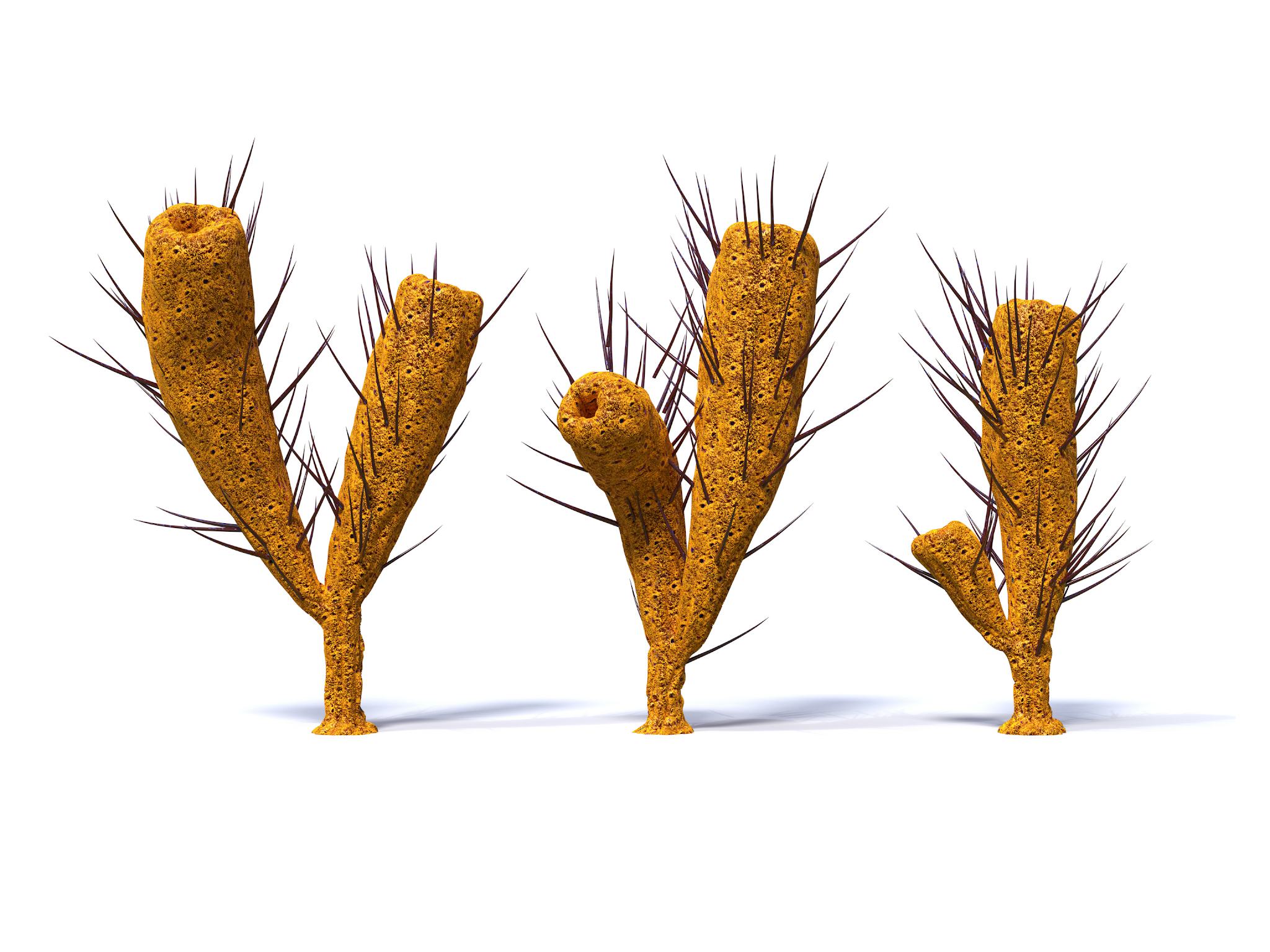
Pirania is named after Mount St. Piran, near the Bow River Valley, Banff National Park, Alberta, Canada. It was first described by Charles Doolittle Walcott in 1920 from 128 fossil specimens found within the Greater Phyllopod bed, the most famous fossil-bearing member of the 508 million-year-old Burgess Shale Fossil Lagerstätte in the Canadian Rockies of British Columbia. The type locality has exceptional preservation of soft-bodied animals from the Middle Cambrian.
Tuesday, 13 July 2021
PIRANIA: MIDDLE CAMBRIAN SPONGE
Monday, 12 July 2021
ANCIENT MARINE REPTILES: ICHTHYOSAURS
They were particularly abundant in the later Triassic and early Jurassic periods before being replaced as the premier aquatic predator by another marine reptilian group, the Plesiosauria, in the later Jurassic and Cretaceous periods.
They thrived during much of the Mesozoic era; based on fossil evidence, they first appeared around 250 million years ago and at least one species survived until about 90 million years ago into the Late Cretaceous.
While they resembled fish and dolphins, ichthyosaurs were large marine reptiles belonging to the order known as Ichthyosauria or Ichthyopterygia. In 2018, Benjamin Kear and his team were able to study ichthyosaur remains at the molecular level, Their findings suggest ichthyosaurs had skin and blubber quite similar to our modern dolphins.
While ichthyosaurs evolved from land-dwelling, lung-breathing reptiles, they returned to our ancient seas and evolved into the fish-shaped creatures we find in the fossil record today.
Their limbs fully transformed into flippers, sometimes containing a very large number of digits and phalanges. Their flippers tell us they were entirely aquatic as they were not well-designed for use on land. And it was their flippers that first gave us the clue that they gave birth to live young; a find later confirmed by fossil embryo and wee baby ichy finds.
Sunday, 11 July 2021
J.A. JELETZKY (1915-1988): CONTRIBUTIONS TO PALAEONTOLOGY
During his high school years, which he finished in Saratov in 1932, he developed an active interest in Mesozoic stratigraphy and palaeontology while visiting the classical Upper Jurassic sections along the Volga River.
You will undoubtedly recall that the Volga is that region that offers up the spectacular oil-in-water coloured ammonite specimens like Quenstedtoceras (Lamberticeras) lamberti, Eboraciceras, Peltoceras, Kosmoceras, Grossouvria, Proriceras, Cadoceras and Rursiceras — inspirational indeed.
He graduated with honours from the Geological and Geophysical Faculty of the State University at Kyiv in 1938 and completed graduate studies in palaeontology and stratigraphy at the Institute of Geological Sciences of the Ukrainian Academy of Sciences, Kyiv, in 1941. His Candidate of Geological Sciences (equivalent to a PhD) thesis was devoted to the stratigraphy and belemnite fauna of the Boreal Upper Cretaceous of northern Eurasia.
On June 22, 1941, the day Germany invaded the USSR, he married a physician, Tamara Fedorovna, the daughter of the distinguished professor F. P. Bohatirchuk and had four children together — Alex, Olga, Theodore, and Halina.
Jurij was in Kyiv when the city fell to the German armies in September 1941, and he continued working there as a palaeontologist in the Institute of Geological Sciences of the Ukrainian Academy of Sciences, until, on the return of the Red Army in 1943, he moved his family west to Poland and Germany. He left Berlin and reached Bayreuth, Bavaria, crossing the narrow strip between the advancing lines of the Allied and Soviet armies.Throughout those difficult years, in which he worked as a librarian and finally as a translator in the U .S.-occupied zone of Germany, Jurij managed to keep his family together and to save some of his personal belongings. In 1948, he moved to Canada, where he became a research scientist for the Geological Survey of Canada. He held that title until 1982 when he was awarded emeritus status.
Jurij’s first paper, published in 1938, dealt with Pleistocene gastropods, but the bulk of the nearly 150 papers published in his lifetime were devoted to Mesozoic palaeontology and stratigraphy, especially from western and northern Canada; Cretaceous stratigraphy and belemnite faunas of northern Eurasia; as well as palaeogeography and paleobiogeography.
He worked on Vancouver Island initially, producing geologic maps and structural and stratigraphic reports, and this work was followed up with studies of correlative strata in southern British Columbia. His second major area of study was the northern Yukon where he elucidated the stratigraphy, structure, and palaeontology of Mesozoic rocks. His outstanding contribution to the work of the Geological Survey of Canada was sustained research on the Cretaceous stratigraphy and fossils of Canada.
George was a prolific writer and made major contributions to palaeontology, particularly the study of Cretaceous ammonoids, the bivalve Buchia, and the Mesozoic coleoids, particularly belemnites on which he began his paleontological career. Indeed, George was engaged in the production of the volume on coleoids for the Treatise on Invertebrate Paleontology when he died.He was a great champion of the role that fossils play in biochronology and the development of the Phanerozoic time scale. George had broad interests that impacted many aspects of geology, including palaeogeography, tectonics, and eustacy.
In 1955, on completion of stratigraphic studies on Vancouver Island, Jurij began a long-range project in the Mackenzie District of northwestern Canada. He said he was searching “for the most nearly continuous and largely or entirely open-marine section of Upper Jurassic-Low er Cretaceous rocks.”
He believed that such a section was badly needed to correlate and order sequentially what were then the scattered Early Cretaceous and Late Jurassic marine invertebrate faunas from western and Arctic Canada. His extensive field research, which began by canoe and on foot in the company of an Indigenous guide and a cook in inaccessible and unpopulated areas of the northern Yukon, was conducted between 1955 and 1975. Numerous publications and shelves of detailed field notebooks document the complete Upper Jurassic-Lower Cretaceous sequence for which he searched.
This project led to his studies on the systematics and biostratigraphy of the bivalve Buchia, used in the final synthesis of his ideas about the Jurassic/Cretaceous boundary (1984, Geological Survey of Canada Special Paper 27). That paper, he said, meant a lot to him: it summarized nearly a lifetime’s work on the Jurassic/Cretaceous boundary beds, and he intended for it to be his final word on the subject.In that work, as in most others related to boreal biostratigraphy, a thorough analysis of the subject was facilitated by his Russian background and his knowledge of several other Slavic languages, as well as German and French.
In the 1960s, Jurij became coordinator and principal author of the Coleoidea volume of the Treatise on Invertebrate Paleontology, after the editors had agreed that the usual compilation of the volume should be preceded by a thorough revision of morphology, taxonomy, and phylogeny. This implied the reappraisal of all principal morphologic features of the Belemnitida and included the study of all type collections available worldwide.
Only an individual with Jurij’s determination and intellectual and working capacity could have faced such a staggering enterprise. He thus amassed an enormous amount of information and became the world’s leading authority on the subject.
A number of papers were published, including his extensively documented work on the comparative morphology, phylogeny, and classification of the fossil Coleoidea (1966, University of Kansas Paleontological Contribution No. 7). Meanwhile, he tended to his official duties for the Survey with his habitual thoroughness. This work included the study of large collections made by other geologists, as well as provincial surveys and research by oil and mining companies, and resulted in a large number of papers and unpublished reports.
However, it slowed the preparation of the Treatise final manuscript. He could have shortened some parts and compiled others, but Jurij felt that as a conscientious scientist he could not agree to publish any results that he considered either wrong or substandard.
Thus, several papers remain unpublished, including a 331-page manuscript, finished in 1978, on early and middle Liassic Belemnite faunas of England in relation to coeval faunas of northern Eurasia.
Jurij was a Fellow of the Geological Society of America and of the Royal Society of Canada. He received the Willet G. Miller Medal of the Royal Society of Canada in 1969 for outstanding basic research in geology (palaeontology and stratigraphy), and the Elkanah Billings Medal of the Geological Association of Canada (1978) for his research on Canadian palaeontology. He was also honoured, together with Ralph Imlay of the U.S.
Geological Survey, with a Special Symposium on the Jurassic-Cretaceous biochronology and palaeogeography of North America, during the Third North American Paleontological Convention in Montreal in 1982 (see Westermann, G., ed., 1984, Geological Association of Canada Special Paper 27).
Jurij Jeletzky worked for many years to the limit of his physical endurance, although he realized the danger to his health. From 1984 until his death in 1988, suffering from cancer, he worked to the limit of his failing strength to publish an important monograph on ammonites of the boreal regions, and to finish the Coleoidea volume of the Treatise and a large synthesis on the Yukon area.
At his death, the first paper (co-written with E. Kemper, Geological Survey of Canada Bulletin 377) was already published; Jurij was still correcting the last version of the Yukon manuscript, and the Treatise manuscript was 80 to 90 per cent complete. In the last week of his life, he forced himself to correct, in his hospital bed, the proof pages of a paper on the relation of the Neuburg Formation of Germany to the sub-boreal Volgian of the Russian platform, thus completing the circle that brought him to geology during his high school years.
A true earth scientist, Jurij based all his interpretations and theoretical discussions on facts, and as a committed, responsible, and independent-minded researcher, he challenged any hypothesis, even the most popular one, if it did not fit his data. Thus, in 1962 (Royal Society of Canada Transactions, v. 56), he opposed the prevailing views on the Cordilleran geosyncline in relation to northern Yukon, and in 1984 (Geological Survey of Canada Special Paper 27), he rejected the existence of large-scale north-south movements of “ allochthonous terranes” in western North America and Alaska after the Middle Jurassic.
Instead, he adhered to the expanding Earth hypothesis rather than to orthodox plate tectonics. He held that palaeontology was the only basis for practical geochronology (1956, American Association of Petroleum Geologists Bulletin, v. 40), discussed the abuse of quantification in palaeontology and biochronological correlation (1965, Journal of Paleontology, v. 39), and the overestimation of eustatic compared to vertical tectonic movements in controlling large-scale transgressions and regressions (1978, Geological Survey of Canada Paper 77-18), and he vindicated the value of molluscs with respect to foraminifers for age and depositional interpretation of Tertiary rocks in British Columbia (1973, Canadian Journal of Earth Sciences, v. 10).
He also thought that his data from extensive collections of Late Jurassic-Early Cretaceous Buchia and Late Cretaceous Inoceramus were in conflict with the “punctuated equilibrium” hypothesis. Whenever he became involved in scientific controversy, it was based on his deep belief that a scientist’s duty is to express openly his doubts whenever his data are challenged. Thus, he was always ready to stand up for his beliefs without being pompous; on the contrary, he was a very modest man.
Jurij never refused to give advice, when asked, especially to a junior colleague, or to write a detailed review of a thesis or manuscript. Even in the last weeks of his life, he completed a review, knowing that time was short and precious. He was extremely loyal to his profession—his love—and to the institution for which he worked.
He loved life, every hour of it. In his private life, he was a kind and generous person, always ready to give help to a colleague or friend. He never showed the strains of a personal life full of hardships.
Jura (George) Jeletzky will be missed by all those who believe that personal freedom, independence of thought, respect for facts, and a straightforward attitude in upholding fundamental principles as the hallmarks of a valuable human and scientific life.
A.C. Riccardi, Museum de Ciencias Naturalas, Universidad Nactional de La Plata, Argentina wrote a wonderful memorial to Jeletzky as did Godfrey Nowland, Chief Paleontologist, Geological Survey of Canada. Much of what they shared is included here.
https://www.cambridge.org/core/services/aop-cambridge-core/content/view/BF4C5A14713639CE54B473408D4406E6/S0022336000019776a.pdf/div-class-title-j-a-jeletzky-1915-1988-div.pdf
Saturday, 10 July 2021
SPINY HETEROMORPH AMMONITE: INDEX FOSSILS
Friday, 9 July 2021
TRILOBITES: HIGHLY SUCCESSFUL ANCIENT ARTHROPODS
Thursday, 8 July 2021
Wednesday, 7 July 2021
TREASURES OF CANADA: TRENT RIVER PALAEONTOLOGY
![]() |
| Dan Bowen, Chair, VIPS, Trent River |
The Pacific Plate is an oceanic tectonic plate that lies beneath the Pacific Ocean. And it is massive. At 103 million km2 (40 million sq mi), it is the largest tectonic plate and continues to grow fed by volcanic eruptions that piggyback onto its trailing edge.
This relentless expansion pushes the Pacific Plate into the North American Plate. The pressure subducts it beneath our continent where it then melts back into the earth. Plate tectonics are slow but powerful forces.
The island chains that rode the plates across the Pacific smashed into our coastline and slowly built the province of British Columbia. And because each of those islands had a different origin, they create pockets of interesting and diverse geology.
It is these islands that make up the Insular Belt — a physio-geological region on the northwestern North American coast. It consists of three major island groups — and many smaller islands — that stretches from southern British Columbia up into Alaska and the Yukon. These bits of islands on the move arrived from the Late Cretaceous through the Eocene — and continues to this day.
The rocks that form the Insular Superterrane are allochthonous, meaning they are not related to the rest of the North American continent. The rocks we walk over along the Trent River are distinct from those we find throughout the rest of Vancouver Island, Haida Gwaii, the rest of the province of British Columbia and completely foreign to those we find next door in Alberta.
To discover what we do find on the Trent takes only a wee stroll, a bit of digging and time to put all the pieces of the puzzle together. The first geological forays to Vancouver Island were to look for coal deposits, the profitable remains of ancient forests that could be burned to the power industry.
Jim Monger and Charlie Ross of the Geological Survey of Canada both worked to further our knowledge of the complex geology of the Comox Basin. They were at the cutting edge of west coast geology in the 1970s. It was their work that helped tease out how and where the rocks we see along the Trent today were formed and made their way north.We know from their work that by 85 million years ago, the Insular Superterrane had made its way to what is now British Columbia.
The lands were forested much as they are now but by extinct genera and families. The fossil remains of trees similar to oak, poplar, maple and ash can be found along the Trent and Vancouver Island. We also see the lovely remains of flowering plants such as Cupanities crenularis, figs and breadfruit.
Heading up the river, you come to a delineation zone that clearly marks the contact between the dark grey marine shales and mudstones of the Haslam Formation where they meet the sandstones of the Comox Formation. Fossilized material is less abundant in the Comox sandstones but still contains some interesting specimens. Here you begin to see fossilized wood and identifiable fossil plant material.
Further upstream, there is a small tributary, Idle Creek, where you can find more of this terrestrial material in the sandy shales. As you walk up, you see identifiable fossil plants beneath your feet and jungle-like, overgrown moss-covered, snarly trees all around you.
Walking west from the Trent River Falls at the bottom, you pass the infamous Ammonite Alley, where you can find Mesopuzosia sp. and Kitchinites sp. of the Upper Cretaceous (Santonian), Haslam Formation. Minding the slippery green algae covering some of the river rocks, you can see the first of the Polytychoceras vancouverense zone.
Continuing west, you reach the first of two fossil turtle sites on the river — amazingly, one terrestrial and one marine. If you continue, you come to the Inland Island Highway.
The Trent River has yielded some very interesting marine specimens, and significant terrestrial finds. We have found a wonderful terrestrial helochelydrid turtle, Naomichelys speciosa, and the caudal vertebrae of a Hadrosauroid dinosaur. Walking down from the Hadrosaur site you come to the site of the fossil ratfish find — one of the ocean's oddest fish.
Ratfish, Hydrolagus Collie, are chimaera found in the north-eastern Pacific Ocean today. The fossil specimen from the Trent would be considered large by modern standards as it is a bruiser in comparison to his modern counterparts.This robust fellow had exceptionally large eyes and sex organs that dangled enticingly between them. You mock, but there are many ratfish who would differ. While inherently sexy by ratfish standards, this fellow was not particularly tasty to their ancient marine brethren (or humans today) — so not hugely sought after as a food source or prey.
A little further again from the ratfish site we reach the contact of the two Formations. The rocks here have travelled a long way to their current location. With them, we peel away the layers of the geologic history of both the Comox Valley and the province of British Columbia.
The Trent River is not far from the Puntledge, a river whose banks have also revealed many wonderful fossil specimens. The Puntledge is also the name used by the K'ómoks First Nation to describe themselves. They have lived here since time immemorial. Along with Puntledge, they refer to themselves as Sahtloot, Sasitla and Ieeksun.
References: Note on the occurrence of the marine turtle Desmatochelys (Reptilia: Chelonioidea) from the Upper Cretaceous of Vancouver Island Elizabeth L. Nicholls Canadian Journal of Earth Sciences (1992) 29 (2): 377–380. https://doi.org/10.1139/e92-033; References: Chimaeras - The Neglected Chondrichthyans". Elasmo-research.org. Retrieved 2017-07-01.
Directions: If you're keen to explore the area, park on the side of Highway 19 about three kilometres south of Courtenay and hike up to the Trent River. Begin to look for parking about three kilometres south of the Cumberland Interchange. There is a trail that leads from the highway down beneath the bridge which will bring you to the Trent River's north side.
Tuesday, 6 July 2021
FERRISAURUS SUSTUTENSIS: A NEW NON-AVIAN DINOSAUR IN BC
You may recall Dr. Victoria Arbour, curator of palaeontology at the Royal BC Museum from her work on ankylosaurs & that interesting specimen from Hornby Island thought to be a pterosaur but further study revealed to be a saurodontid fish, an ambush predator with very sharp serrated teeth and elongate, torpedo-like body. Not a pterosaur but still a massively exciting find. Arbour was very gracious about the new interpretation, taking it in stride. She has since gone on to name this partial ornithischian dinosaur from Sustut Basin, as well as the ankylosaurs Zuul, Zaraapelta, Crichtonpelta, and Ziapelta. She's been a busy bee.
For this latest find, she’s partnered up & published her findings with David Evans from the Royal Ontario Museum in the peer-reviewed scientific journal PeerJ - the Journal of Life and Environmental Sciences last year. Their paper describes this partial dinosaur skeleton found amongst the inhospitable boreal forests and folded rock of the Canadian Cordillera near the Sustut Basin of northern British Columbia, Canada.
The first bones were collected by geologist Kenny F. Larsen who was surveying for uranium along the then in-construction BC Rail line along the Sustut River. The bones were later donated to Dalhousie University in Halifax, Nova Scotia then accessioned by the Royal British Columbia Museum in Victoria, BC. The skeleton includes parts of the pectoral girdles, left forelimb, left hindlimb, and right pes. Their rationale for a new species distinguished from other named leptoceratopsids is based on the proportions of the ulna and pedal phalanges.
This specimen was previously described in 2008 as an indeterminate small-bodied, bipedal neornithischian, possibly representing either a pachycephalosaur or a basal ornithopod similar to Thescelosaurus. With more material to work with, Arbour and Evans reinterpreted the remains as a leptoceratopsid ceratopsian, Ferrisaurus sustutensis, gen. et. sp. nov.
![]() |
| Figure 2: Preserved elements of RBCM P900 |
It has been placed, within a reasonably resolved phylogenetic context, with Ferrisaurus recovered as more closely related to Leptoceratops than Montanoceratops. At 68.2–67.2 Ma in age, Ferrisaurus falls between, and slightly overlaps with, both Montanoceratops and Leptoceratops, and represents a western range extension for Laramidian leptoceratopsids. Leptoceratopsidae is an extinct family of neoceratopsian dinosaurs from Asia, North America and Europe. They resembled and were closely related to, other neoceratopsians, such as Protoceratopsidae and Ceratopsidae, but they are more primitive and generally smaller.
![]() |
| Figure 3: Pectoral Elements of Laramidian leptoceratopsids |
The fossil plant finds may not seem that exciting in comparison to a dinosaur but Cretaceous plants in BC are also relatively rare. Most of our best fossil plant sites are Eocene, the ancient lakebed sites at McAbee and Princeton — so a good 15 million or so years earlier.
During that expedition, the team recovered a fragment of a large Cretaceous terrestrial trionychoid turtle Basilemys from the family Nanhsiungchelyidae near the confluence of Birdflat Creek and the Sustut River. This largely North American turtle along with the plants will allow us to make correlations with terrestrial finds from other sites including those from the Nanaimo group, the inland island construction sites and the Trent River on Vancouver Island and Horseshoe Canyon in southwestern Alberta. Jordan Mallon and Donald Brinkman have done some good work on the Basilemys morrinensis from the Upper Cretaceous Horseshoe Canyon Formation. The Sustut Basin turtle and plant remains have been accessioned into the Royal BC Museum’s collections in Victoria.
It wasn't until last summer that Arbour was able to extract more of this dinosaur and not all of it as their field season was shortened by a cold snap that brought snow and ice, freezing the ground they were working in the high alpine. Arbour plans to continue her work searching for dinosaur fossils in the high alpine plateaus of northern British Columbia. A fresh grant this year from the Natural Sciences and Engineering Research Council of Canada (NSERC) will help pave the way for both her and some summer students to continue their fieldwork.
Reference: Arbour VM, Evans DC. 2019. A new leptoceratopsid dinosaur from Maastrichtian-aged deposits of the Sustut Basin, northern British Columbia, Canada. PeerJ 7:e7926 https://doi.org/10.7717/peerj.7926. Here's a link to the paper: https://peerj.com/articles/7926/
Figure 1: RBCM P900, the holotype of Ferrisaurus sustutensis, was collected along the BC Rail line near the intersection of Birdflat Creek and the Sustut River in 1971, in the Sustut Basin of northern British Columbia, Canada. Map modified from Evenchick et al. (2003).
Figure 2: Preserved elements of RBCM P900, holotype of Ferrisaurus sustutensis, in white (gray represents missing parts of incomplete bones). RBCM P900 includes a partial right coracoid, partial left scapular blade, complete left radius, partial left ulna, partial left tibia, fibula, and coossified astragalus and ?calcaneum, partial left metatarsals I-IV, and digits III (phalanges 2–4) and IV (phalanges 2–5) of the right pes.
Figure 3: Pectoral elements of RBCM P900, holotype of Ferrisaurus sustutensis, compared to other Laramidian leptoceratopsids. (A) Fragmentary right coracoid of RBCM P900 in lateral view, compared to (B) complete right scapulocoracoid of CMN 8889, Leptoceratops gracilis, lateral view centered on coracoid with scapula in oblique view. Fragmentary left scapular blade of RBCM P900 in (C) lateral and (D) medial view, compared to (E) left scapula of MOR 300, Cerasinops hodgskissi in medial view, and (F) left scapula of TCM 2003.1.9, Prenoceratops pieganensis in lateral view. Abbreviations: sp, sternal process.
Monday, 5 July 2021
PTEROSAURS OF HORNBY ISLAND
We divide their lineage into two major types: basal pterosaurs and pterodactyloids. Basal pterosaurs (also called 'non-pterodactyloid pterosaurs' or ‘rhamphorhynchoids’) were smaller animals with fully toothed jaws and long tails. Their wide wing membranes connected to their hind legs. This would have allowed them some manoeuvrability on the ground, but with an awkward sprawling posture. They were better climbers with flexible joint anatomy and strong claws. Basal pterosaurs preferred to dine on insects and small vertebrates.
Later pterosaurs (pterodactyloids) evolved many sizes, shapes, and lifestyles. Pterodactlyoids had narrower wings with free hind limbs, highly reduced tails, and long necks with large heads. On the ground, pterodactyloids walked better than their earlier counterparts, manoeuvring all four limbs smoothly with an upright posture. They walked standing plantigrade on the hind feet and folding the wing finger upward to walk on the three-fingered "hand." These later pterosaurs were more nimble. They could take off from the ground, run and wade and swim. Their jaws had horny beaks and some of these later groups lacked the teeth of earlier lineages. Some groups developed elaborate head crests that were likely used to attract mates' sexy-pterosaur style.
So can we or have we found pterosaurs on Hornby Island? The short answer is yes.
![]() |
| Collishaw Point, known locally as Boulder Point, Hornby Island |
Peter Mustard, a geologist from the Geologic Survey of Canada, did considerable work on the geology of the island. It has a total stratigraphic thickness of 1350 m of upper Nanaimo Group marine sandstone, conglomerate and shale.
During the upper Cretaceous, between ~90 to 65 Ma, sediments derived from the Coast Belt to the east and the Cascades to the southeast poured seaward to the west and northwest into what was the large ancestral Georgia Basin. This major forearc basin was situated between Vancouver Island and the mainland of British Columbia. The rocks you find here originated far to the south in Baja California and are the right age and type of sediment for a pterosaur find. But are we California dreaming?
![]() |
| Upper Cretaceous Nanaimo Group Fossil Concretion |
Victoria Arbour, a Canadian evolutionary biologist and palaeontologist working as a Natural Sciences and Engineering Research Council of Canada postdoctoral fellow at the University of Toronto and Royal Ontario Museum, certainly thought so.
While this fossil find was initially described as a very late-surviving member of the pterosaur group Istiodactylidae, further examination cast doubt on the identification. Once more detail was revealed the remains were published as being those of a saurodontid fish, an ambush predator with very sharp serrated teeth and elongate, torpedo-like bodies that grew up to two meters. Not a pterosaur but still a massively exciting find. Arbour was very gracious at the renaming, taking it in stride. She has since gone on to name a partial ornithischian dinosaur from Sustut Basin, as well as the ankylosaurs Zuul, Zaraapelta, Crichtonpelta, and Ziapelta. But she may have another shot at a pterosaur.
![]() |
| Dan Bowen, Chair, VIPS. Photo: Deanna Steptoe Graham |
The site is known as Boulder Point to the locals and it has been a popular fossil destination for many years. It is the same site where Sharon made her find years earlier.
The concretion contains four articulated vertebrae that looked to be fish at first glance. Jay Hawley, a local fossil enthusiast was asked to prep the block to reveal more details. Once the matrix was largely removed the vertebrae inside were revealed to be bird bones, not fish and not another saurodontid as originally thought. Palaeontologist Victoria Arbour was called back in to put her keen lens on the discovery.
Sunday, 4 July 2021
DIPLOMOCERAS OF HORNBY / JA-DAI-AICH
![]() |
| Diplomoceras sp. |
Thursday, 1 July 2021
OH CANADA — CANADA'S PLANNED, FUNDED, HIDDEN & ONGOING GENOCIDE
![]() |
| Murdered & Missing Children Art by Roy Vickers |
You likely know about the Residential School System in Canada — and also the USA. You may have heard the stories of what went on there.
Recently, the media has been flooded by the deaths and unmarked graves of children. We weep for them as a nation.
And you likely feel sadness or outrage for these events that feel like they should be deep in the past — except they weren't.
The 'Indian' Residential Schools were schools built and funded by the government of Canada and run by various religious groups between 1831 (most in western Canada opened around 1860-1870s) and into the 1990s — the last closed in 1997.
The first school to open was the Mohawk Institute Residental School in 1828. They began to receive federal funding in 1831. The last school to close was Kivalliq Hall in Rankin Inlet, in what is now Nunavut, which closed in 1997; it became an IRSSA-recognized school in 2019 following a court ruling, which is why earlier accounts describe the last school closing in 1996.
Yes, recent history. The most important question is not when were these schools built — but why were these schools built?
To answer that we need to think about Canada as a young nation. Canada was meant to be a conquered land under British rule. The 'savages' having served their purpose in the (arguably mutually beneficial) fur trade and providing 'true novelty' in exhibitions like the 1893 Chicago World Fair, now needed to set their (silly, primitive) traditional ways aside and get on with the business of being white — or at least, dressing 'normal', speaking English (or French), adopting Western civilization practices. All primitive 'religious' paraphernalia had been stolen by this point — coppers, masks, etc. — and the practice of potlatch forbidden by law.
The goal by the 1870s was that the Indigenous adults living at that time would be the LAST of the 'savages' and their children would be "educated = assimilated" into Western society. The churches running the schools were completely empowered to "beat them into submission" so that the children would "assimilate or die."
So, to the world in our outward-facing messaging and in our history books, Canada did this kind and generous thing of building and funding schools to give these precious young children a much-needed education. We did this because, we as Canadians, are good guys.
All of this is hard to believe given Canada's global image. We are the quiet, polite folk with the funny accent. What is being described sounds more like the work of the Nazi's extermination pogroms during the Second World War.
You will be surprised to learn, then, that the term "Final Solution" was coined by Indian Affairs Superintended Duncan Campbell back in 1910 as he articulated how he envisioned solving the "Indian Problem" in Canada.
"It is readily acknowledged that Indian children lose their natural resistance to illness by habitating so closely in these schools and that they die at a much higher rate than in their villages. But this alone does not justify a change in the policy of this Department, which is geared towards the final solution of our Indian Program."
That statement was written by Duncan C. Scott in April 1910, in his capacity as the Superintendent of Indian Affairs to General-Major D. McKay, British Columbia's Indian Agent (Department of Indian Affairs Archives, RG 10 series).
![]() |
| Indian Residential Schools operated in Canada from 1831-1996 |
Some children and parents did want their kids to go to school for an education. And some had schools close to home that they could have or would have attended but they could not.
Under the Indian Act of Canada, every First Nation (Metis & Inuit still had to but not under this Act) child had to attend a residential school (built far from home and run by the church) by law.
It was illegal for these same children to attend ANY other educational institution. Why would we care where they were educated? It would actually have been more economical to have them live at home and attend school.
If education was the goal, why have this written into law?
History books will need to be amended to correct the untruths, the systemic re-writing, editing and white-washing of history. It is my hope that they include exact copies of these documents and not a paraphrased interpretation. The original wording is chilling. When you do get the chance to read the original documentation, please do.
So, 150,000 or more 'Indians' — First Nation, Inuit and Metis — were forced to attend these residential schools, not to give them an education but to deliberately strip them of their culture. It wasn't lost as a by-product of attending, it was the sole reason for their attending.
We may find that the number exceeds 150,000 as there are pretty good Census records from that time in Canada's history. Even so, 150,000 is every child they could get their hands on from the age of 4-16 living in our country.
We used to paint a picture that children were lucky to attend and that their parents wanted them to attend. This, too, is a lie. It was illegal not to send your children. Children were beaten, tortured and raped. Beaten for speaking their native tongue.
It was illegal to protest your children being taken. It was illegal to even seek legal advice regarding the matter.
We feel sadness today for the few hundred unmarked graves we are finding. This mild 'there-there, that is tragic, lets put up a nice headstone, take a few silent minutes and enjoy a cup of tea... and move on' attitude by our government is not surprising.
We're Canada. We're used to being the good guys. We wrote our history to be the good guys.
But this was G.E.N.O.C.I.D.E. — organized, premeditated, structured and funded genocide in partnership between the church and the government of Canada.
"Genocide — the deliberate killing of a large number of people from a particular nation or ethnic group with the aim of destroying that nation or group."
Canada was dealing with "the Indian problem" back in the 1800s. Lands were set aside (very similar to how we treat animals in a zoo...) and groups of First Nations, Inuit and Metis were moved onto these 'reserves.'
Now, if you want to wage a successful war, you either need to kill everyone outright (though spare a few as slaves) or inter-marry with the population. Given that the first forays by settlers were to trade, it was the latter strategy that was chosen — except it was too slow.
I have more direct quotes that I will dig out to share with you about our governments' views on "the Indian Problem" and the deliberate 'assimilate or die pogrom' as delivered through the Residential School System — think of it as Smallpox 2.0 (infected people and blankets were sent into communities to infect and kill).
We feel sad for the #215 and the hundreds of unmarked graves we are finding. I think the death toll exceeds 50,000. Not all of those graves will be unmarked. Some of those children are in local cemeteries, some were cremated in Indian Hospitals (where medical experimentation was done), some in unmarked graves, but I truly think we are just at the tip of the iceberg.
Realistically, it may be as high as 75,000. There are newspaper reports from way back in the day that speak to a 50% death rate at the schools. Yes, 50%.
That is just the number of dead and buried. What about abused and tortured? Raped and beaten? That number is at or near — or exceeds — 150,000.
So, what happens now? There will be apologies. There will be an inquiry. Many people will buy and wear orange shirts as an act of solidarity — and I thank those who do. For a few weeks, it will saturate the news.
Canada will try to sidestep their active participation and coordination of genocide. Canadian political groups may use this tragedy to help bolster their image for re-election. Good for them. I don't really care why they do the right thing just that they do the right thing.
"This was a sad part of our history (trying to put it in the past) for which we apologize (on behalf of folk long dead so what can we really do about it?) and move forward as a nation (with some parades and emotionally charged solidarity)...
But this doesn't go away with an apology and a kumbaya.
So, the Canadian government will continue to apologize again and again — AND try to slide the blame over to the church, particularly the Catholic Church as they operated about 70% of all of these assimilation centres and because they are perceived to be immune to the law, in many cases above the law, and incredibly well-funded — plus they are well-known bastards with a long history of being hated — the perfect pre-made scapegoat.
So, records will be slow to be produced. Records that support a narrative of this being 'all the churchs' fault" will likely be more readily found and produced than those which directly implicate our government. Some of the records found will be destroyed.
But the truth will come out. Survivor stories will be told.
And it is not just the Catholic Church — though they are a particularly vicious organization with a very long history of abuse and paedophilia — exactly who you would NOT want to entrust with children. These are the same self-righteous charmers who brought us the Inquisition, an infamous history of torture and persecution that goes back to the 12th century. I am not a fan.
I have Christian and Catholic friends whom I love. I love individuals but not institutions who do not hold themselves to account. Love them or hate them, these organizations will be thrown under the bus as they deserve.
If you read canadahistory.ca, you'll see "Western Canada's Treaties were intended to provide frameworks for respectful coexistence."
In Canada, Treaties represent the source of First Nation's peoples' unique nation-to-nation relationship with the Crown. When I first read that 'the treaties were meant as a means of respectful coexistence,' I thought, 'that sounds about right.' Then I thought more of the histories. It sounds great, but it is not true.
I do not know if Canada is capable of honestly dealing with this shame, and guilt as a nation.
Groups protect their own. I worry that those that do come across evidence may destroy it 'for the collective good.' Destruction of evidence is a very common practice. I think we need to acknowledge that we cannot be trusted as a nation to investigate this on our own. I would like the UN as a neutral third party to work with us as a nation as we uncover our historical truths.
What will not happen — though I would very much love it to — is for every church involved to have their church property revoked (not burned to the ground as is happening in our country), all of their records confiscated and made public (as appropriate) and all of the known abusers still working with them abusing the next generation of children, brought to justice.
Every Canadian should read the Truth and Reconciliation Commission's Final Report. This should be taught in schools. Groups should be brought together to discuss this as a nation and work together to plan the next steps.
Folk around the world should read it, too. Canada has a long history of missing and murdered women and children. The Murdered and Missing Indigenous Women and Girls Inquiry did good work and produced 231 Calls to Justice.
These recent news stories will finally be the boot to the neck of Canada to acknowledge the hidden history of this planned, funded genocide by the government of Canada. These recently discovered remains will be the final pebble that creates an avalanche.
This is a powerful time in our history. This is our chance to do what is right — what is just. This is a chance to truly listen and take steps to collectively mend ourselves as a nation of nations. Sadness and outrage are natural responses to this truth. I hope you, too, feel a passionate desire for justice — for Truth & Reconciliation.
Thank you to Roy Vickers for sharing this powerful image to help gain awareness and create dialogue for lasting change.
Wednesday, 30 June 2021
FOSSILS, TEXTILES AND URINE
![]() |
| Yorkshire Coast |
The Yorkshire Museum was given this important ichthyosaur fossil back in 1857 when alum production was still a necessary staple of the textile industry. Without that industry, many wonderful specimens would likely never have been unearthed.
These quarries are an interesting bit of British history as they helped shape the Yorkshire Coast, created an entirely new industry and gave us more than a fixative for dyes. With them came the discovery of many remarkable fossil specimens and, oddly, local employment in the collection of urine.
In the 16th century, alum was essential in the textile industry as a fixative for dyes.
![]() |
| Fashion in Medieval Livonia (1521): Albrecht Dürer |
This century saw the rise of the ruff, which grew from a mere ruffle at the neckline to immense, slightly silly, cartwheel shapes. They adorned the necklines of the ultra-wealthy and uber-stylish men and women of the age.
At their most extravagant, ruffs required wire supports and were made of fine Italian reticella, a cutwork linen lace.
![]() |
| 16th Century Fashion / Ruff Collars and Finery |
The Pope held a tidy monopoly on the industry, supplying both alum and the best dyes. He also did a nice trade in the colourful and rare pigments for painting. And for a time, all was well with dandy's strutting their finery to the local fops in Britain.
All that changed during the Reformation. Great Britain, heathens as they were, were cut-off from their Papal source and found themselves needing to fend for themselves.
The good Thomas Challoner took up the charge and set up Britain's first Alum works in Guisborough. Challoner looked to paleontology for inspiration. Noticing that the fossils found on the Yorkshire coast were very similar to those found in the Alum quarries in Europe, he hatched a plan to set-up an alum industry on home soil. As the industry grew, sites along the coast were favoured as access to the shales and subsequent transportation was much easier.
![]() |
| Alum House, Photo: Joyce Dobson and Keith Bowers |
At the peak of alum production, the industry required 200 tonnes of urine every year. That's the equivalent of all the potty visits of more than 1,000 people. Yes, strange but true.
The steady demand was hard to keep up with and urine became an imported resource from markets as far away as London and Newcastle upon Tyne in the northeast of England. Wooden buckets were left on street corners for folk to do their business then carted back to the south to complete the alum extraction process. The urine and alum would be mixed into a thick liquid. Once mixed, the aromatic slosh was left to settle and then the alum crystals were removed.
I'm not sure if this is a folktale or plain truth, but as the story goes, one knows when the optimum amount of alum had been extracted as you can pop an egg in the bucket and it floats on its own.
![]() |
| Alum House. Photo: Ann Wedgewood and Keith Bowers |
There are many sites along the Yorkshire Coast which bear evidence of the alum industry. These include Loftus Alum Quarries where the cliff profile is drastically changed by extraction and huge shale tips remain.
Further South are the Ravenscar Alum Works, which are well preserved and enable visitors to visualize the processes which took place. The photos you see here are of Alum House at Hummersea. The first shows the ruin of Alum House printed on a postcard from 1906. The second (bottom) image shows the same ruin from on high with Cattersty Point in the background.
The good folk at the National Trust in Swindon are to thank for much of the background shared here. If you'd like to learn more about the Yorkshire area or donate to a very worthy charity, follow their link below.
Reference: https://www.nationaltrust.org.uk/yorkshire-coast/features/how-alum-shaped-the-yorkshire-coast
Tuesday, 29 June 2021
TEMNODONTOSAURUS CRASSIMANUS
![]() |
| Temnodontosaurus crassimanus |
The fellow you see here is the Type Specimen for the species and he lives on display in the Yorkshire Museum. As the reference specimen for the species, all hopeful specimens that may belong to this species are checked against the Type Specimen to see if they share diagnostic features.
The Yorkshire Museum was given this important ichthyosaur fossil back in 1857, albeit in bits and pieces. The first bits of fossil bones were found near Whitby on the North Yorkshire coast by workmen quarrying alum. They recognized the bones as belonging to a fossilized reptile and alerted local authorities who in turn alerted the good Master Owen.
It was quite an undertaking to recover as it was found in more than fifty pieces in massive shale blocks and the alum quarry was active at the time. Alum quarrying helped share the Yorkshire Coast as an important staple of the textile industry going back to the 16th-century. By the 1860s, alum quarrying was slowing down. The ability to manufacture synthetic alum by 1855 had shifted the industry and it died out entirely by 1871. Lucky for us, the last years of alum production gifted us this well-preserved eight-metre specimen, one of the largest ichthyosaurs ever discovered in the UK.
Paleo-coordinates: 54.5° N, 0.6° W: paleocoordinates 42.4° N, 9.3° E